 PlantFun
Plant Needs
Characteristics
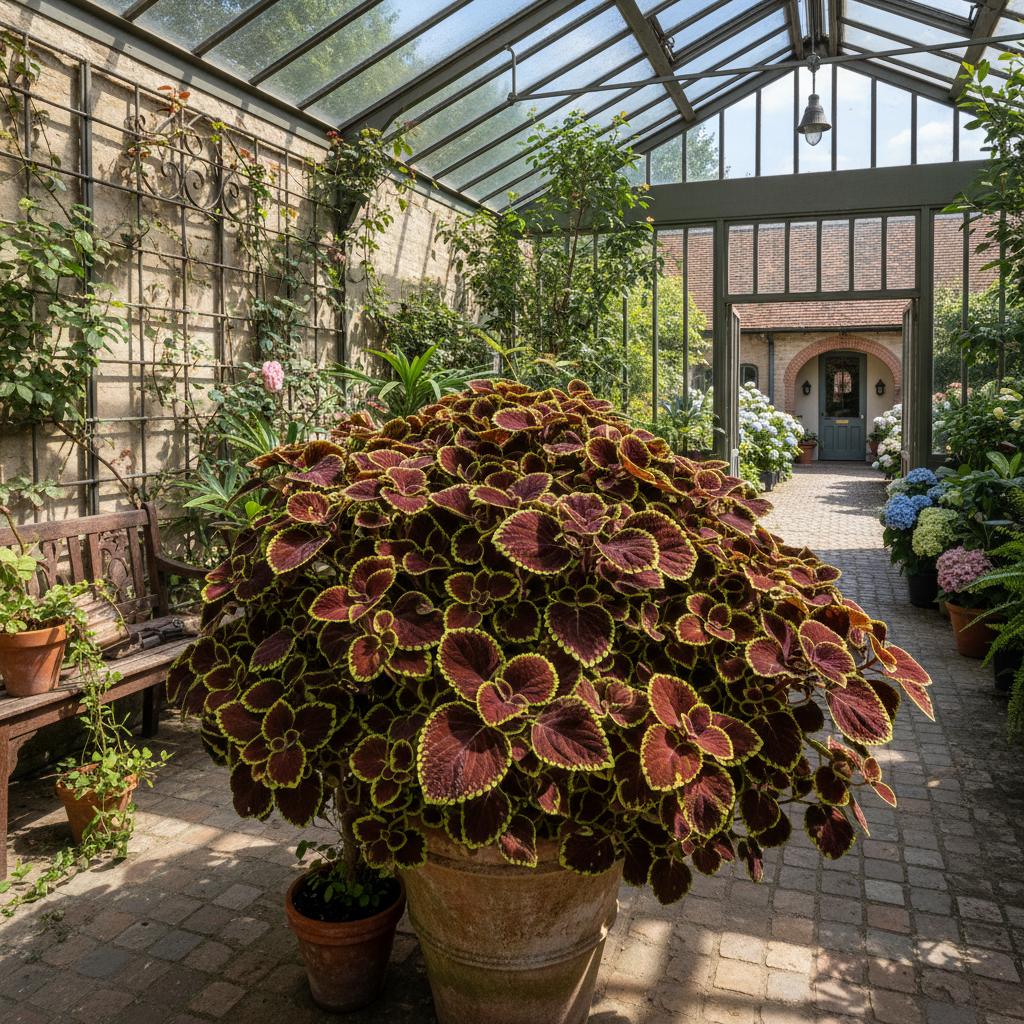
- Leaves: Opposite, ovate with scalloped or toothed margins; features a prominent dark burgundy to chocolate-brown center surrounded by a contrasting bright green edge.
- Stems: Distinctly square in cross-section, fleshy, semi-succulent, and pale green to slightly purplish.
- Flowers: Small, tubular, pale blue or violet flowers borne on terminal spike-like racemes (often pinched off by gardeners to maintain foliage vigor).
Care Guide
Water thoroughly when the top inch of soil feels dry, keeping it evenly moist.
Apply a balanced liquid fertilizer diluted to half strength.. Regular feeding enhances leaf color and overall plant vigor.
Coffee Grounds Tea:Soak used coffee grounds in water overnight, strain, and use the pale liquid to water the plant. This provides a gentle nitrogen boost ideal for foliage plants. Avoid dumping thick layers of raw grounds directly on the soil surface to prevent mold and fungus gnats.- Pinch off the growing tips regularly to encourage branching and a bushier, more compact shape.
- Remove flower spikes as soon as they appear to direct the plant's energy back into producing vibrant leaves.
- Trim back any leggy or overgrown stems to maintain an attractive form.
Toxicity
Warning: this plant may be toxic.
Pets: Toxic per ASPCA. Contains essential oils and diterpenes that can cause gastrointestinal distress and depression.
Humans: Sap may cause minor skin irritation in sensitive individuals; ingestion of large amounts can cause mild gastrointestinal upset.
Garden Uses & Culture
Culture: During the Victorian era in Europe, Coleus became wildly popular for "carpet bedding," where brightly colored foliage plants were arranged in intricate, rug-like geometric patterns in grand estate gardens.
Usage: Excellent as a container specimen, border plant in shaded gardens, or as a vibrant indoor houseplant.