 PlantFun
Plant Needs
Sunlight
Prefers shaded areas, growing on decaying wood and buried roots.
Watering
Requires high moisture and ambient humidity to fruit.
Temperature
Fruits best in mild, damp weather during spring and autumn.
Characteristics
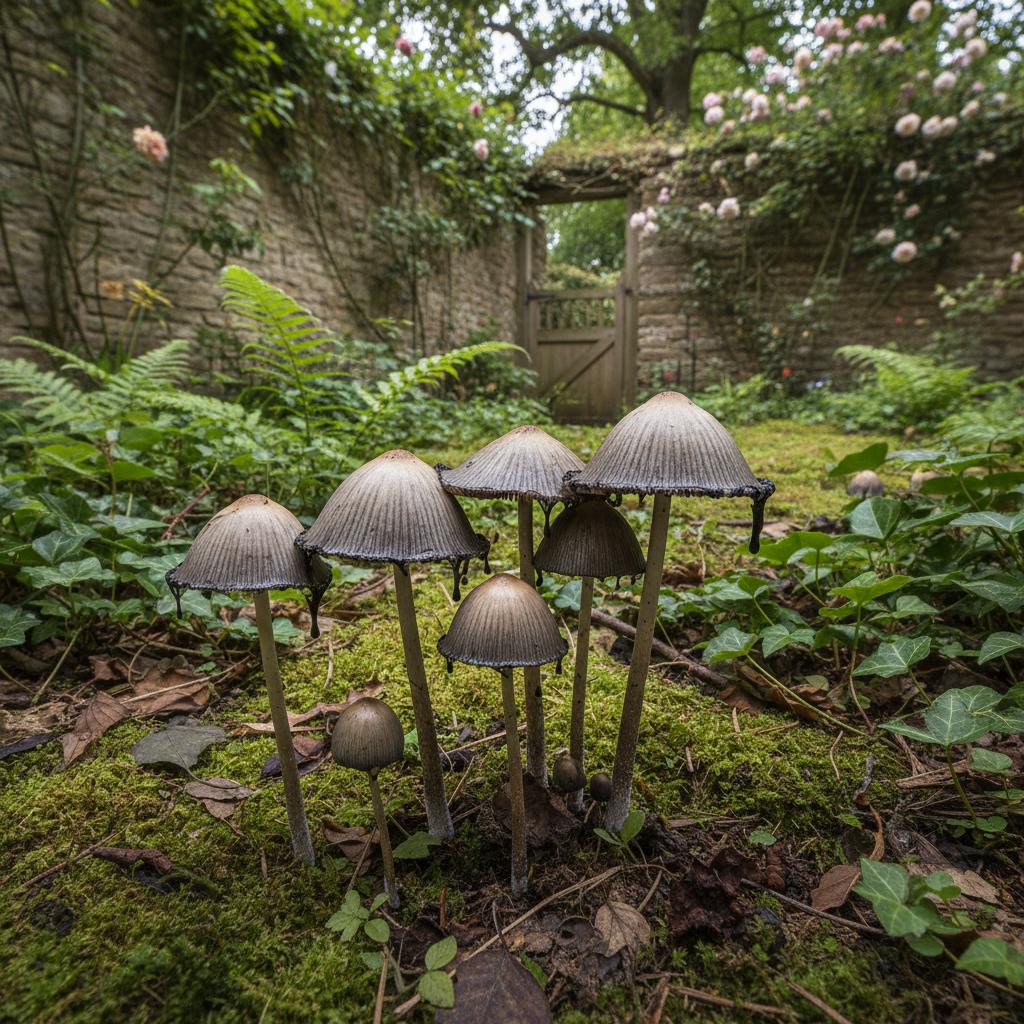
- Cap: 1-3 cm across, oval to bell-shaped, tawny-brown, covered with glistening mica-like granules when young, margin becoming striate;
- Gills: Attached to the stem or free, initially white, turning dark brown then black, eventually deliquescing (melting) into black ink in age;
- Stem: 2-8 cm tall, 2-5 mm thick, white, smooth or finely powdery, hollow, fragile;
- Spores: Black in mass, smooth, elliptical with a central germ pore.
Care Guide
Watering
Keep substrate consistently moist to encourage fruiting
Fertilization
N/A. Fungi do not require traditional fertilizers; they decompose organic matter.
Spent Coffee Grounds:Mix cooled, pasteurized coffee grounds into the woody substrate to provide extra nitrogen for mycelial growth; avoid unpasteurized grounds to prevent green mold contamination.Pruning
- Harvest fruiting bodies quickly before they deliquesce (turn to ink);
- Remove old, inky caps to prevent messy decay in cultivated areas.
Toxicity
Warning: this plant may be toxic.
Pets & Humans
Pets: Ingestion of raw wild mushrooms may cause mild gastrointestinal distress.
Humans: Generally edible when cooked young, but raw consumption may cause gastrointestinal upset.
Garden Uses & Culture
Culture: Inky caps have historically been used to make actual ink for writing and drawing in Europe, providing a unique intersection of mycology and historical documentation.
Usage: - **Culinary**: Edible when young and cooked, though highly perishable; - **Practical**: The black liquid from autodigestion can be boiled, strained, and used as writing ink.