 PlantFun
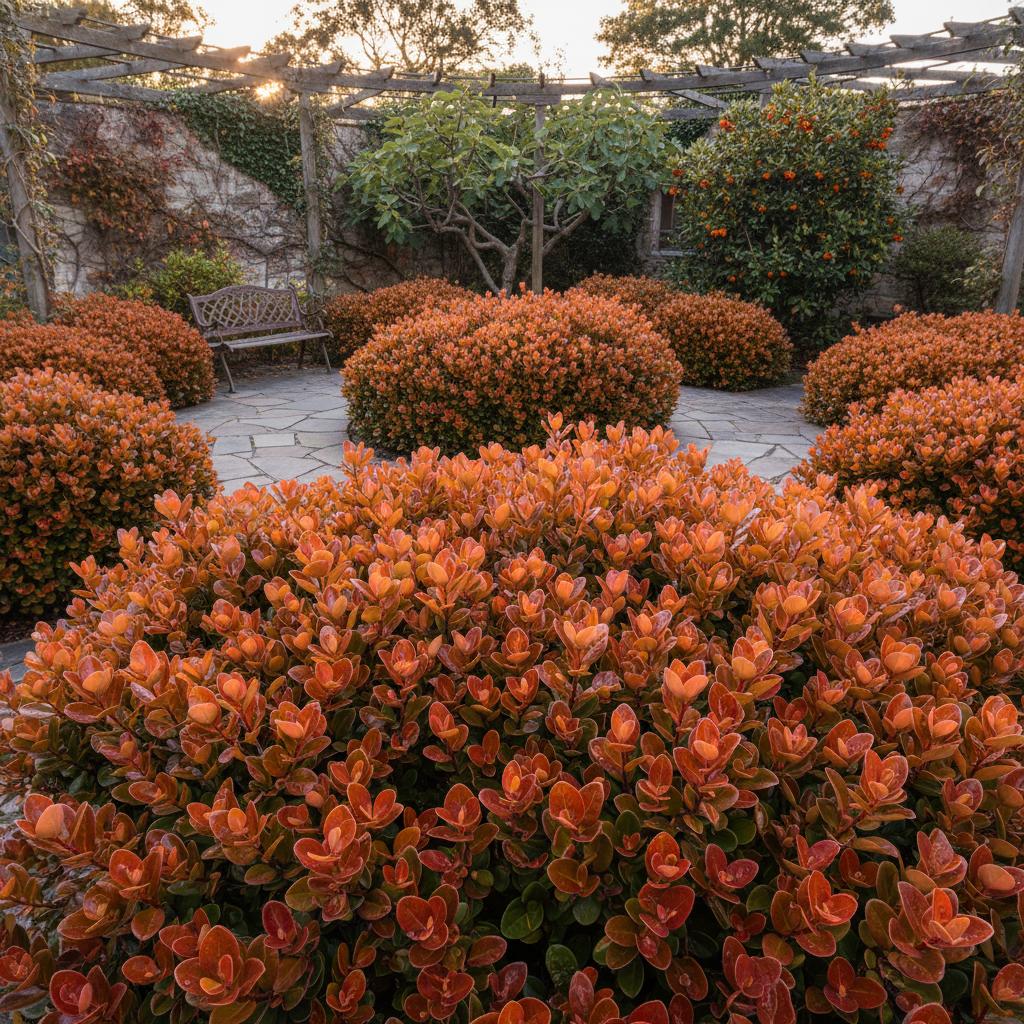
Plant Needs
Sunlight
Prefers full sun to partial shade; full sun enhances the glossiness and color of variegated varieties.
Watering
Highly drought-tolerant once established; requires well-draining soil and infrequent but deep watering.
Temperature
Thrives in mild coastal climates; frost tender and requires protection from freezing temperatures.
Characteristics
- Leaves: Opposite, broadly ovate to oblong, extremely glossy and reflective, dark green (often variegated in cultivars), fleshy, with small pits (domatia) on the underside;
- Flowers: Dioecious, small, inconspicuous, greenish-white, tubular, borne in small clusters;
- Fruit: Fleshy, ovoid, orange-red drupes appearing on female plants in late summer to autumn;
- Stems: Woody, branching, often sprawling or prostrate in harsh coastal winds, bark is grayish-brown.
Care Guide
Watering
Water deeply when the top 2-3 inches of soil become dry.
Fertilization
Apply a balanced, slow-release fertilizer at the start of the growing season.. Avoid over-fertilizing, which can lead to leggy growth and reduced wind resistance.
Coffee Grounds Tea:Steep used coffee grounds in water overnight. Use the diluted liquid to water the plant, boosting lush foliage growth. Avoid applying thick layers of raw grounds directly to the soil to prevent mold.Pruning
- Prune in late winter or early spring before new growth begins;
- Tip-prune regularly to encourage dense, bushy growth;
- Remove any dead, damaged, or crossing branches to maintain airflow;
- Can be sheared formally for hedging, though this may remove potential fruiting sites.
Toxicity
Warning: this plant may be toxic.
Pets & Humans
Pets: Considered non-toxic to cats.
Humans: Generally considered non-toxic; fruits are technically edible but not palatable.
Garden Uses & Culture
Culture: Widely embraced in Californian and British coastal gardens during the 20th century for its remarkable resistance to salt spray and ocean gales, becoming a staple of seaside landscaping.
Usage: - Excellent for coastal hedging and windbreaks; - Popular as a container specimen for patios; - Used in xeriscaping and water-wise gardens.