 PlantFun
Plant Needs
Characteristics
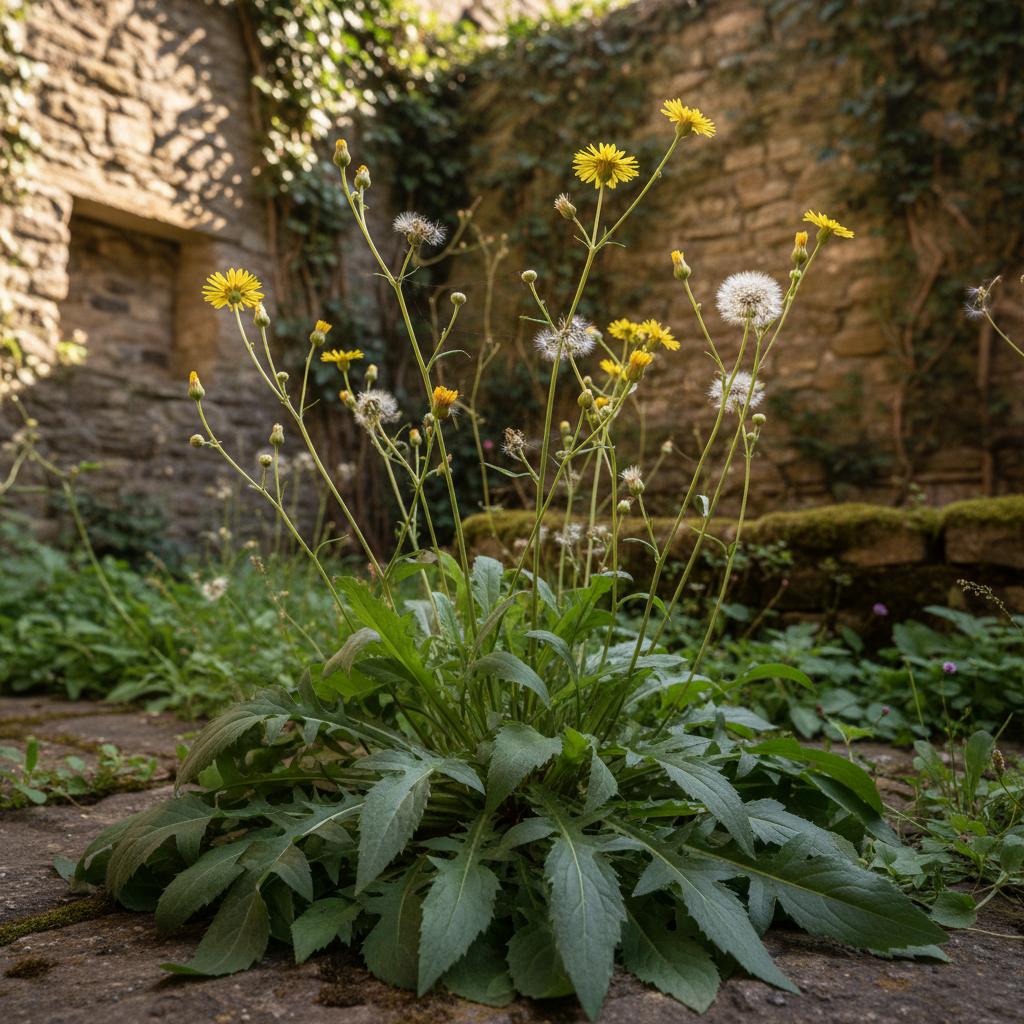
- Leaves: Basal rosette of deeply lobed or toothed leaves, stem leaves are fewer, smaller, and often clasping.
- Flowers: Yellow, dandelion-like capitula (flower heads) composed entirely of ray florets, emitting a distinct sweet fragrance.
- Stem: Erect, slender, often branched near the top, containing milky latex when broken.
- Fruit: Small, ribbed achenes topped with a white, fluffy pappus for wind dispersal.
Care Guide
Water moderately, allowing the topsoil to dry out between waterings.
Apply a light, balanced organic compost if soil is very poor.. Hawksbeards thrive in relatively poor soils; over-fertilizing can promote excessive foliage at the expense of flowers.
Banana Peel Tea:Steep chopped banana peels in water for 24-48 hours. Strain and use the liquid to water the base of the plant to support blooming. Discard the peels in a compost bin to avoid attracting pests.- Deadhead spent flowers regularly to prolong the blooming period.
- Remove seed heads before they mature if you wish to prevent aggressive self-seeding in the garden.
- Cut back dead foliage in late autumn or early spring to tidy the plant.
Toxicity
Warning: this plant may be toxic.
Pets: Non-toxic to cats per ASPCA guidelines for typical Asteraceae/Crepis species.
Humans: Generally considered non-toxic to humans; no known severe hazards.
Garden Uses & Culture
Culture: Hawksbeards have long been part of the rural European landscape, often associated with rustic wildflower meadows and traditional cottage gardens.
Usage: - **Ecological**: Excellent for attracting pollinators like bees and butterflies. - **Ornamental**: Used in naturalized garden settings, rock gardens, and meadow plantings.