 PlantFun
Plant Needs
Sunlight
Thrives in full sun but can tolerate partial shade.
Watering
Drought-tolerant once established; prefers moderate watering.
Temperature
Adaptable to a wide range of temperate climates.
Characteristics
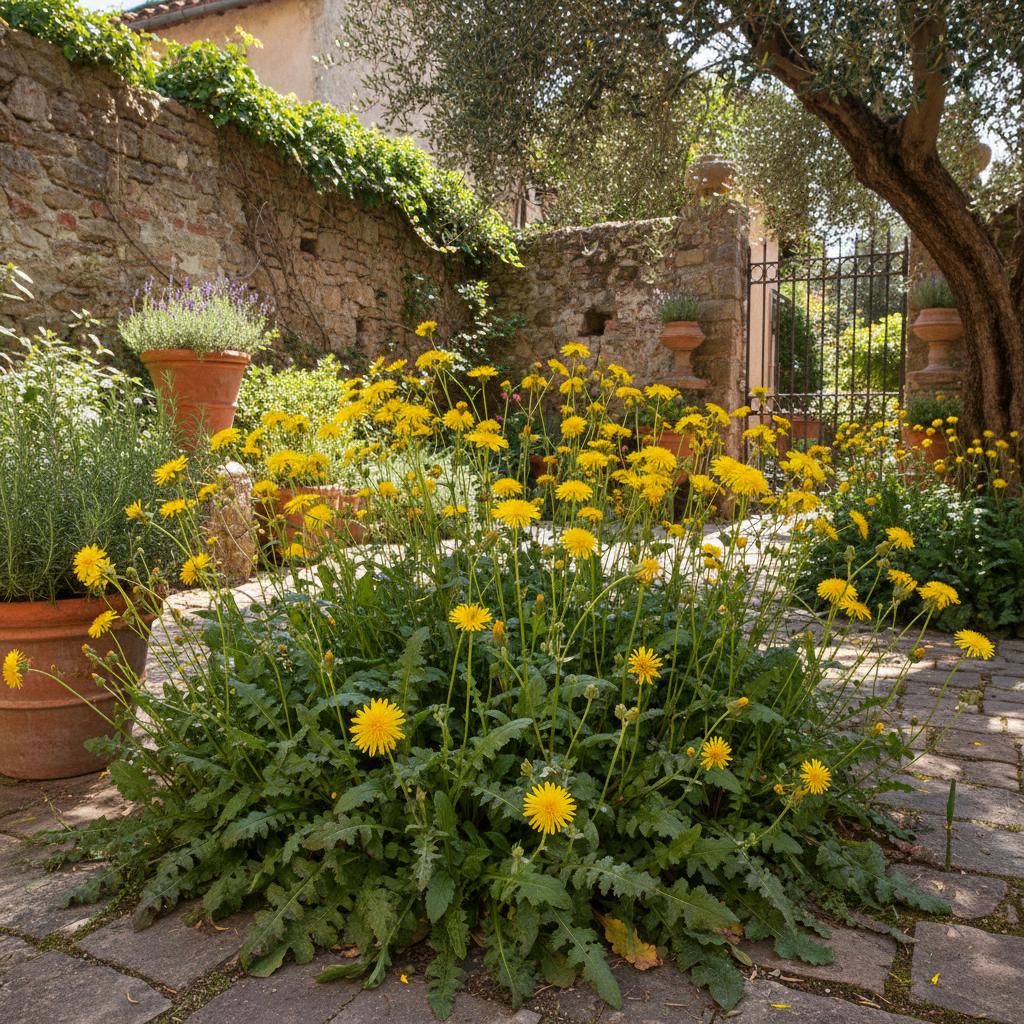
- Leaves: Basal rosette of pinnately lobed, lanceolate leaves, glabrous or slightly hairy; stem leaves are smaller, clasping the stem with sagittate bases;
- Flowers: Capitula arranged in loose corymbs, consisting entirely of yellow ray florets, resembling small dandelions;
- Stems: Erect, branched, often reddish at the base, exuding a milky latex when broken;
- Fruit: Achenes with a pappus of simple, soft white bristles for wind dispersal.
Care Guide
Watering
Water when the top inch of soil is dry.
Fertilization
Light application of compost if grown ornamentally.. Generally does not require supplemental fertilization in average soils.
Compost Tea:Steep a handful of finished compost or used tea leaves in water for 24 hours, strain, and use to water the base. Avoid over-fertilizing as it prefers lean soils.Pruning
- Deadhead spent flowers to prevent aggressive self-seeding;
- Cut back to the base in late autumn if managing as a garden plant;
- Remove basal rosettes manually if weed control is desired.
Toxicity
Warning: this plant may be toxic.
Pets & Humans
Pets: Non-toxic to cats per general botanical consensus.
Humans: Generally considered non-toxic; young leaves are sometimes consumed as a bitter salad green.
Garden Uses & Culture
Culture: Often viewed as a common weed in Western agriculture, yet appreciated by foragers and herbalists for its dandelion-like resilience and bright summer presence.
Usage: Ecological pioneer species, pollinator attractor for bees and hoverflies, occasional forage for livestock.