 PlantFun
Plant Needs
Sunlight
Prefers full sun for best flowering, but tolerates partial shade.
Watering
Requires moderate watering; keep soil moist but ensure excellent drainage to prevent corm rot.
Temperature
Hardy in USDA zones 6-9; requires winter mulching in colder regions.
Characteristics
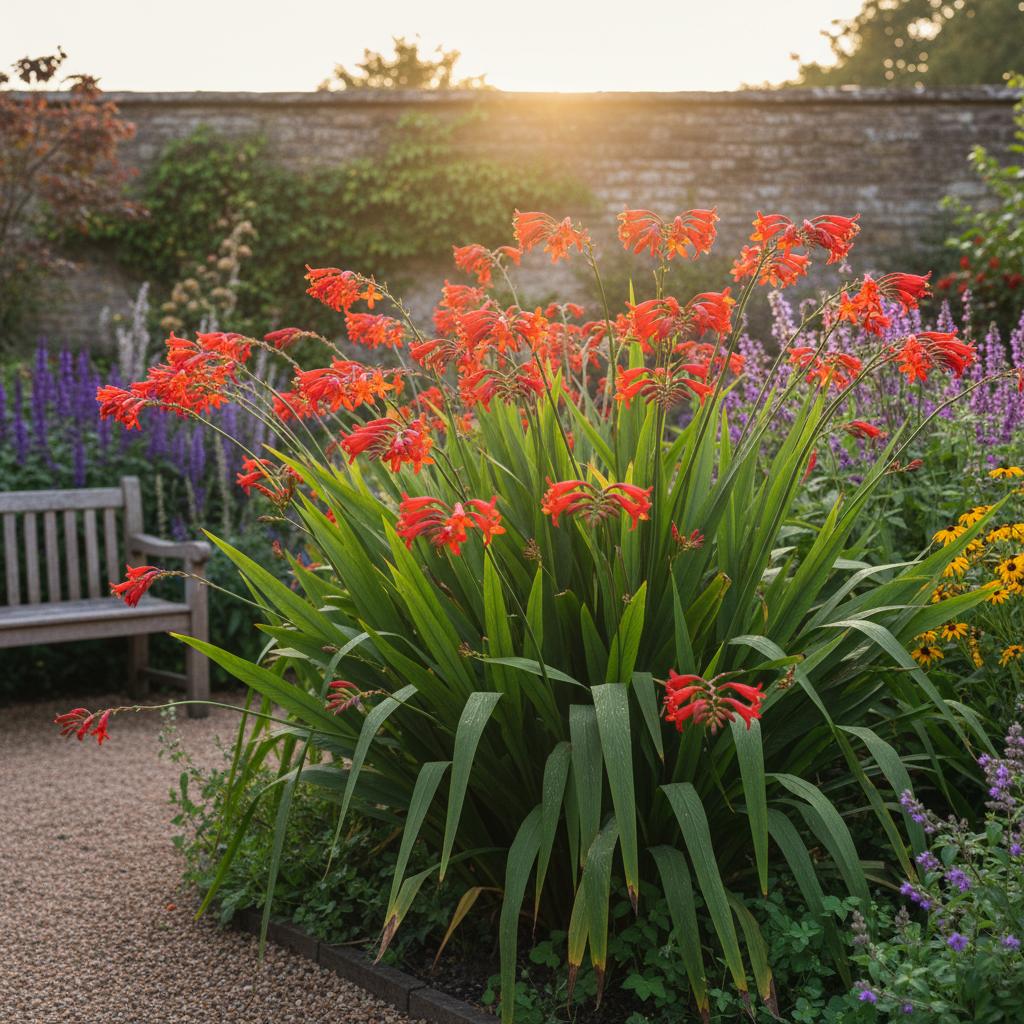
- Leaves: Sword-shaped, mid-green, pleated, erect leaves forming dense clumps;
- Flowers: Funnel-shaped, bright orange, red, or yellow, arranged in branched, arching spikes (panicles);
- Roots: Produces chains of underground corms that multiply rapidly.
Care Guide
Watering
Water regularly during active growth and blooming.
Fertilization
Apply a balanced fertilizer as new growth appears.. Fertilize monthly during the growing season.
Banana Peel Tea:Steep chopped banana peels in water for 24-48 hours. Dilute 1:1 with water and apply to the base of the plant to boost flower production. Discard solids in compost to avoid attracting pests.Pruning
- Cut back faded flower spikes to the foliage to tidy the plant;
- Leave foliage intact until it dies back naturally in late autumn to nourish the corms;
- Divide congested clumps every 3-4 years in early spring to maintain vigor.
Toxicity
Warning: this plant may be toxic.
Pets & Humans
Pets: Non-toxic to cats per ASPCA guidelines, but ingestion of plant material may cause mild, self-limiting vomiting.
Humans: Generally considered non-toxic to humans, though ingesting large amounts of corms may cause mild stomach upset.
Garden Uses & Culture
Culture: Highly popular in Victorian and Edwardian English gardens, often planted in herbaceous borders for late summer color.
Usage: Excellent as cut flowers for floral arrangements; widely used in garden borders to attract hummingbirds and pollinators.