 PlantFun
Plant Needs
Sunlight
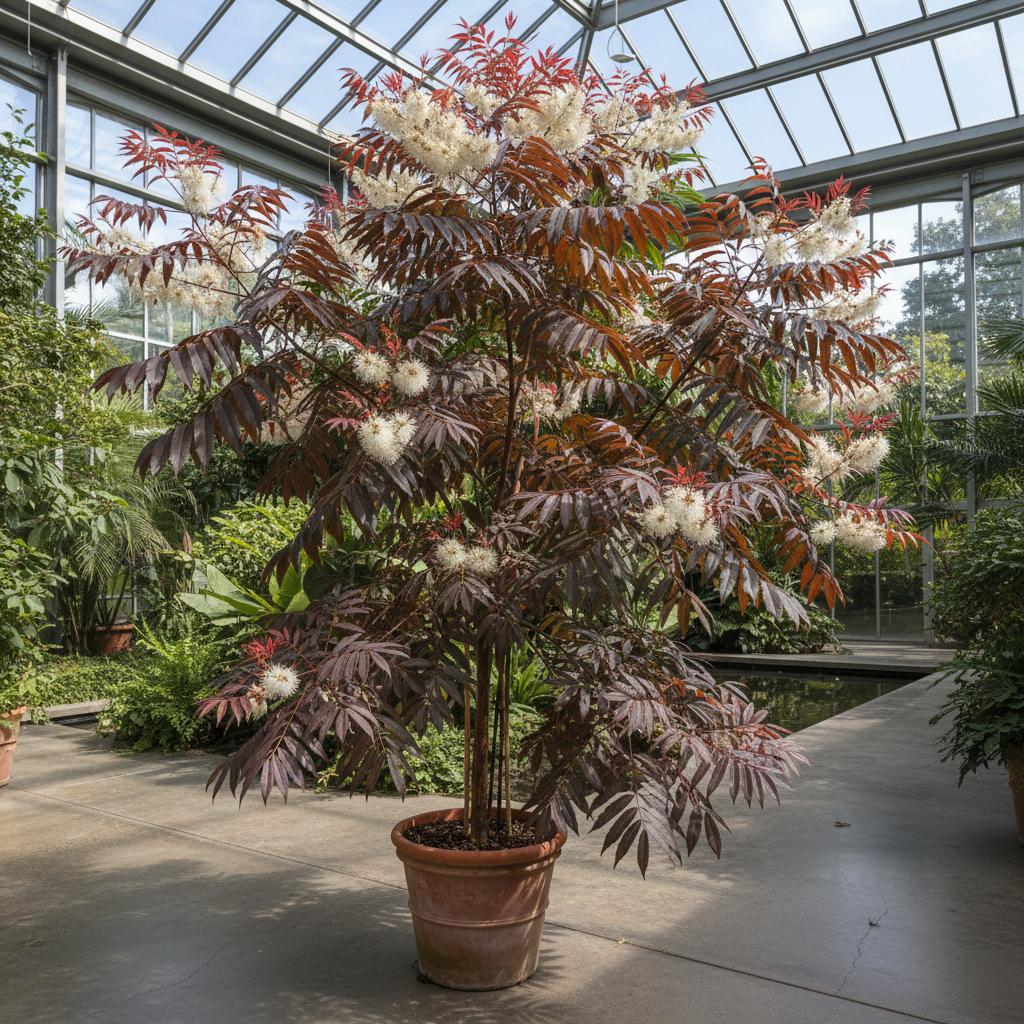
Requires full sun to partial shade to maintain its vibrant purplish foliage coloration.
Watering
Prefers moderate watering; requires highly well-draining soil to prevent root rot, mimicking its native rocky habitat.
Temperature
Thrives in tropical to subtropical climates; not frost-tolerant.
Characteristics
- Leaves: Opposite, simple or pinnately compound, leathery texture, margins serrate, exhibiting a distinct purplish or reddish-bronze tinge, especially on new growth;
- Flowers: Inflorescence in dense, spike-like racemes resembling a bottle-brush, flowers small, purplish-red to pinkish, with prominent exserted stamens;
- Stem: Woody, reddish-brown bark, featuring prominent, spoon-shaped stipules at the nodes which are characteristic of the family.
Care Guide
Watering
Water thoroughly when the top two inches of soil feel dry.
Fertilization
Apply a light, low-phosphorus organic top dressing.. Adapted to nutrient-poor soils; avoid heavy chemical fertilizers, especially those high in phosphorus.
Coffee Grounds Tea:Steep used coffee grounds in water overnight, strain, and use the liquid to water the plant. This provides a gentle nitrogen boost and helps maintain the slight soil acidity it prefers without overloading it with phosphorus.Pruning
- Prune lightly immediately after flowering to maintain a compact shape;
- Remove any dead, diseased, or crossing branches to improve air circulation;
- Avoid heavy pruning, as it may reduce the next season's blooms.
Toxicity
Warning: this plant may be toxic.
Pets & Humans
Pets: No known toxicity to cats.
Humans: No known toxicity; generally considered safe for humans.
Garden Uses & Culture
Culture: N/A
Usage: - **Ornamental**: Cultivated in specialized botanical gardens and collections for its striking purple foliage and unique flowers; - **Ecological**: Plays a role in the native maquis ecosystem of New Caledonia, providing habitat and resources for local fauna.