 PlantFun
Plant Needs
Characteristics
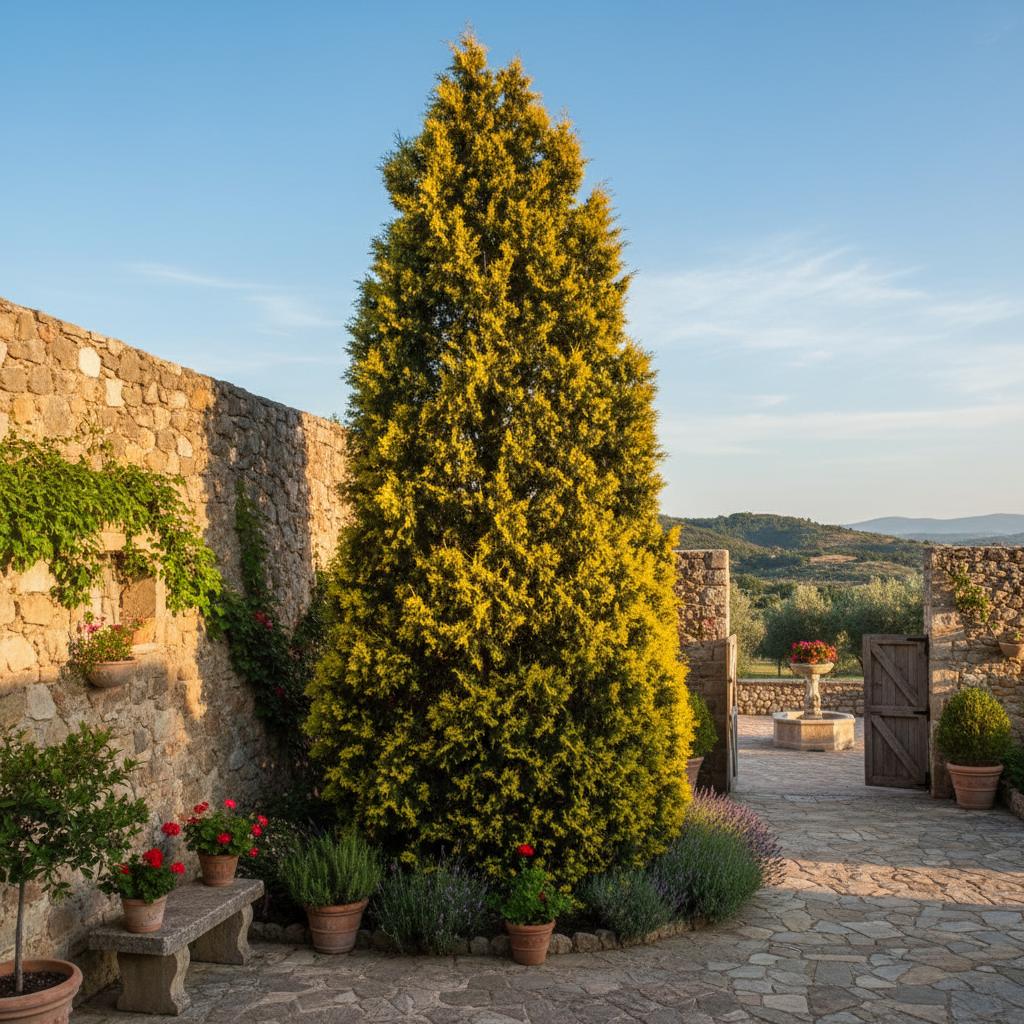
- Leaves: Scale-like, 2-5 mm long, produced on rounded shoots, dark green and tightly appressed.
- Cones: Seed cones are ovoid or globose, 25-40 mm long, with 10-14 scales, green turning brown at maturity.
- Bark: Grayish-brown, shallowly fissured and peeling in longitudinal strips.
- Habit: Typically narrowly columnar or fastigiate in cultivation, forming a dense, spire-like crown.
Care Guide
Water deeply once every 1-2 weeks for young plants; mature plants rely on rainfall.
Apply a balanced slow-release fertilizer at the base before new growth begins if soil is very poor.. Generally does not require heavy fertilization; over-fertilizing can lead to weak, leggy growth.
Coffee Grounds and Eggshells:Mix dried coffee grounds and crushed eggshells into the topsoil around the drip line to provide a slow release of nitrogen and calcium. Avoid applying too close to the trunk.- Timing: Prune in late winter or early spring before new growth starts.
- Shaping: Lightly shear the outer foliage to maintain the tight columnar shape if desired.
- Health: Remove any dead, diseased, or broken branches promptly to maintain airflow.
- Caution: Do not cut into old wood that has no green needles, as it will not regrow.
Toxicity
Warning: this plant may be toxic.
Pets: Non-toxic per ASPCA guidelines; ingestion of foliage may cause mild mechanical irritation.
Humans: Generally non-toxic; pollen may cause mild respiratory allergies in sensitive individuals.
Garden Uses & Culture
Culture: In Western classical antiquity, the cypress was a symbol of mourning and the underworld, often planted in cemeteries and associated with Hades.
Usage: Widely used as an ornamental tree, for windbreaks, privacy screens, and its durable, scented wood is used in cabinetry and doors.