 PlantFun
Plant Needs
Sunlight
Requires full sun for the best foliage color and prolific blooming.
Watering
Keep soil consistently moist but well-drained; do not allow tubers to sit in waterlogged soil.
Temperature
Thrives in warm summer temperatures; frost-tender and tubers must be lifted and stored in cold climates before the first hard freeze.
Characteristics
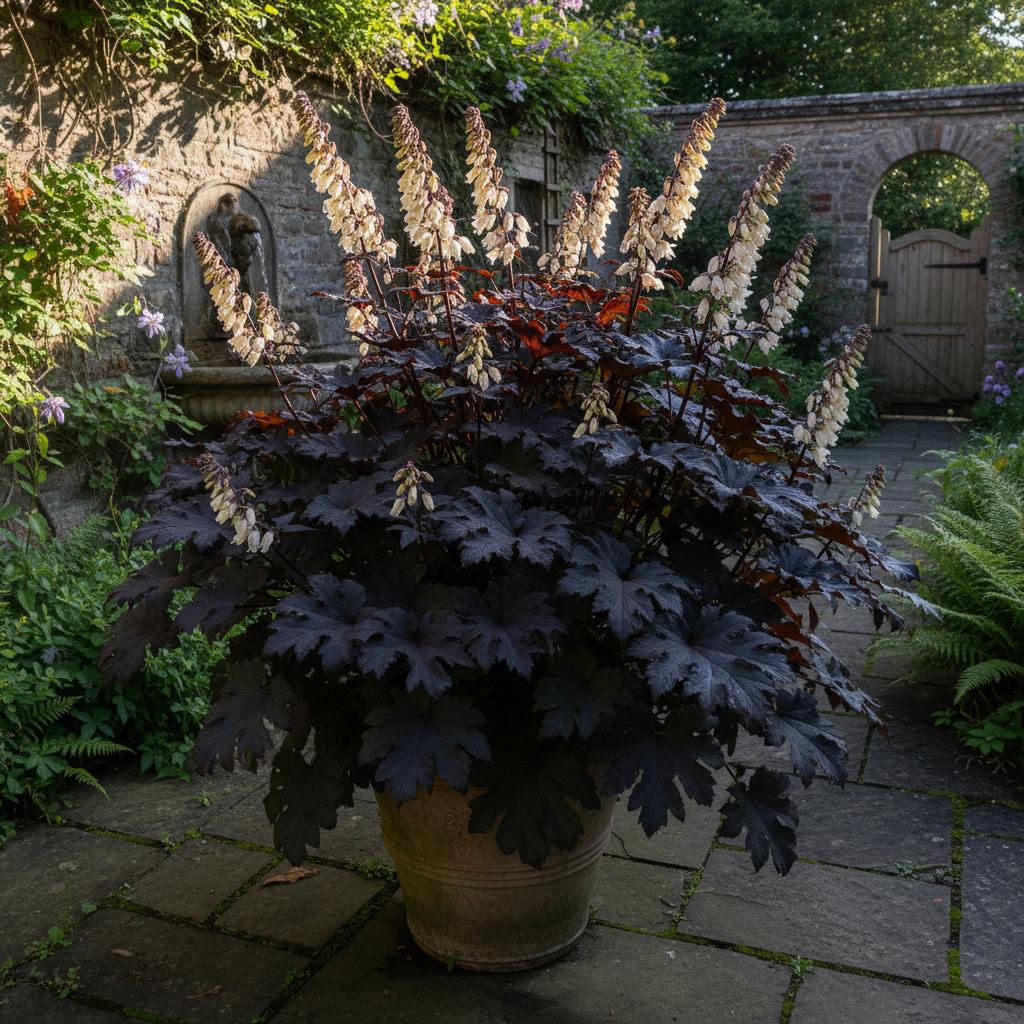
- Leaves: Pinnately compound, deeply lobed, featuring a striking dark purplish-black to bronze-black coloration;
- Flowers: Single to semi-double blooms, deep velvety maroon to near-black petals contrasting with bright golden-yellow central disc florets;
- Stems: Upright, sturdy, and dark-tinted, requiring staking in windy areas;
- Roots: Fleshy tuberous roots used for energy storage and overwintering.
Care Guide
Watering
Water deeply 2-3 times a week during active growth and blooming, especially in dry spells.
Fertilization
Apply a balanced fertilizer when planting tubers.. Avoid high nitrogen, which leads to weak stems and poor flower production.
Banana Peel Tea:Steep chopped banana peels in water for 24-48 hours. Dilute 1:1 with water and apply to the base of the plant to encourage robust blooming. Discard peels in compost to avoid attracting pests.Pruning
- Pinching: Pinch out the center shoot when the plant is about 30 cm tall to encourage branching and a bushier habit;
- Deadheading: Regularly remove spent flowers to prolong the blooming period and redirect energy;
- Disbudding: For larger exhibition-size blooms, remove the side buds leaving only the terminal bud on each stem.
Toxicity
Warning: this plant may be toxic.
Pets & Humans
Pets: Toxic to cats per ASPCA; may cause mild gastrointestinal upset and dermatitis.
Humans: May cause mild skin irritation upon contact with foliage; tubers are generally non-toxic but not recommended for consumption.
Garden Uses & Culture
Culture: In Victorian floriography, the dahlia represents elegance, inner strength, and a lasting bond or commitment.
Usage: Excellent for dramatic contrast in ornamental borders, cottage gardens, and as a striking cut flower in floral arrangements.