 PlantFun
Plant Needs
Characteristics
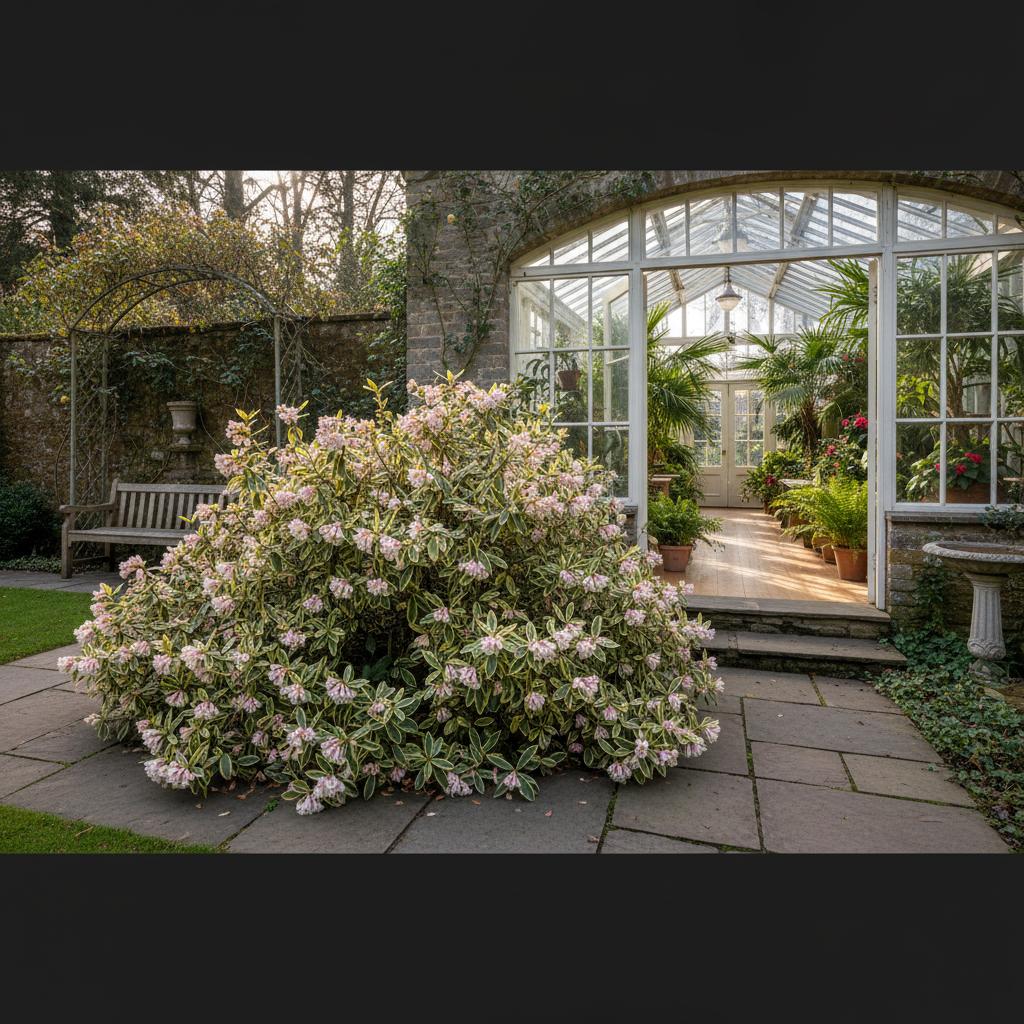
- Leaves: Evergreen, alternate, narrowly oval to lanceolate, glossy dark green, leathery, 7-9 cm long;
- Flowers: Borne in terminal clusters, highly fragrant, tubular with 4 spreading lobes, purplish-pink on the outside and pale pink to white inside;
- Stems: Moderately branched, grayish-brown bark, smooth, very fibrous;
- Fruits: Fleshy red berries, though rarely produced in cultivation.
Care Guide
Water moderately, allowing the soil to dry out slightly between waterings.
Apply a balanced, slow-release fertilizer immediately after flowering.. Requires minimal feeding; over-fertilization can damage the sensitive root system.
Coffee grounds topdressing:Sprinkle a very light layer of used, cooled coffee grounds around the drip line to maintain slight soil acidity and improve organic matter. Do not pile against the trunk.- Prune minimally, as Daphne is slow-growing and resents heavy cutting;
- Remove only dead, diseased, or broken branches;
- If shaping is necessary, do so immediately after flowering finishes in spring;
- Always use sterilized tools to prevent the spread of viral infections.
Toxicity
Warning: this plant may be toxic.
Pets: Highly toxic per ASPCA. Ingestion can lead to severe gastrointestinal distress, weakness, and potential fatality.
Humans: All parts are highly toxic, especially the berries and sap. Ingestion causes severe burning in the mouth and digestive tract, and the sap can cause severe contact dermatitis.
Garden Uses & Culture
Culture: In Victorian flower language, Daphne signifies "sweets to the sweet" or "I would not have you otherwise," celebrated for its intoxicating winter fragrance.
Usage: Excellent as a specimen plant near entryways or patios where its winter fragrance can be appreciated; also used in woodland gardens and foundation plantings.