 PlantFun
Plant Needs
Characteristics
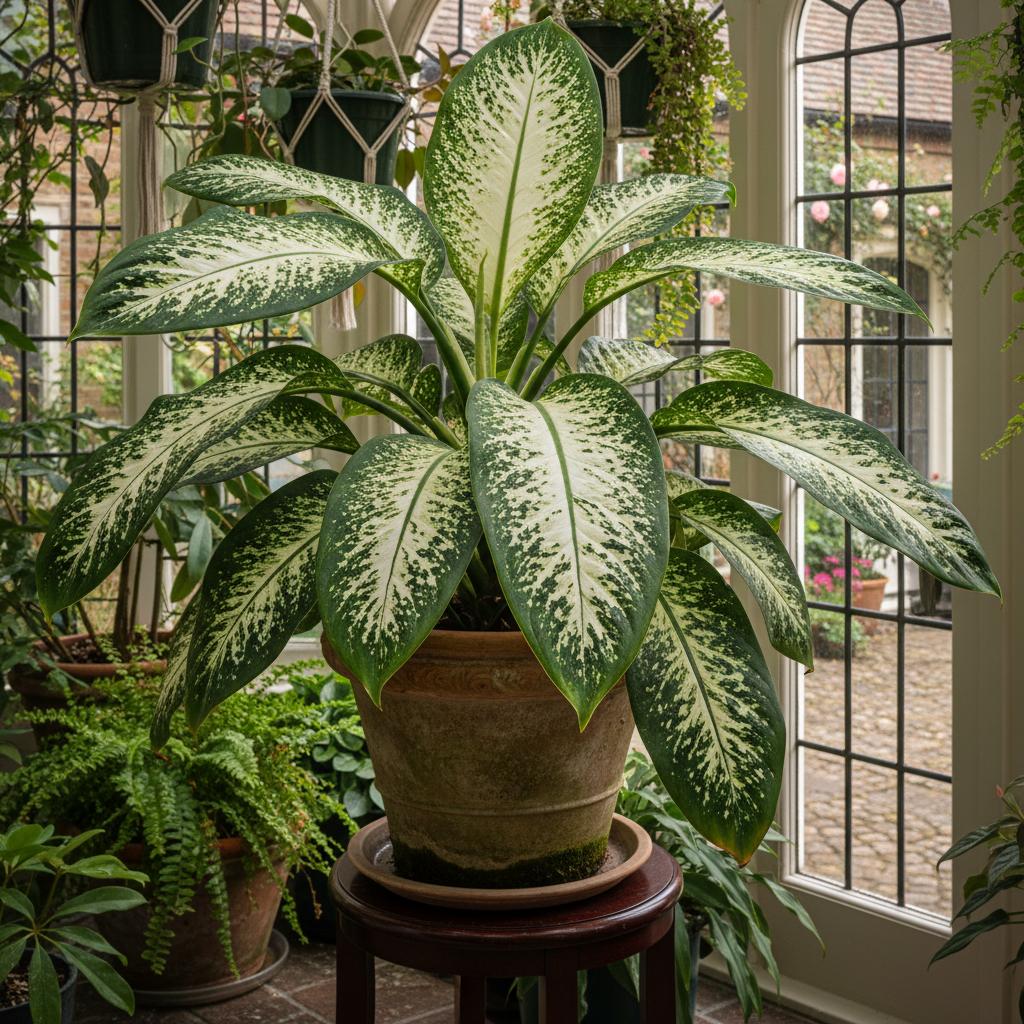
- Leaves: Large, ovate-oblong to lanceolate, featuring striking variegation with white, cream, or yellow spots and blotches along the midrib and lateral veins.
- Stems: Thick, fleshy, cane-like, unbranched, green, prominently displaying leaf scars as older, lower leaves naturally fall off.
- Flowers: Typical aroid inflorescence consisting of a green spathe enclosing a white to cream spadix; rarely produced in indoor cultivation.
- Roots: Thick, fleshy fibrous root system adapted to loose, well-aerated tropical soils.
Care Guide
Water thoroughly when the top inch of soil feels dry.
Apply a balanced, diluted fertilizer to support active foliage growth.. Do not fertilize during the winter months when plant growth naturally slows down.
Aquarium Water:Use water from routine freshwater aquarium changes to water the plant. It provides gentle, natural nitrogen for lush foliage. Ensure the water has no added salts or fish medications.- Always wear thick gloves when pruning to protect skin from the irritating sap.
- Remove yellowing or dying lower leaves by cutting them close to the main stem.
- Cut back leggy or overgrown canes to a few inches above the soil line to encourage bushy new growth.
- Sterilize pruning shears before and after use to prevent the spread of bacterial diseases.
Toxicity
Warning: this plant may be toxic.
Pets: Toxic to cats per ASPCA, causing intense oral irritation and gastrointestinal distress.
Humans: Contains insoluble calcium oxalate crystals and proteolytic enzymes causing severe oral pain and swelling.
Garden Uses & Culture
Culture: Popularized during the Victorian era in Europe and the Americas as a robust parlor plant that could withstand the dim, coal-heated environments of 19th-century homes.
Usage: Primarily grown as an ornamental houseplant; noted for its ability to improve indoor air quality by filtering out certain volatile organic compounds.