 PlantFun
Plant Needs
Characteristics
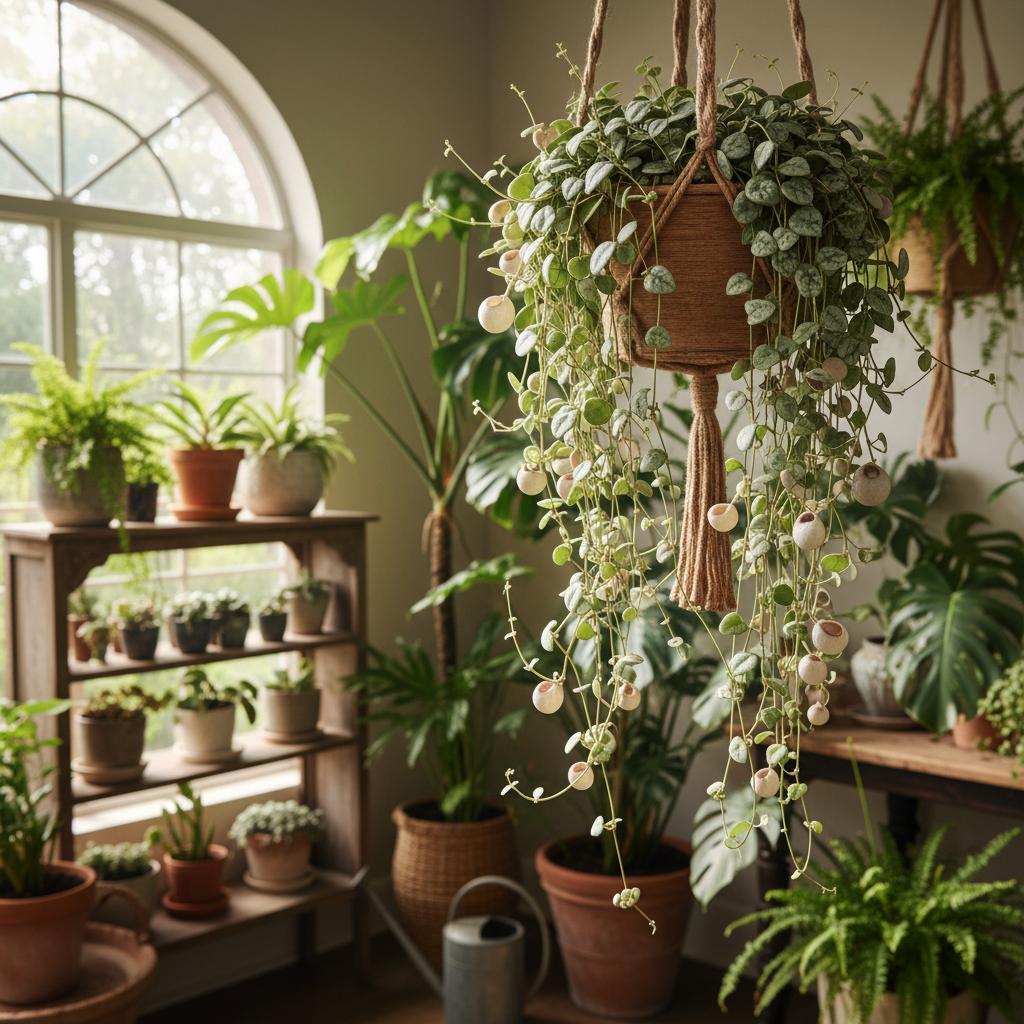
- Leaves: Opposite, fleshy, round to broadly ovate, resembling small coins, pale green to yellowish-green, about 1 cm in diameter;
- Flowers: Very small, urn-shaped, white to pale yellow, borne in umbel-like clusters at the leaf axils;
- Stems: Slender, trailing or climbing, producing adventitious roots at the nodes to cling to surfaces.
Care Guide
Water thoroughly when the medium is dry, ensuring excess water drains away completely.
Apply a balanced, water-soluble fertilizer diluted to quarter strength.. Epiphytes require very little fertilizer; over-fertilizing can burn the delicate roots.
Banana Peel Tea:Soak chopped banana peels in water for 24 hours, strain, and dilute 1:1 with water. Use this liquid to water the plant to support root health and foliage vigor. Discard the solid peels in the compost to prevent pests and odors indoors.- Trim excessively long or leggy stems to encourage branching and a fuller appearance;
- Remove any dead, yellowing, or shriveled leaves and stems to maintain plant hygiene;
- Propagate healthy stem cuttings by laying them on moist sphagnum moss.
Toxicity
Warning: this plant may be toxic.
Pets: Generally considered non-toxic to cats per ASPCA guidelines, though ingestion of large amounts may cause mild, self-limiting GI upset.
Humans: The plant exudes a milky sap when broken, which can cause mild skin irritation or gastrointestinal upset if ingested.
Garden Uses & Culture
Culture: Popular in Western indoor gardening for its cascading, architectural form, often featured in modern minimalist decor and hanging planters.
Usage: Ideal for hanging baskets, mounted on cork bark, or grown in large, well-ventilated terrariums.