 PlantFun
Plant Needs
Sunlight
Prefers bright, indirect light; direct sunlight will scorch the leaves, while too little light causes weak growth and loss of color.
Watering
If grown in water, change the water completely every 1-2 weeks. If in soil, keep evenly moist but not waterlogged.
Temperature
Thrives in warm room temperatures; highly sensitive to cold drafts and temperatures below 10°C (50°F).
Characteristics
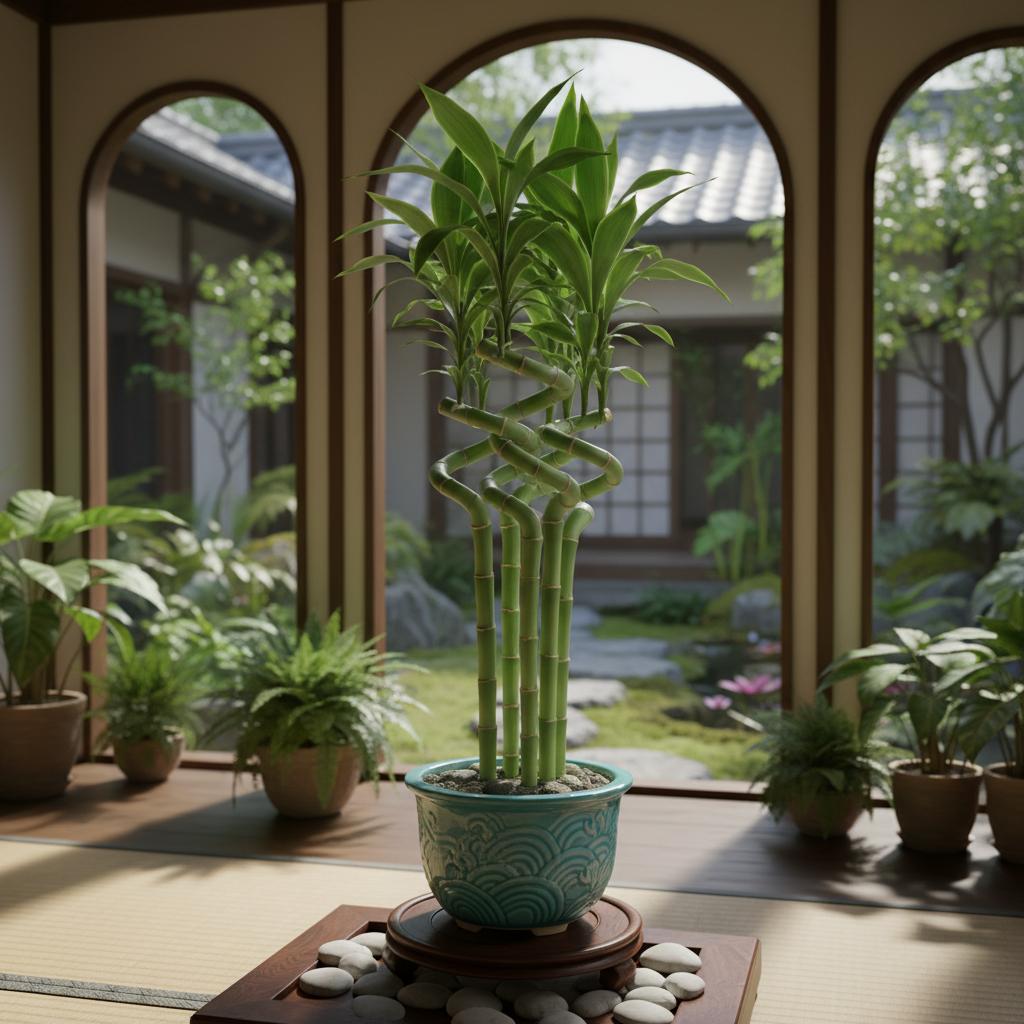
- Leaves: Lanceolate to ovate-lanceolate, 15-25 cm long, grayish-green, slightly twisted, often with white or pale green margins in cultivated varieties;
- Stems: Fleshy, segmented, upright but flexible, resembling bamboo culms, green and glabrous;
- Flowers: Small, white, tubular, borne in short terminal clusters (extremely rare in indoor cultivation);
- Roots: Fibrous, often reddish or orange when healthy, highly adaptable to aquatic environments.
Care Guide
Watering
Keep soil consistently moist or maintain clean water levels in vases.
Fertilization
Apply a very weak liquid fertilizer if grown in soil.. Extremely light feeder; over-fertilization will quickly burn the roots and yellow the leaves.
Aquarium Water:Use old aquarium water when changing your fish tank. It provides gentle, natural nitrates perfect for water-grown or potted Dracaena. Ensure the water is at room temperature and free of harsh water-treatment chemicals.Pruning
- Remove any yellowing or dead leaves by peeling them gently downward from the stem;
- Trim the top of the main stem to control height and encourage new side shoots;
- Cut away any mushy or brown roots if growing in water to prevent rot.
Toxicity
Warning: this plant may be toxic.
Pets & Humans
Pets: Toxic per ASPCA. Ingestion causes vomiting (occasionally with blood), depression, anorexia, hypersalivation, and dilated pupils.
Humans: Contains steroidal saponins; ingestion may cause mild gastrointestinal irritation, nausea, or vomiting.
Garden Uses & Culture
Culture: N/A
Usage: Popular indoor ornamental plant, often grown hydroponically in glass vases or arranged in decorative containers for homes and offices.