 PlantFun
Plant Needs
Sunlight
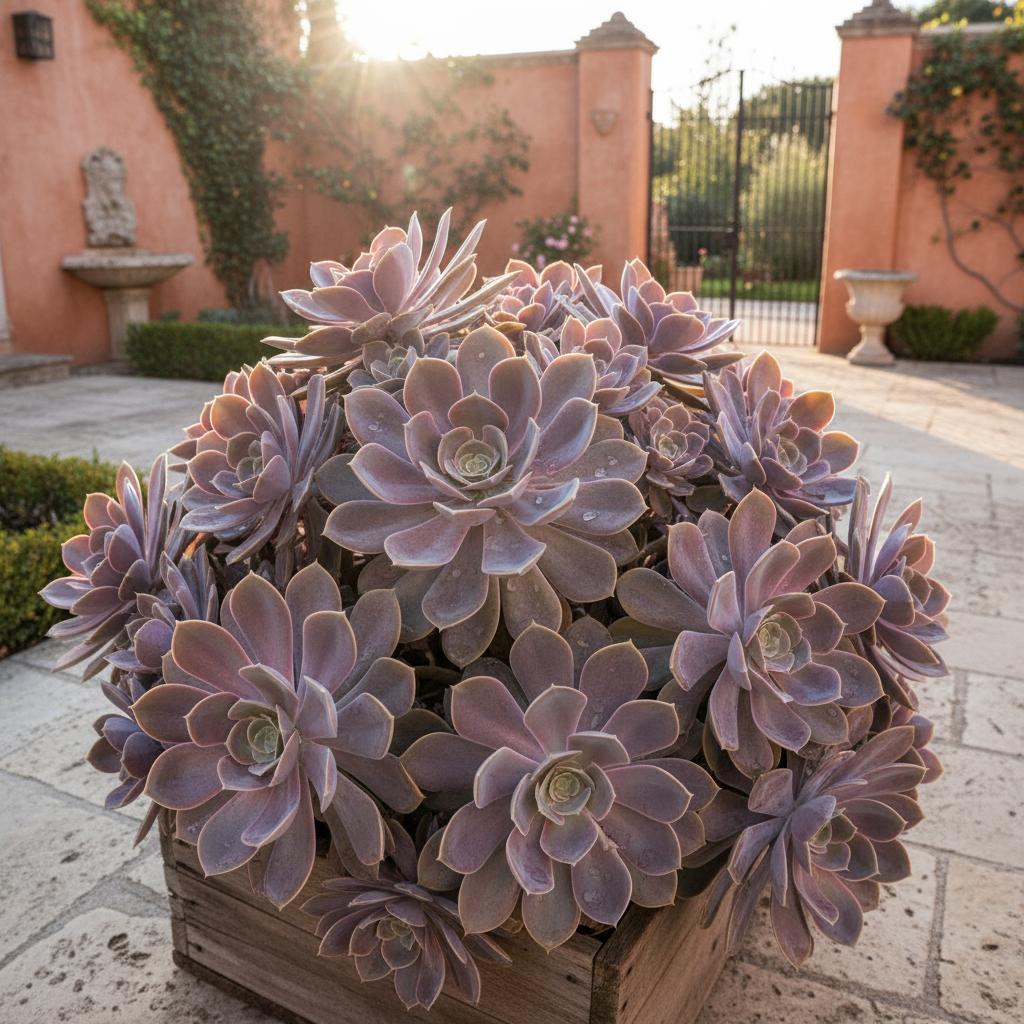
Requires bright, direct sunlight to maintain its compact rosette shape and vibrant purple-pink coloration.
Watering
Water thoroughly only when the soil is completely dry (soak and dry method).
Temperature
Prefers warm temperatures; not frost-tolerant and should be protected from freezing.
Characteristics
- Leaves: Fleshy, spatulate to obovate, forming a solitary rosette, grayish-brown to purplish-pink with powdery white epicuticular wax (farina);
- Flowers: Bell-shaped, coral pink on the outside and yellow inside, borne on a 30 cm tall reddish raceme;
- Stem: Short, stout, becoming visible as lower leaves are shed over time.
Care Guide
Watering
Water deeply when the soil is 100% dry.
Fertilization
Apply a diluted, low-nitrogen succulent fertilizer once.. Fertilize sparingly during the active growing season.
Banana Peel Tea:Soak chopped banana peels in water for 24-48 hours, strain, and dilute 1:1 with water. Use during the growing season to support root health and blooming. Avoid leaving solid peels on the soil to prevent fungus gnats.Pruning
- Gently remove dried, dead leaves from the bottom of the rosette to prevent rot and pest hiding spots;
- If the stem becomes too tall and bare (leggy), behead the rosette, let it callous for a few days, and replant in fresh soil;
- Snip off flower stalks at the base once blooms have faded to redirect energy to the plant.
Toxicity
Warning: this plant may be toxic.
Pets & Humans
Pets: Non-toxic per ASPCA.
Humans: Non-toxic to humans.
Garden Uses & Culture
Culture: A classic staple in Western succulent collections and bridal bouquets due to its elegant, rose-like geometry and pastel colors.
Usage: Container gardens, rockeries, wedding floral arrangements, windowsill decor.