 PlantFun
Plant Needs
Characteristics
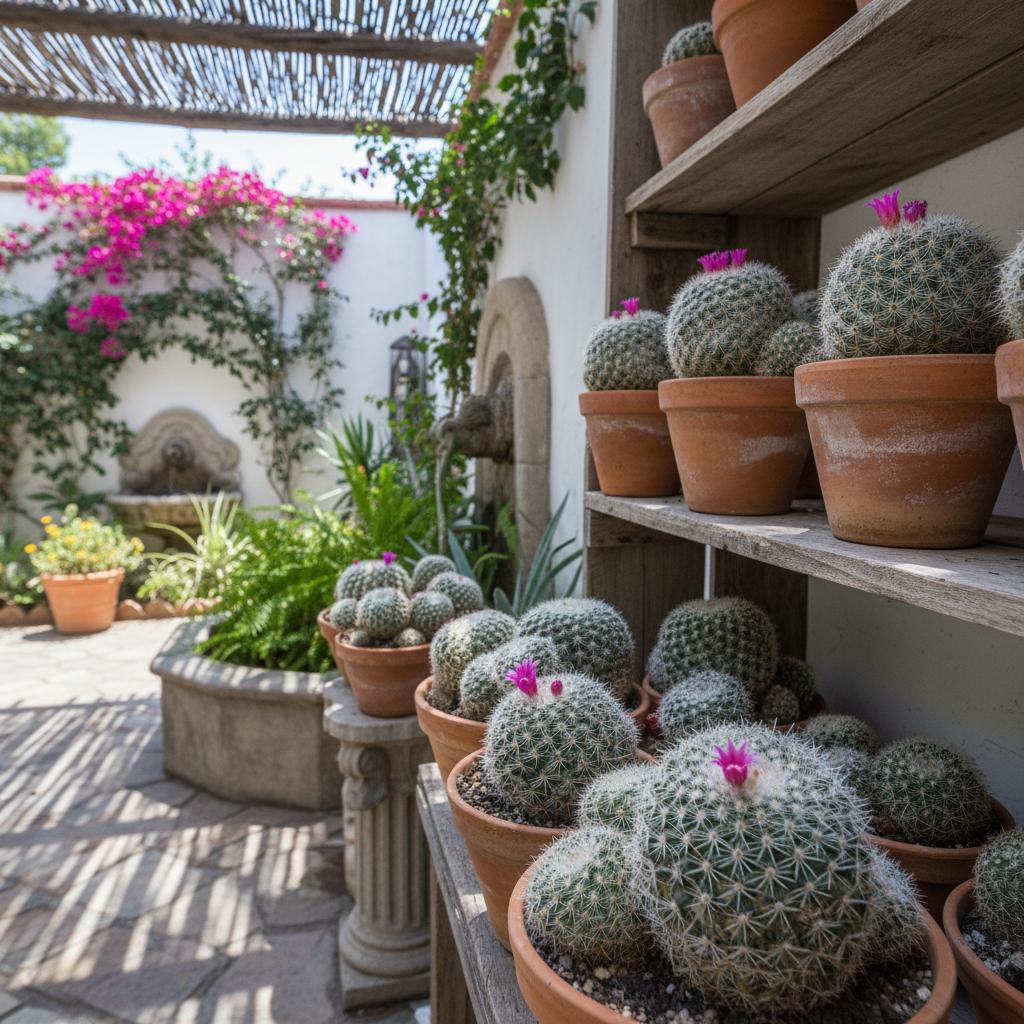
- Stem: Globose to slightly cylindrical, highly depressed at the apex, typically 1 to 5 cm in diameter, completely obscured by spines;
- Spines: Densely covered in tiny, chalky-white radial spines (usually 20-40 per areole) that lie flat against the stem;
- Flowers: Small, pale pink to whitish, 3-6 mm in diameter, emerging from the woolly apex of the plant;
- Fruit: Small, bright red, club-shaped berries that protrude prominently from the white spines when ripe.
Care Guide
Water thoroughly but infrequently, allowing the soil to dry out completely between waterings.
Apply a diluted, low-nitrogen fertilizer once at the beginning of the growing season.. Fertilization recommendations description
Banana Peel Tea:Soak dried banana peels in water for 24-48 hours. Dilute the liquid 1:1 with water and apply during the active growing season to support root health and flowering. Avoid using the solid peels on the soil surface to prevent fungal gnats and rot.- Pruning is not required for this miniature cactus;
- Gently remove dried, spent flowers or shriveled fruits from the apex using tweezers to maintain a clean appearance;
- Avoid damaging the delicate woolly crown during cleaning.
Toxicity
Warning: this plant may be toxic.
Pets: Non-toxic per ASPCA guidelines for most Cactaceae. Spines are relatively soft but can cause mild mechanical irritation if chewed.
Humans: No known chemical toxicity; fruits are technically edible but extremely small. Spines may cause minor mechanical irritation.
Garden Uses & Culture
Culture: Highly prized in Western cactus collecting communities for its perfect geometric symmetry and miniature size, often featured in specialized succulent exhibitions.
Usage: - Cultivated as a specimen plant in miniature succulent collections; - Ideal for small decorative pots and windowsill gardens.