 PlantFun
Plant Needs
Characteristics
- Leaves: Narrow, lanceolate to linear, 2-8 cm long, entire or slightly toothed margins, often covered with fine bipartite hairs giving a slightly grayish-green appearance;
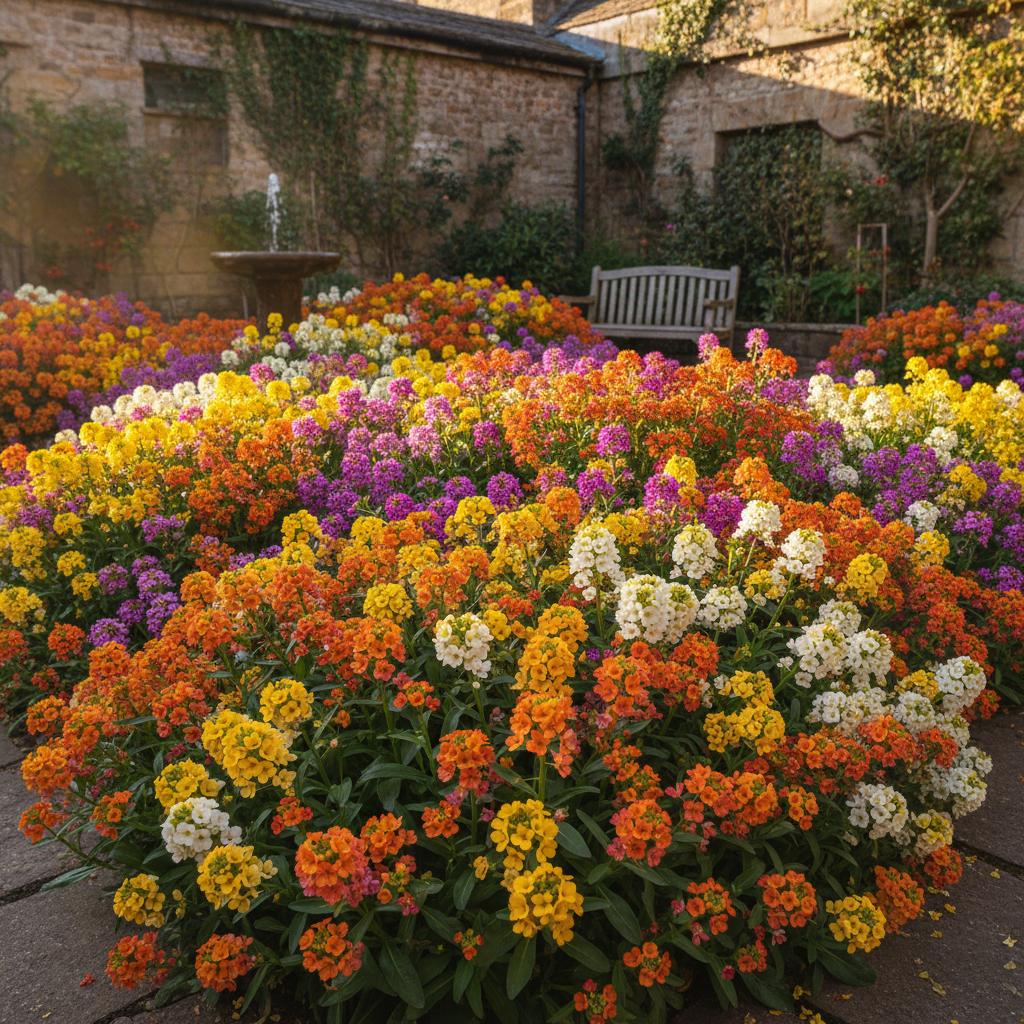
- Flowers: Terminal racemes of highly fragrant, four-petaled cross-shaped flowers, typically 1.5-2.5 cm across, in shades of yellow, orange, red, or purple;
- Stems: Erect, branching, often becoming woody at the base in older plants;
- Fruit: Narrow, elongated siliques (seed pods) 3-7 cm long, containing numerous small seeds.
Care Guide
Water moderately during active spring growth; reduce watering in summer as the plant may go dormant in heat.
Apply a light, balanced fertilizer once as new growth appears.. Avoid high-nitrogen fertilizers, which promote foliage at the expense of flowers.
Crushed Eggshell Powder:Wash, dry, and finely crush eggshells. Sprinkle around the base of the plant and gently scratch into the soil to provide calcium and slightly raise the soil pH, mimicking their native rocky cliff habitats.- Deadheading: Remove spent flower spikes promptly to encourage a second flush of blooms and prevent self-seeding;
- Shaping: Lightly trim back the foliage by one-third after the main flowering period to maintain a bushy, compact habit;
- Rejuvenation: Avoid cutting into old, woody stems at the base, as they may not regrow.
Toxicity
Warning: this plant may be toxic.
Pets: Highly toxic per ASPCA guidelines due to cardiac glycosides, which can cause severe heart arrhythmias and gastrointestinal issues.
Humans: Contains cardiac glycosides; ingestion of large amounts can cause gastrointestinal and cardiac distress.
Garden Uses & Culture
Culture: In Victorian floriography, the wallflower symbolizes "fidelity in adversity" because it naturally roots itself in the cracks of old stone walls and ruined buildings, blooming brightly despite harsh conditions.
Usage: Popular in rock gardens, raised beds, cottage gardens, and as fragrant cut flowers.