 PlantFun
Plant Needs
Sunlight
Requires full, direct sunlight for optimal growth and structural integrity.
Watering
Highly drought-tolerant; allow the soil to dry out completely between waterings.
Temperature
Thrives in hot climates; not frost-tolerant and must be protected from freezing temperatures.
Characteristics
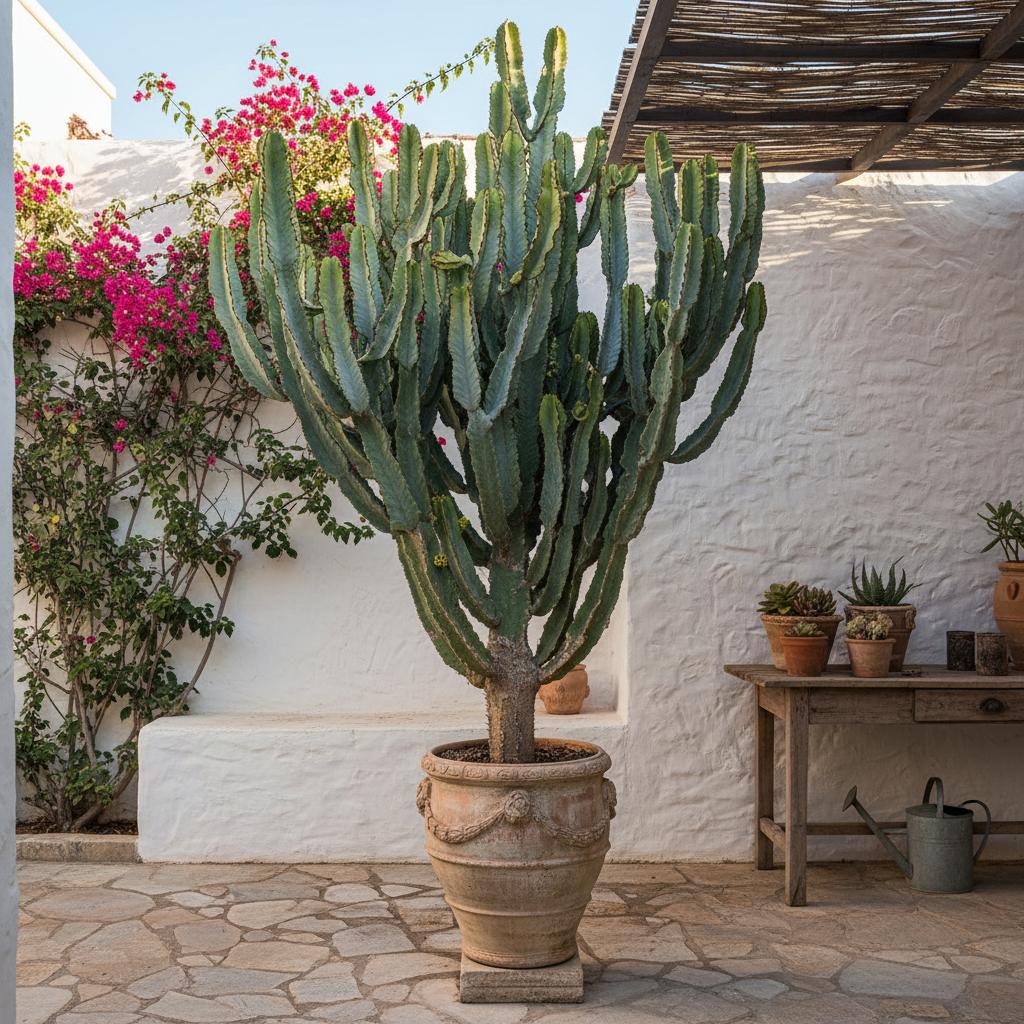
- Leaves: Small, lanceolate leaves appear briefly at the growing tips of young branches before falling off, leaving the plant largely leafless.
- Stems: Thick, fleshy, and deeply ribbed (usually 4-5 ribs), branching to form a candelabra shape; margins are armed with paired, dark brown spines.
- Flowers: Small, inconspicuous yellowish-green cyathia that appear near the tips of the upper branches.
- Sap: Produces a copious, milky white latex when cut or damaged, which is highly irritating and toxic.
Care Guide
Watering
Water deeply but infrequently, allowing the soil to completely dry out.
Fertilization
Apply a diluted, low-nitrogen succulent fertilizer once.. Do not fertilize during the dormant winter months.
Banana Peel Tea:Soak chopped banana peels in water for 24-48 hours. Dilute 1:1 with water before applying to the soil. Avoid applying too often to prevent salt buildup, and ensure the soil still dries out completely.Pruning
- Safety First: Always wear heavy gloves, long sleeves, and protective eyewear when pruning to avoid contact with the toxic, pressurized sap.
- Technique: Use a sterile, sharp knife or saw to remove damaged or overgrown arms at the joint.
- Sap Control: Spray the cut wounds immediately with cold water to coagulate the latex and stop the bleeding.
Toxicity
Warning: this plant may be toxic.
Pets & Humans
Pets: Highly toxic per ASPCA; exposure to sap causes severe dermal and oral irritation.
Humans: Highly toxic milky sap (latex) causes severe skin and eye irritation, and is toxic if ingested.
Garden Uses & Culture
Culture: Highly valued in modern Western xeriscaping and architectural landscape design for its dramatic, sculptural silhouette.
Usage: Used as a striking ornamental specimen plant in arid gardens, and historically planted as an impenetrable barrier hedge in its native range.