 PlantFun
Plant Needs
Sunlight
Requires full sun for best foliage color and compact growth.
Watering
Highly drought-tolerant once established; requires well-draining soil and infrequent watering.
Temperature
Prefers mild coastal climates; tolerates light frost but needs protection from hard freezes.
Characteristics
- Leaves: Glaucous (blue-green), alternate, entire, obovate to elliptic, fleshy, closely packed along the stems;
- Flowers: Cyathia surrounded by striking dark red to purple-black involucral glands, lacking true petals;
- Stems: Erect, fleshy, pale green to reddish, exuding a milky white latex when broken or damaged;
- Roots: Extensive creeping rhizomes adapted for stabilizing in shifting coastal sands.
Care Guide
Watering
Water deeply but infrequently, allowing the soil to dry out completely between waterings.
Fertilization
Apply a light, low-nitrogen fertilizer to encourage root and foliage health without excessive weak growth.. Requires very little fertilization; over-fertilizing can harm the plant.
Banana Peel Tea:Steep chopped banana peels in water for 24-48 hours, strain, and dilute 1:1 with water. Use sparingly to provide a gentle potassium boost for root strength. Discard solids in compost to avoid foul odors and pests.Pruning
- Safety first: Always wear thick gloves and protective eyewear when pruning to avoid contact with the toxic, irritating milky sap;
- Maintenance: Remove dead or dying stems at the base to encourage fresh basal growth;
- Cleanup: Wash any tools immediately after use to prevent the latex from hardening and rusting the metal.
Toxicity
Warning: this plant may be toxic.
Pets & Humans
Pets: Toxic per ASPCA (Euphorbia spp.). Ingestion causes gastrointestinal irritation, and sap causes dermal/eye irritation.
Humans: The milky sap (latex) is highly irritating to the skin and eyes, and toxic if ingested.
Garden Uses & Culture
Culture: N/A
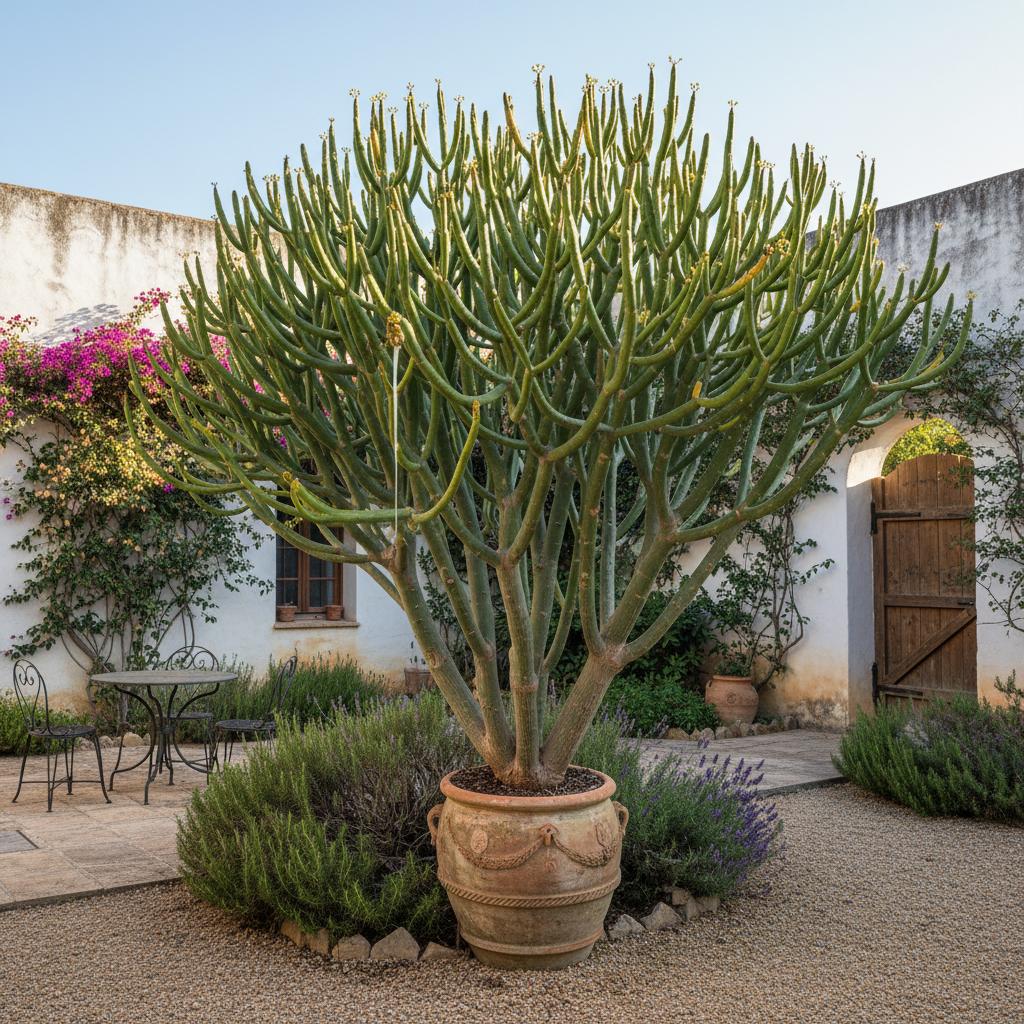
Usage: Excellent for coastal erosion control, xeriscaping, rock gardens, and as a striking architectural container plant.