 PlantFun
Plant Needs
Sunlight
Requires bright direct sunlight for best blooming and compact growth.
Watering
Highly drought tolerant; allow the soil to dry out completely between waterings.
Temperature
Thrives in warm temperatures; protect from frost and freezing drafts.
Characteristics
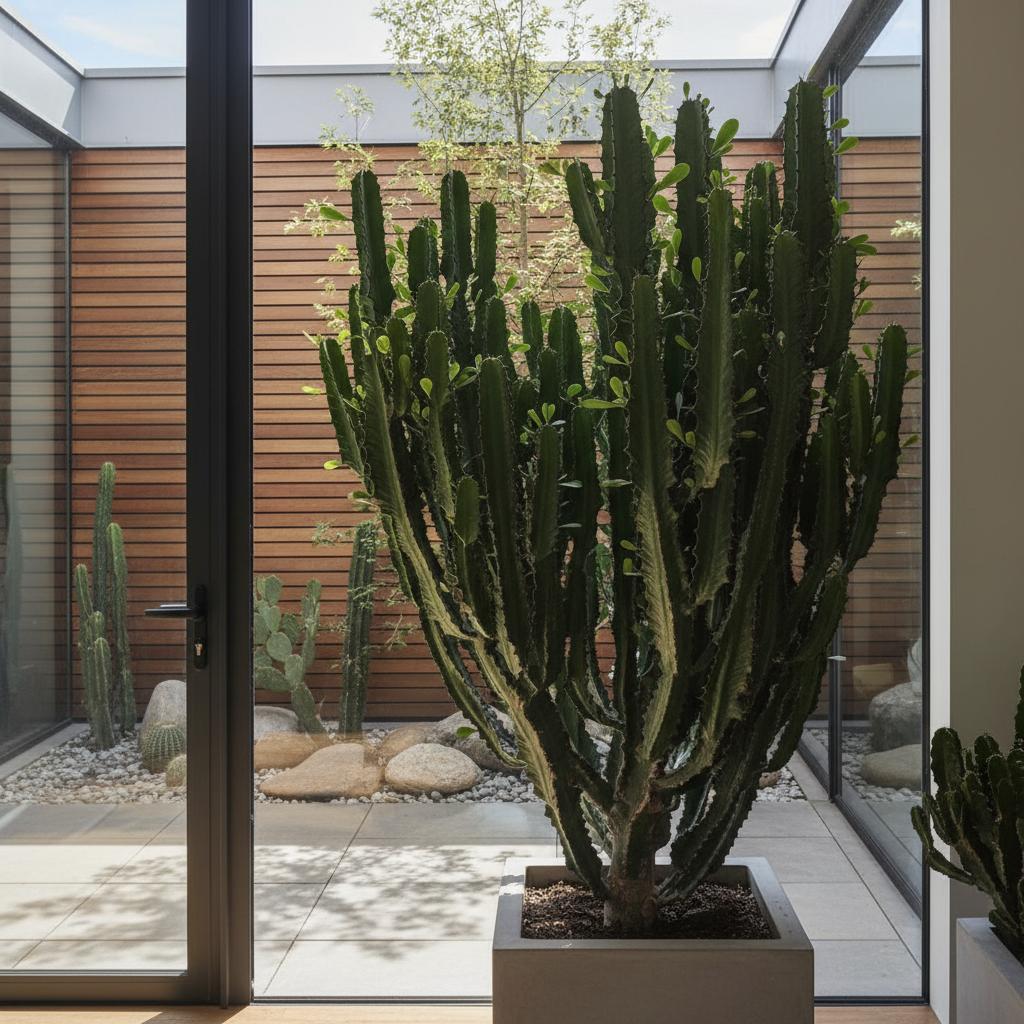
- Leaves: Obovate to spatulate, mostly found near the growing tips, dropping from older stems to conserve moisture;
- Stems: Fleshy, grayish-brown, heavily armed with sharp, tapering spines up to 3 cm long;
- Flowers: True flowers are small and inconspicuous (cyathia), surrounded by showy, petal-like red, pink, or yellow bracts.
Care Guide
Watering
Water thoroughly when the top inch of soil is dry.
Fertilization
Apply a diluted, balanced liquid fertilizer.. Feed only during active growth phases; suspend fertilization in winter.
Banana Peel Tea:Soak chopped banana peels in water for 48 hours, strain, and dilute 1:1 with water. Avoid using raw peels directly on soil to prevent pests and mold.Pruning
- Wear thick gloves and eye protection to avoid contact with toxic sap and sharp spines;
- Prune in early spring to maintain shape and encourage branching;
- Wipe pruning blades with rubbing alcohol after use to remove sticky latex.
Toxicity
Warning: this plant may be toxic.
Pets & Humans
Pets: Toxic per ASPCA. Ingestion causes oral and gastrointestinal irritation; dermal exposure causes skin/eye irritation.
Humans: Highly irritating toxic sap (latex) can cause severe contact dermatitis, blistering, and intense eye pain or injury.
Garden Uses & Culture
Culture: Associated with the Crown of Thorns worn by Jesus Christ in Christian tradition, symbolizing endurance and sacrifice.
Usage: Popular ornamental houseplant, barrier hedge in tropical climates, and xeriscape specimen.