 PlantFun
Plant Needs
Sunlight
Requires full, direct sunlight for optimal growth and spine coloration.
Watering
Highly drought-tolerant; water only when the soil is completely dry to the bottom of the pot.
Temperature
Thrives in extreme heat; protect from frost and freezing temperatures.
Characteristics
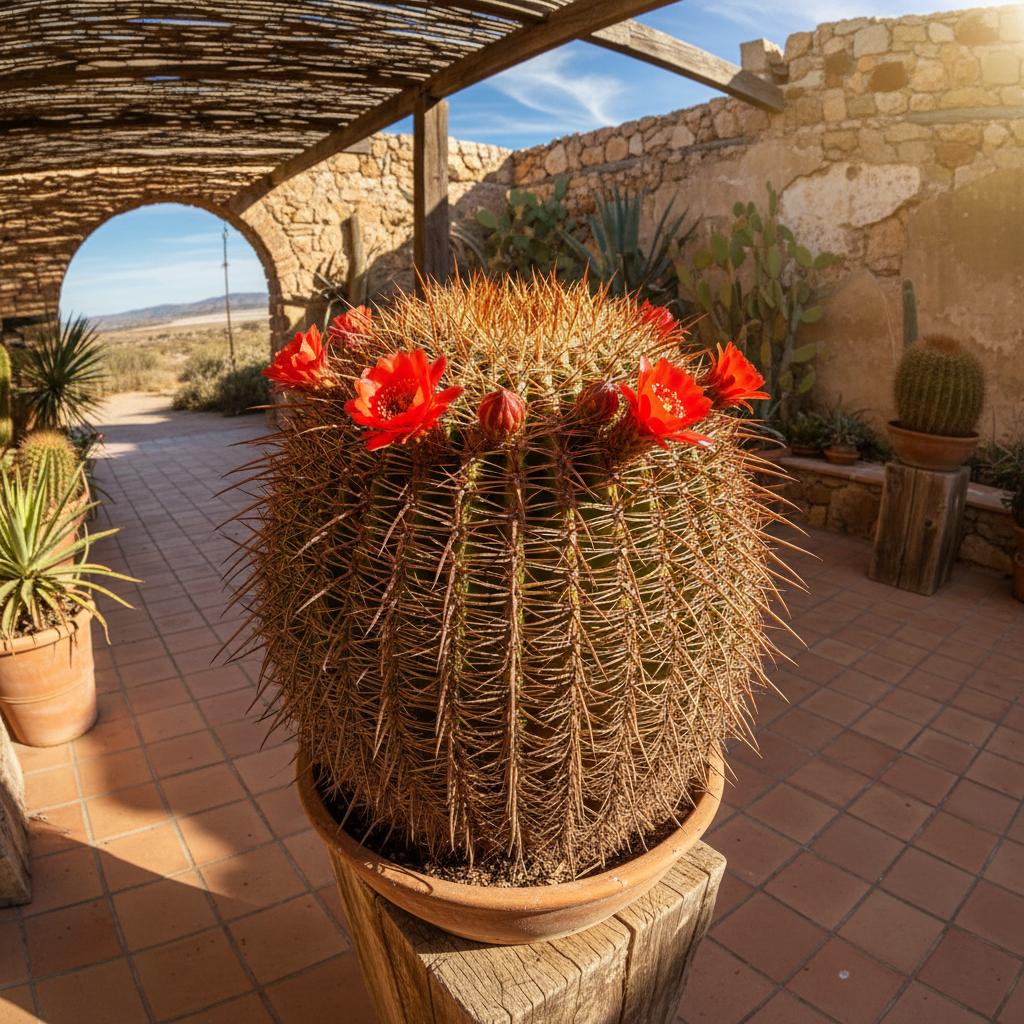
- Stem: Cylindrical, deep green, forming large clumps with age, featuring 13 to 20 prominent, acute ribs;
- Spines: Striking bright red to purplish-red central spines that are thick and awl-like, surrounded by radial spines often reduced to white, hair-like bristles;
- Flowers: Bell-shaped, yellow to orange-red, approximately 2.5 cm long, emerging in a ring at the crown of the plant;
- Fruit: Yellowish, fleshy, barrel-shaped, containing numerous small black seeds.
Care Guide
Watering
Water deeply but infrequently, allowing soil to dry completely between waterings.
Fertilization
Apply a diluted, low-nitrogen fertilizer once.. Fertilization recommendations description
Banana Peel Tea:Soak chopped banana peels in water for 24-48 hours, strain, and dilute 1:1 with water. Apply during the active summer growing season to support root health and spine development. Discard the solid peels in compost; do not leave raw peels on the soil surface to avoid attracting pests or causing fungal issues.Pruning
- Pruning is generally not required for this species;
- Carefully remove any dead debris or fallen leaves that accumulate between the ribs or at the base to prevent rot and pest harboring;
- Always wear thick, puncture-resistant gloves when handling.
Toxicity
Warning: this plant may be toxic.
Pets & Humans
Pets: Non-toxic per ASPCA guidelines, but sharp spines can cause severe puncture wounds to eyes and skin.
Humans: Non-toxic chemically, but poses a high risk of mechanical injury due to sharp, rigid spines.
Garden Uses & Culture
Culture: In North American desert landscaping, barrel cacti symbolize endurance, resilience, and the harsh, untamed beauty of the arid frontier.
Usage: - Ornamental landscaping in xeriscapes and rock gardens; - Natural barrier or security planting due to its formidable spines; - Potted specimen for patios and greenhouses.