 PlantFun
Plant Needs
Sunlight
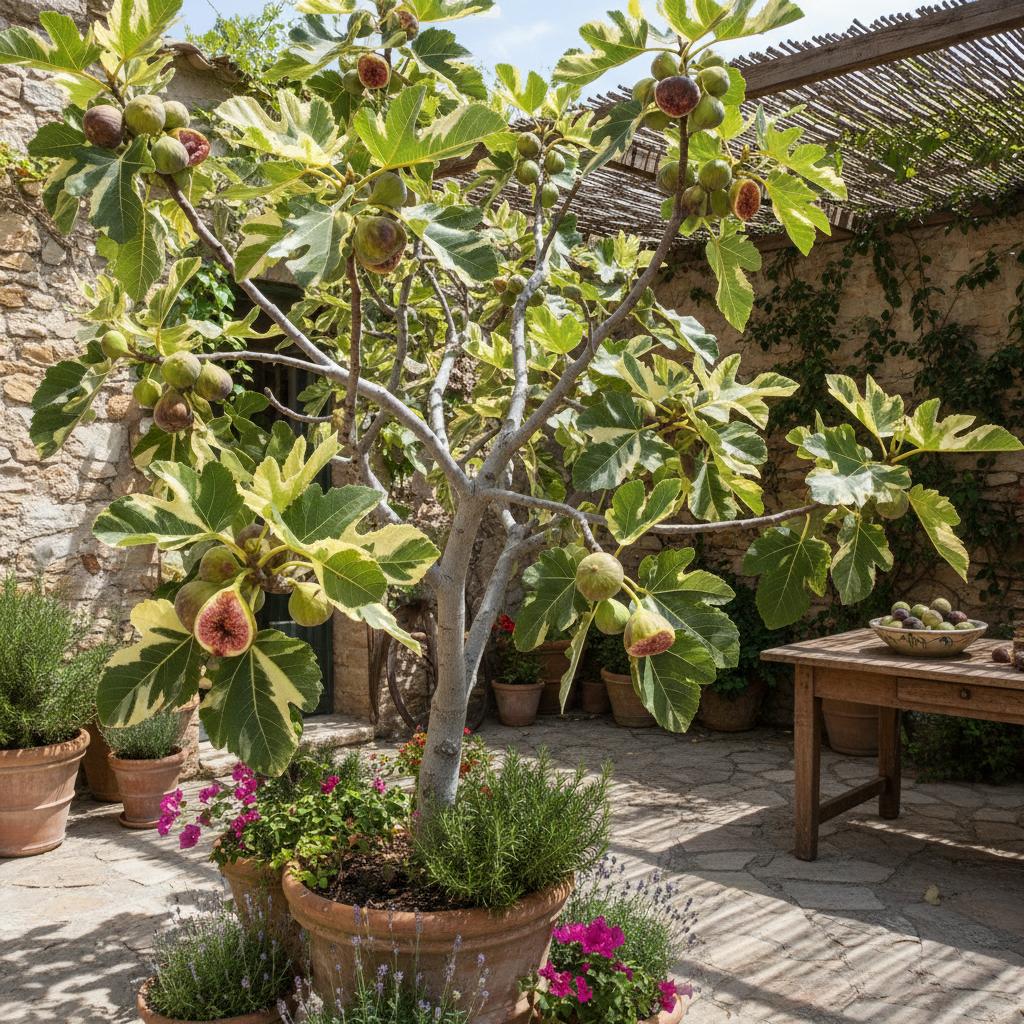
Requires full sun for optimal fruit ripening and to maintain the distinct striping.
Watering
Moderate watering; allow the topsoil to dry out between waterings, but maintain consistent moisture during fruit development.
Temperature
Prefers warm Mediterranean climates but is cold hardy down to -10°C when fully dormant.
Characteristics
- Leaves: Large, deeply lobed (usually 3 to 5 lobes), rough texture, bright green above and paler beneath;
- Fruit: Distinctive syconium (inverted flower) with yellow and green longitudinal stripes on the skin, interior flesh is bright strawberry red;
- Bark: Smooth, silvery-gray, exuding a milky white latex when cut or damaged.
Care Guide
Watering
Water deeply 1-2 times a week during active growth and fruiting.
Fertilization
Apply a balanced fertilizer as new growth begins.. Avoid excessive nitrogen, which promotes lush foliage at the expense of fruit production.
Banana Peel Tea:Soak chopped banana peels in water for 24-48 hours. Dilute 1:1 with water and apply to the base to boost fruit development. Avoid foul odors by not leaving it to ferment too long.Pruning
- Prune in late winter during dormancy;
- Remove dead, diseased, or crossing branches to improve air circulation;
- Thin out the center to allow sunlight to reach ripening fruits;
- Wear gloves when pruning to protect skin from the irritating milky sap.
Toxicity
Warning: this plant may be toxic.
Pets & Humans
Pets: Toxic per ASPCA due to proteolytic enzyme (ficin) and psoralen in the sap.
Humans: Sap can cause skin irritation (phytophotodermatitis) when exposed to sunlight; ripe fruits are entirely safe and edible.
Garden Uses & Culture
Culture: Figs hold deep cultural significance in the Mediterranean, symbolizing peace, prosperity, and abundance in ancient Greek and Roman traditions.
Usage: Cultivated primarily for its highly ornamental and delicious edible fruits, which are eaten fresh, dried, or made into preserves.