 PlantFun
Plant Needs
Characteristics
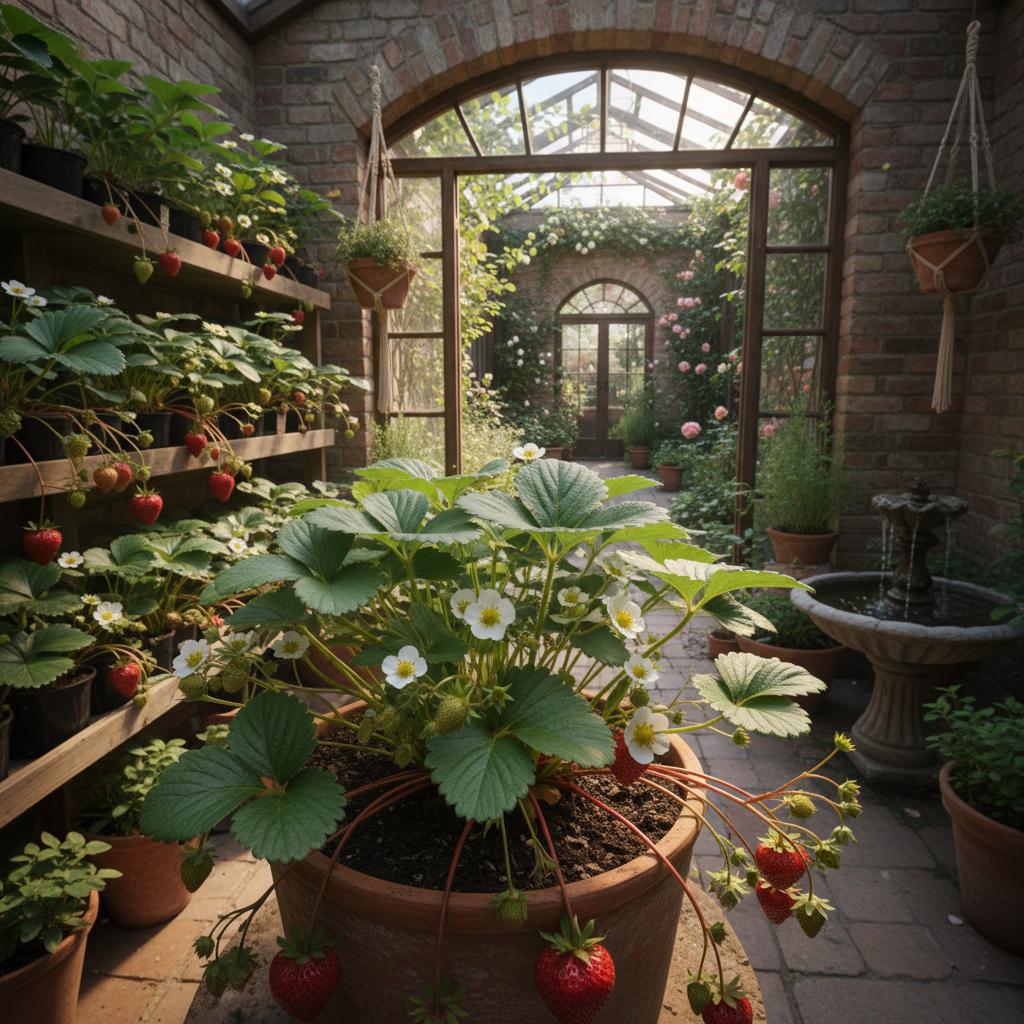
- Leaves: Trifoliate, bright green, with coarsely serrated margins and slightly hairy surfaces;
- Flowers: Small, five-petaled white flowers with bright yellow centers (stamens and pistils), borne on short stems;
- Fruit: Large, fleshy, bright red aggregate accessory fruits with seeds (achenes) embedded on the outer surface;
- Stems: Produces creeping stolons (runners) that root at the nodes to form new plantlets.
Care Guide
Keep soil consistently moist, watering deeply when the top inch of soil feels dry.
Apply a balanced organic fertilizer as new growth appears.. Avoid high-nitrogen fertilizers, which promote excessive leaf growth at the expense of fruit.
Banana Peel Tea:Steep chopped banana peels in water for 24-48 hours. Dilute 1:1 with water and apply to the soil base. The high potassium content supports robust flower and fruit development. Avoid leaving raw peels on the surface to prevent attracting pests.- Runner Removal: Snip off unneeded runners (stolons) to direct the plant's energy into producing larger fruits rather than foliage;
- Deadheading: Remove any dead or diseased leaves promptly to improve air circulation;
- Blossom Pinching: For newly planted strawberries, pinch off the first flush of flowers to encourage strong root establishment.
Toxicity
Warning: this plant may be toxic.
Pets: Non-toxic to cats per ASPCA; safe if nibbled.
Humans: Completely safe and highly nutritious; fruits are widely consumed.
Garden Uses & Culture
Culture: In Victorian flower language, strawberries symbolize perfection and righteousness. They have long been associated with Venus, the goddess of love, due to their heart shape and red color.
Usage: - **Culinary**: Eaten fresh, baked into pies, or preserved as jams and jellies; - **Ornamental**: Excellent as an edible ground cover, in hanging baskets, or in tiered planters.