 PlantFun
Plant Needs
Characteristics
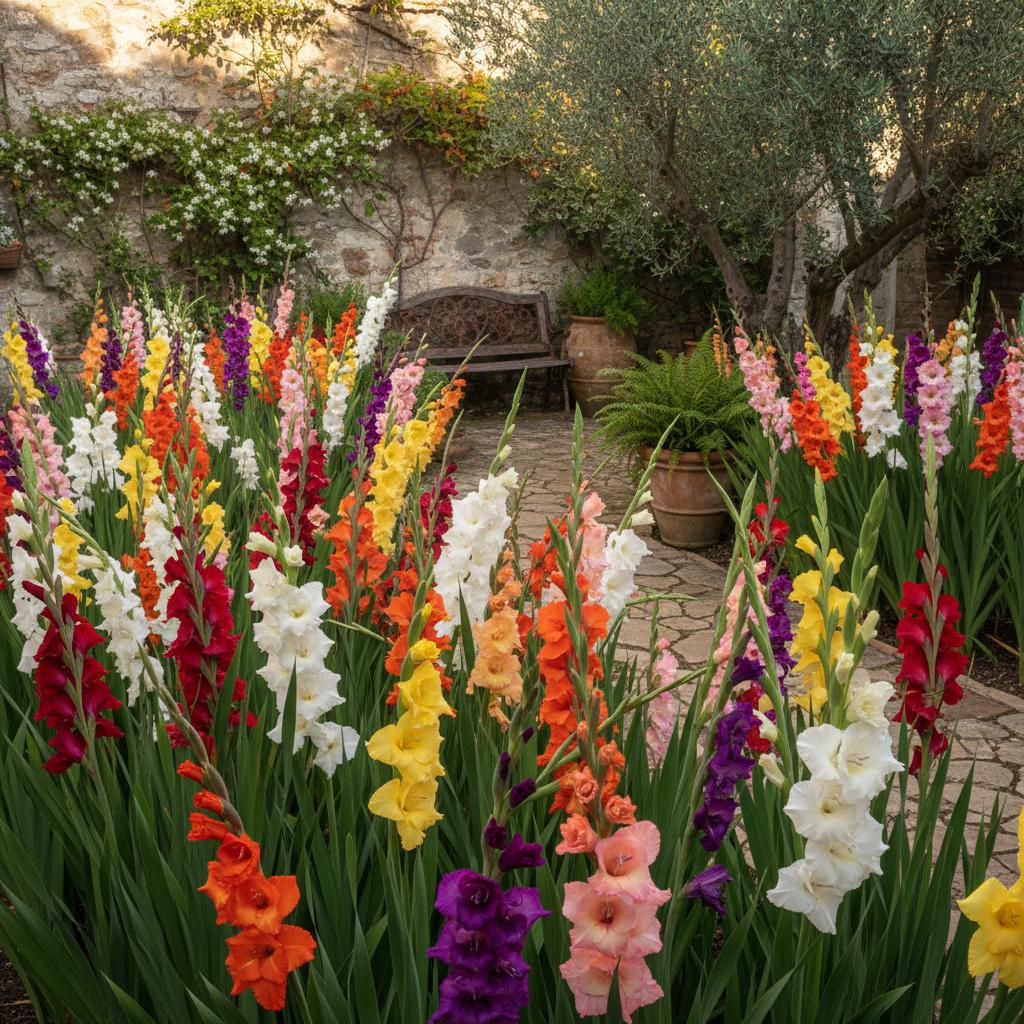
- Leaves: Sword-shaped (ensiform), linear with parallel venation, green, growing in a stiff, fan-like basal arrangement;
- Flowers: Funnel-shaped, zygomorphic, arranged in a tall, one-sided terminal spike, available in a wide spectrum of colors including red, pink, yellow, and white;
- Stem: Erect, unbranched, fleshy but sturdy, emerging from an underground corm;
- Underground: Fleshy corms covered in fibrous, papery tunics.
Care Guide
Water deeply once a week, ensuring the soil does not dry out completely while flower spikes are forming.
Apply a balanced fertilizer when shoots first emerge from the soil.. Regular feeding supports the development of large flower spikes.
Banana Peel Tea:Steep chopped banana peels in water for 24-48 hours. Strain and use the liquid to water the base of the plant to encourage robust blooming. Discard solids in compost to avoid attracting pests.- Cut flower spikes off after blooms fade to direct the plant's energy back into the corm;
- Leave the foliage intact until it turns completely yellow and dies back naturally;
- Remove dead foliage only after it easily pulls away from the corm.
Toxicity
Warning: this plant may be toxic.
Pets: Toxic per ASPCA; ingestion of corms or leaves can cause gastrointestinal irritation.
Humans: Corms may cause mild skin irritation upon contact or gastrointestinal upset if ingested.
Garden Uses & Culture
Culture: Named from the Latin word "gladius" (sword), the gladiolus represents strength of character, faithfulness, and honor in Victorian floriography. It is also the traditional birth flower for the month of August.
Usage: Highly prized as a cut flower for floral arrangements; excellent for adding vertical interest to garden borders.