 PlantFun
Plant Needs
Characteristics
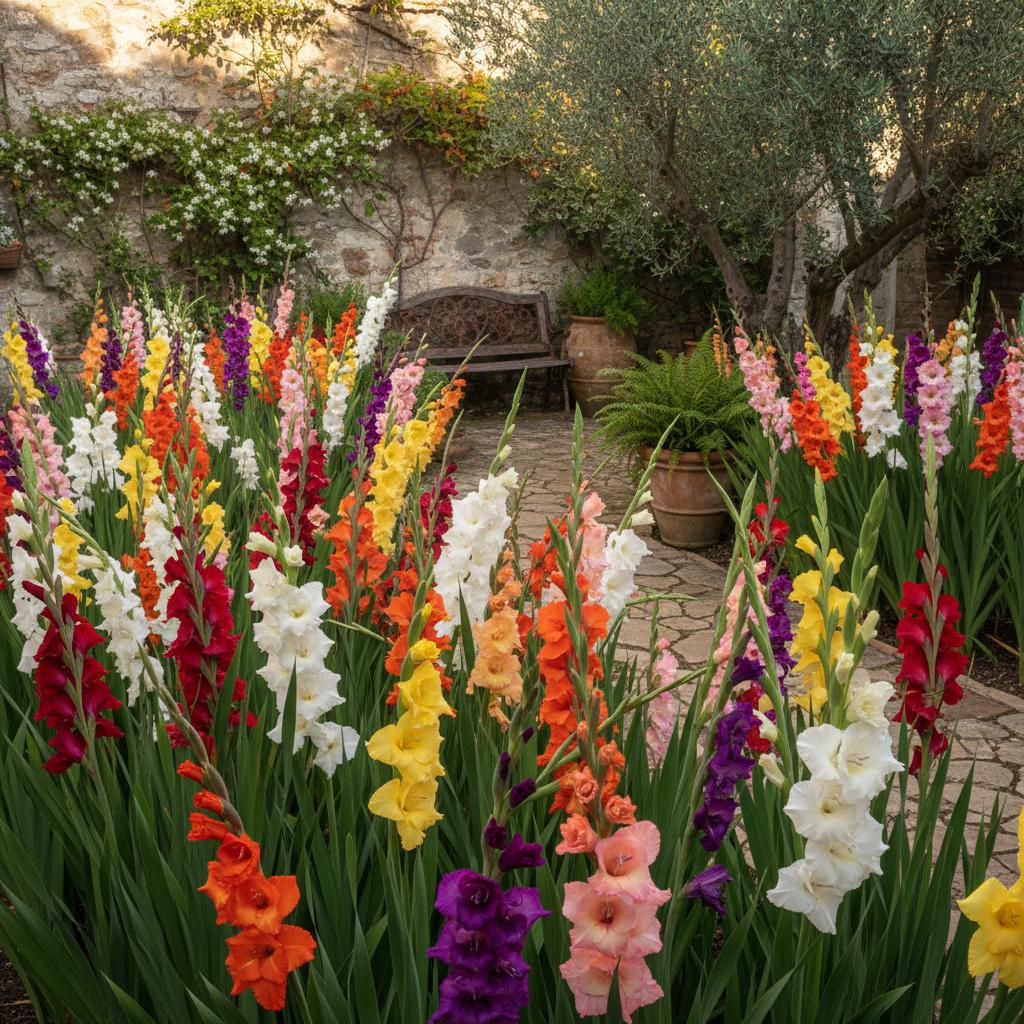
- Leaves: Basal, sword-shaped (ensiform), green, with prominent parallel venation, growing in a fan-like arrangement;
- Flowers: Tall, one-sided spikes (racemes) of funnel-shaped, zygomorphic flowers in vibrant shades of pink, red, purple, or white;
- Stem: Erect, unbranched, fleshy stems emerging from an underground corm;
- Roots: Fibrous roots growing from the base of the corm, which acts as a storage organ.
Care Guide
Water deeply once a week, providing about 1 inch of water, especially during dry spells and when flower spikes are forming.
Apply a balanced fertilizer when shoots first emerge from the soil.. Avoid high-nitrogen fertilizers, which promote foliage growth at the expense of flowers.
Banana Peel Tea:Soak chopped banana peels in water for 24-48 hours. Strain and use the liquid to water the base of the plant to promote strong flower spikes and vibrant blooms. Discard the solid peels in a compost bin to avoid attracting pests.- Deadheading: Cut off the flower spike once all blooms have faded to direct the plant's energy back into the corm;
- Foliage Care: Leave the leaves intact until they turn completely yellow and brown, as they are needed to photosynthesize and store energy for next year;
- Winter Prep: Cut the dead foliage down to 1-2 inches above the corm before lifting them for winter storage.
Toxicity
Warning: this plant may be toxic.
Pets: Toxic per ASPCA. Ingestion of the plant, especially the corms, can cause gastrointestinal irritation.
Humans: Handling corms may cause mild skin irritation. Ingestion of corms can cause mild gastrointestinal upset.
Garden Uses & Culture
Culture: Named from the Latin word "gladius," meaning sword, due to its leaf shape. In Victorian floriography, it symbolizes strength of character, faithfulness, and honor. It is also the recognized birth flower for the month of August.
Usage: Highly prized as a cut flower for floral arrangements due to its tall, dramatic spikes. Also used extensively in garden borders and mass plantings.