 PlantFun
Plant Needs
Sunlight
Requires bright, indirect sunlight to full sun to maintain its compact rosette shape and vibrant pastel coloration.
Watering
Highly drought-tolerant; utilize the "soak and dry" method, allowing the soil to dry out completely between waterings.
Temperature
Prefers warm temperatures and is not frost-hardy; protect from freezing conditions.
Characteristics
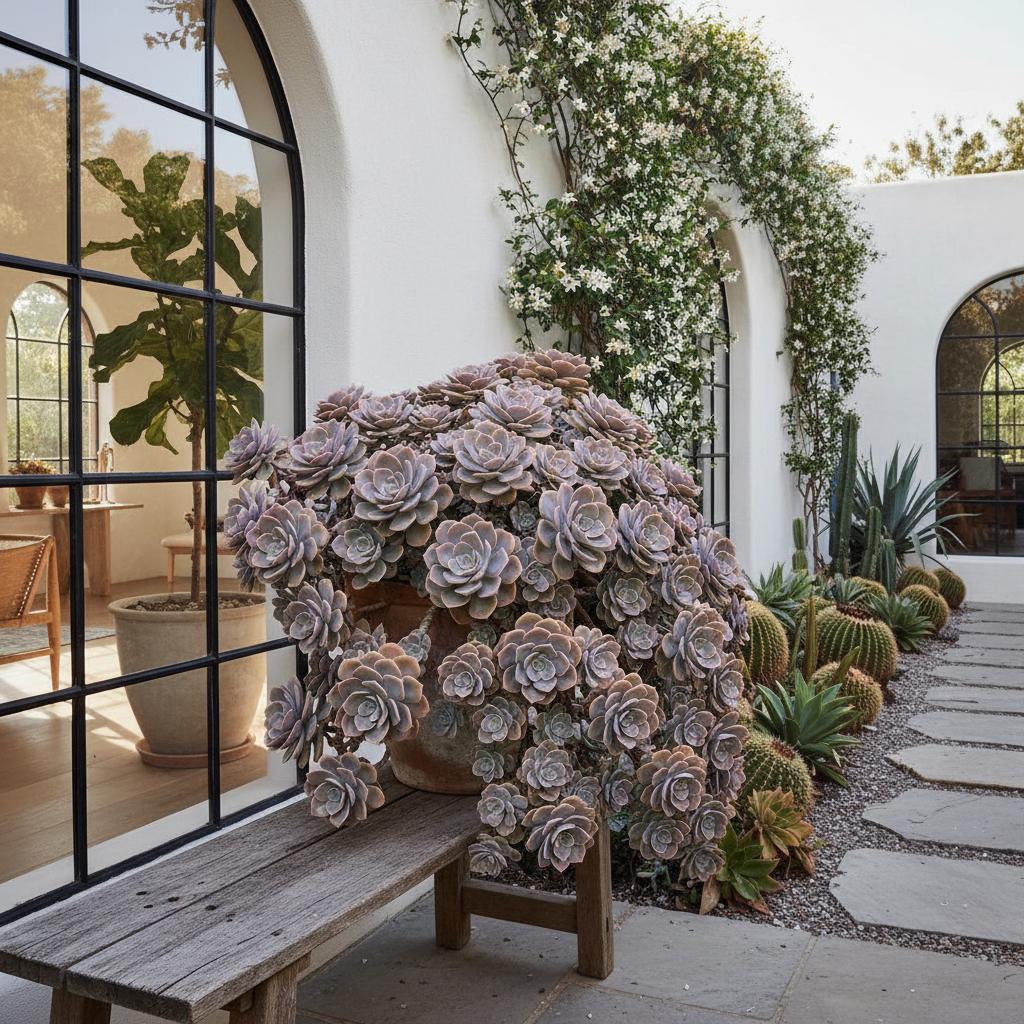
- Leaves: Fleshy, obovate to spatulate, pale grayish-pink to lavender, covered in a powdery epicuticular wax (farina) forming flat rosettes up to 12 cm wide;
- Flowers: Star-shaped, 5-petaled, pale yellow with distinct reddish-brown spots and banding, borne on multi-branched inflorescences;
- Stem: Thick and fleshy, initially erect but becoming decumbent or trailing as the plant ages and elongates.
Care Guide
Watering
Water thoroughly when the soil is completely dry.
Fertilization
Apply a diluted, balanced fertilizer.. Fertilize sparingly during the active growing season; do not fertilize in winter.
Banana Peel Tea:Steep chopped banana peels in water for 24-48 hours. Dilute 1:1 with water before use. Avoid placing raw peels directly on the soil to prevent fungus gnats and rot.Pruning
- Deadheading: Remove spent flower stalks at the base to redirect energy to foliage growth;
- Grooming: Gently pull away dried, dead basal leaves to prevent moisture trapping and pest infestations;
- Beheading: If the stem becomes too long and bare (leggy), cut the top rosette off, let it callus for a few days, and replant to propagate.
Toxicity
Warning: this plant may be toxic.
Pets & Humans
Pets: Non-toxic to cats per ASPCA guidelines for the genus.
Humans: Non-toxic to humans.
Garden Uses & Culture
Culture: Highly prized in Western succulent collections and xeriscaping for its striking pastel colors, often symbolizing endurance and timeless beauty in arid environments.
Usage: Perfect for container gardens, rockeries, hanging baskets (as stems trail over time), and sunny windowsill displays.