 PlantFun
Plant Needs
Sunlight
Requires bright, direct sunlight to maintain compact rosettes and vibrant leaf coloration.
Watering
Highly drought-tolerant; allow the soil to dry out completely between waterings.
Temperature
Prefers warm temperatures; must be protected from frost and freezing conditions.
Characteristics
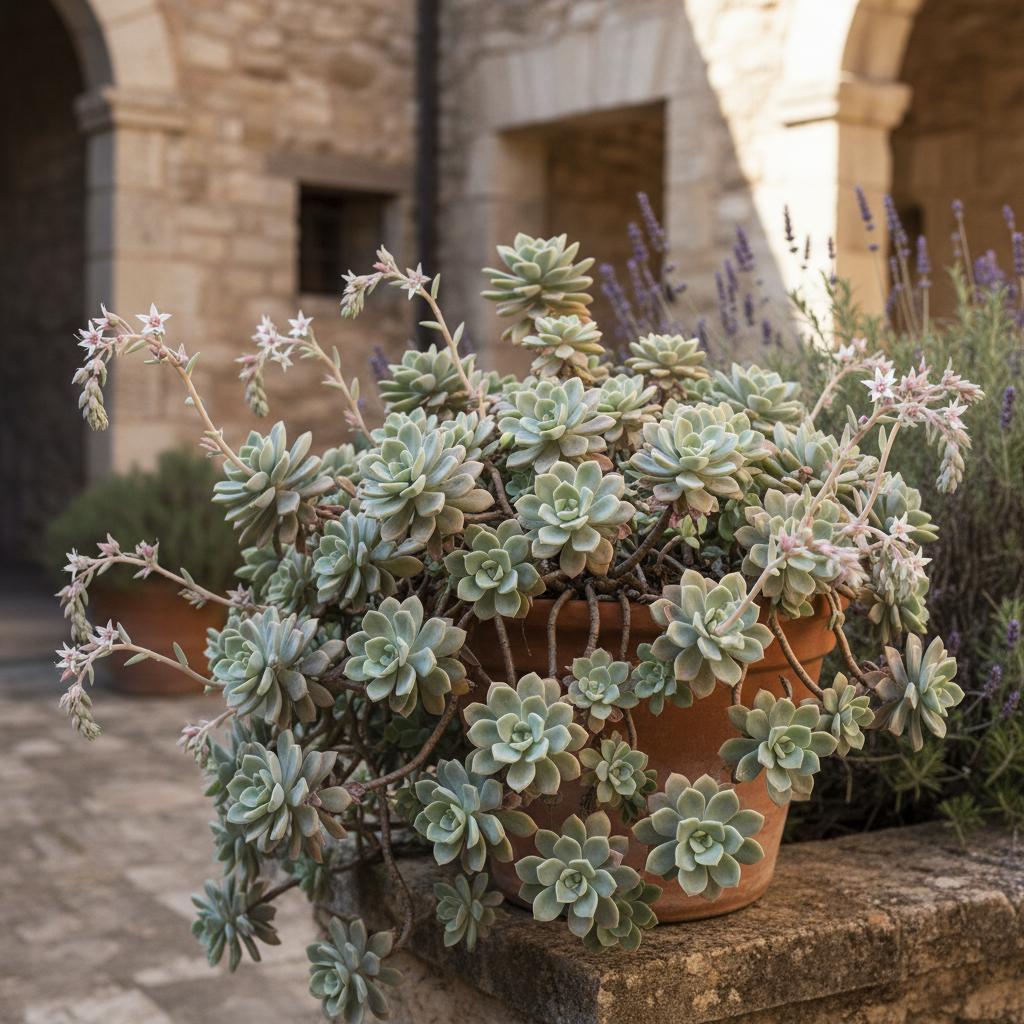
- Leaves: Fleshy, obovate to spatulate, arranged in terminal rosettes, pale blue-gray to pinkish, covered in powdery epicuticular wax (farina);
- Flowers: Star-shaped, 5-petaled, white with reddish-brown speckles, borne on branching cymes;
- Stems: Trailing or decumbent, becoming bare and woody at the base as older leaves naturally senesce.
Care Guide
Watering
Water deeply when the soil is completely dry, about once every two weeks.
Fertilization
Apply a diluted, balanced succulent fertilizer once a month.. Do not over-fertilize, as this can cause weak, leggy growth.
Banana Peel Tea:Soak chopped banana peels in water for 24 hours, strain, and dilute 1:1 with water. Use the liquid to water the soil. Discard the peels in compost to avoid attracting fungus gnats; avoid high salt concentrations.Pruning
- Grooming: Gently remove dried, shriveled basal leaves to prevent pests like mealybugs from hiding;
- Beheading: Cut back leggy stems in spring to encourage compact new growth;
- Propagation: Allow cut stems or fallen healthy leaves to callus for a few days before placing them on dry soil to root.
Toxicity
Warning: this plant may be toxic.
Pets & Humans
Pets: Non-toxic to cats per ASPCA.
Humans: Non-toxic to humans.
Garden Uses & Culture
Culture: Often shared among neighbors and friends in Western gardening communities as a "passalong plant" due to its extreme ease of propagation from single fallen leaves.
Usage: Excellent for hanging baskets, rock gardens, xeriscaping, and container arrangements where its trailing stems can cascade over the edges.