 PlantFun
Plant Needs
Characteristics
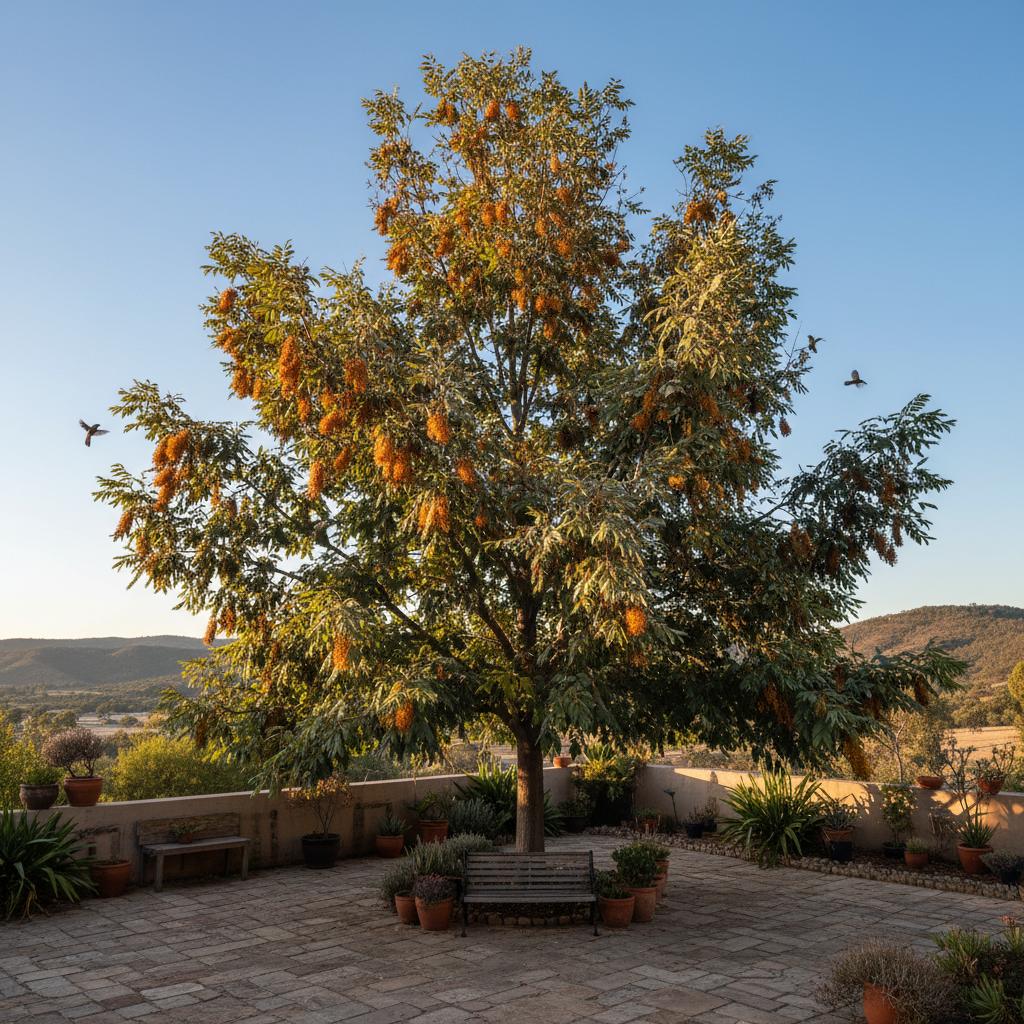
- Leaves: Fern-like, bipinnatifid, 15-30 cm long, dark green above and silvery-silky below;
- Flowers: Golden-orange, toothbrush-like racemes, 12-15 cm long, lacking true petals but with prominent styles;
- Bark: Dark grey, furrowed, with a lace-like pattern on mature trunks.
Care Guide
Water deeply once a week during active growth.
Apply a low-phosphorus organic mulch or very light feed.. Grevilleas are highly sensitive to phosphorus; use only phosphorus-free or very low-phosphorus feeds.
Banana Peel Tea:Soak chopped banana peels in water for 24 hours. Dilute 1:1 with water. This provides potassium without the phosphorus that can harm Proteaceae roots. Avoid using eggshells as they raise soil pH.- Prune lightly after flowering to maintain shape and encourage bushiness;
- Remove dead or damaged branches in late winter;
- Avoid hard pruning into old wood, as it may not regenerate well.
Toxicity
Warning: this plant may be toxic.
Pets: Mild gastrointestinal upset if ingested; sap may cause skin irritation (per ASPCA guidelines for similar irritants).
Humans: Foliage and sap contain tridecylresorcinol, which can cause contact dermatitis and allergic skin reactions.
Garden Uses & Culture
Culture: Widely planted as a street and shade tree in warm climates across the Americas and Europe; its timber, known as silky oak, was historically prized for cabinetry and furniture making.
Usage: - **Ornamental**: Specimen tree for large gardens and parks; - **Timber**: Used for furniture, cabinetry, and fencing; - **Ecological**: Flowers are a major nectar source for bees and nectar-feeding birds.