 PlantFun
Plant Needs
Characteristics
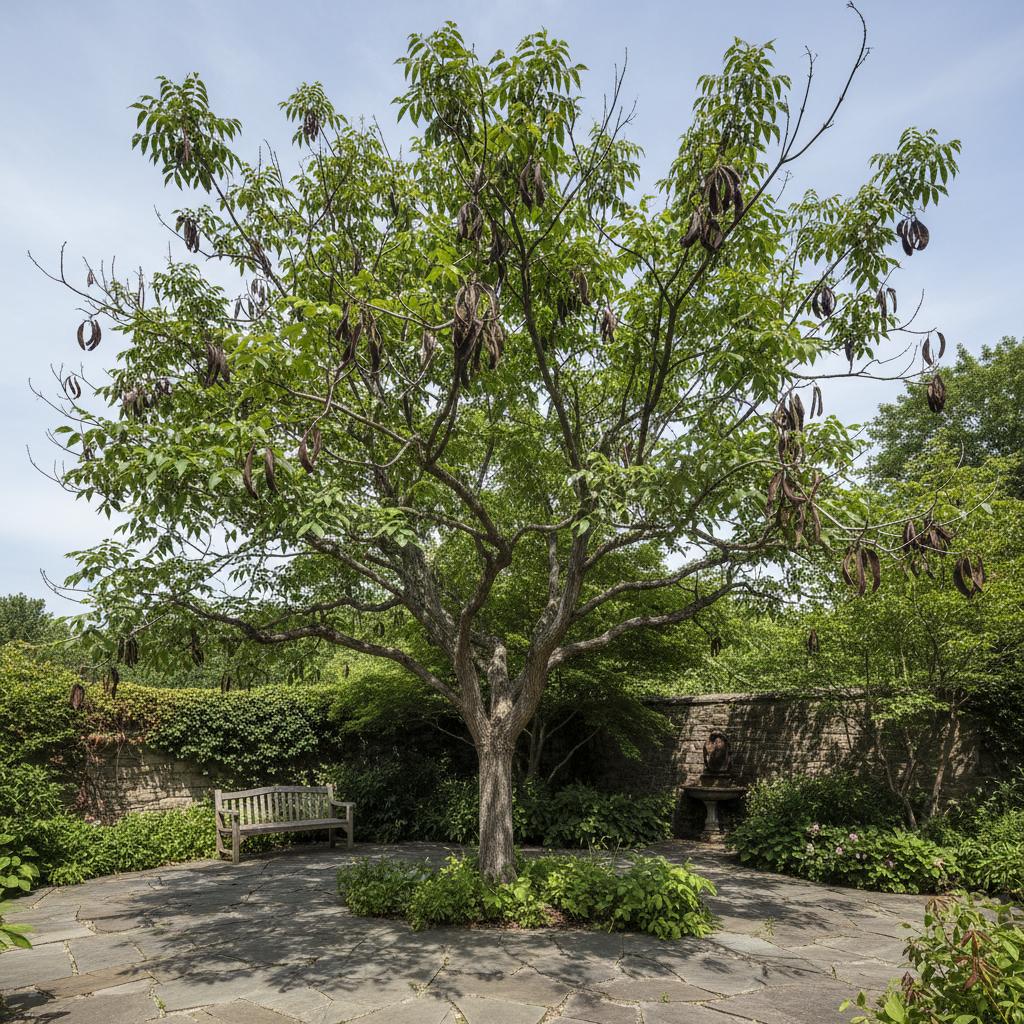
- Leaves: Bipinnately compound, exceptionally large (up to 90 cm long), with numerous ovate, bluish-green leaflets that turn golden-yellow in autumn;
- Flowers: Dioecious (male and female on separate trees), greenish-white, star-shaped, borne in terminal panicles;
- Fruit: Hard, thick, leathery reddish-brown pods (15-25 cm long) containing large, hard seeds, persisting through winter on female trees;
- Bark: Dark grayish-brown, deeply fissured with scaly, curling ridges;
- Twigs: Very stout, blunt, and lacking fine branching, giving the tree a distinctive "naked" appearance during dormancy.
Care Guide
Water deeply once a week for the first few growing seasons to establish a deep root system.
Apply a layer of compost or a balanced organic mulch around the base before new growth begins.. Avoid heavy nitrogen fertilizers which can promote weak, leggy growth.
Compost Tea:Steep aged household compost (vegetable scraps, coffee grounds, eggshells) in water for 24-48 hours. Strain and pour around the tree's drip line to improve soil biology. Avoid applying directly against the trunk.- Prune in late winter or early spring while the tree is fully dormant;
- Focus on structural pruning for young trees to establish a strong central leader;
- Remove any dead, damaged, or crossing branches;
- Because of its coarse branching habit, minimal pruning is required once mature.
Toxicity
Warning: this plant may be toxic.
Pets: Toxic if raw seeds or pods are ingested, leading to gastrointestinal upset and potential neurological signs (per ASPCA guidelines for cytisine).
Humans: Unroasted seeds and pods contain the toxic alkaloid cytisine, which can cause severe gastrointestinal and neurological distress if ingested raw.
Garden Uses & Culture
Culture: Early American settlers and Native Americans roasted the seeds to neutralize the toxins and used them as a coffee substitute, though the brew contains no caffeine.
Usage: Widely planted as an ornamental shade tree and urban street tree due to its exceptional tolerance to drought, pollution, and poor soils. The heavy, durable wood is occasionally used for cabinetry and fence posts.