 PlantFun
Plant Needs
Characteristics
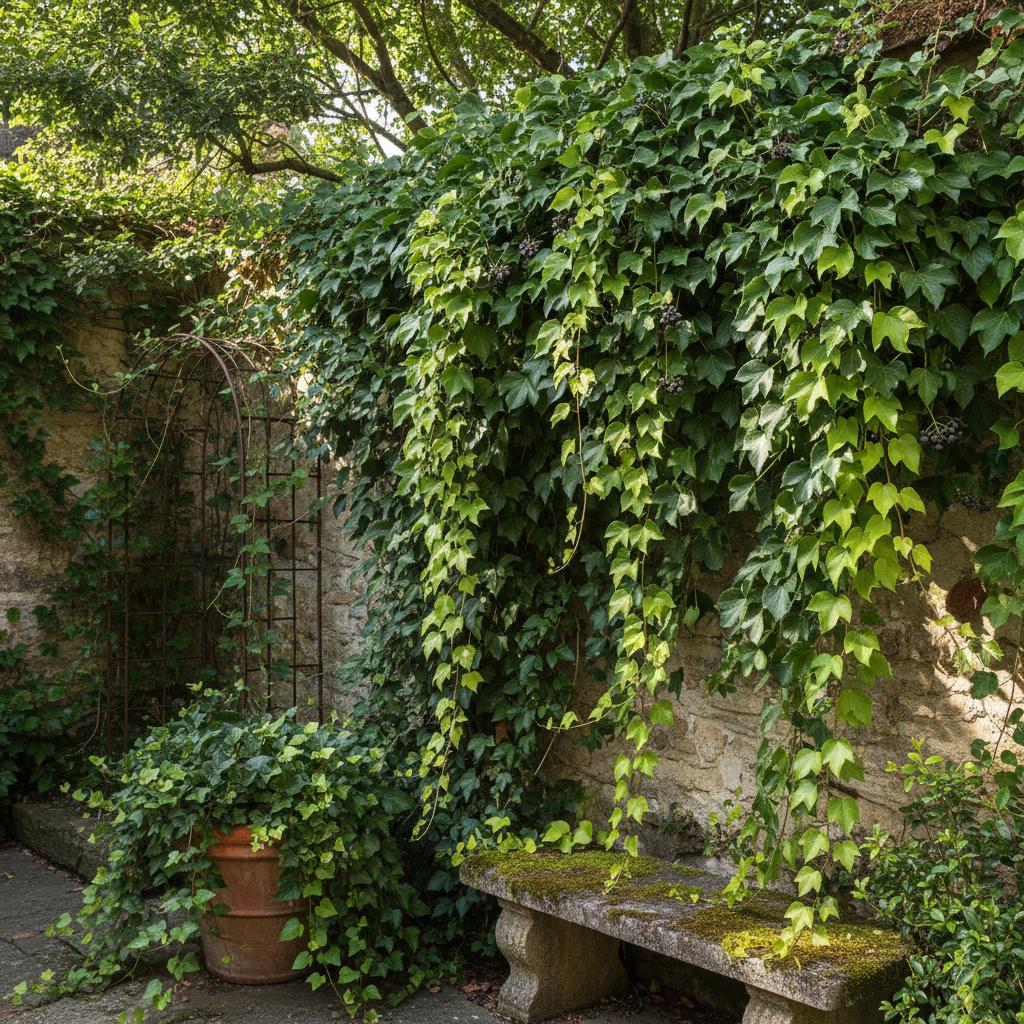
- Leaves: Alternate, palmately 3-5 lobed on juvenile creeping stems, unlobed and cordate on adult flowering stems, dark green with pale veins;
- Flowers: Small, greenish-yellow, arranged in globose umbels, appearing only on mature, unlobed branches;
- Stems: Woody, climbing via adventitious rootlets that secrete a natural adhesive;
- Fruit: Small, globose, purplish-black berries ripening in late winter to spring.
Care Guide
Water thoroughly when the top inch of soil feels dry to the touch.
Apply a balanced liquid fertilizer diluted to half strength.. Feed only during the active growing season; withhold fertilizer during winter dormancy.
Coffee Grounds Tea:Steep used coffee grounds in water overnight, strain, and use the liquid to boost foliage growth. Avoid over-application to prevent excessive soil acidity.- Control Growth: Prune aggressively in early spring to control size, shape, and prevent it from overtaking other plants;
- Maintenance: Remove dead, damaged, or leggy vines to encourage bushier, healthier new growth;
- Structural Protection: Trim vines away from gutters, wooden siding, and painted surfaces, as the aerial roots can cause structural damage.
Toxicity
Warning: this plant may be toxic.
Pets: Toxic to cats per ASPCA. Ingestion can cause vomiting, abdominal pain, hypersalivation, and diarrhea.
Humans: Sap can cause contact dermatitis; ingestion of berries or leaves causes gastrointestinal upset.
Garden Uses & Culture
Culture: In ancient Greece and Rome, ivy was sacred to Dionysus (Bacchus), symbolizing eternal life, fidelity, and the intoxicating power of nature. It was often woven into wreaths for winter solstice celebrations.
Usage: Widely cultivated as an ornamental ground cover, a climbing vine for masonry walls, and a popular trailing indoor houseplant.