 PlantFun
Plant Needs
Sunlight
Thrives in full sun but can tolerate partial shade, though blooming may be reduced.
Watering
Drought-tolerant once established; prefers deep, occasional watering.
Temperature
Highly adaptable and cold hardy, tolerating a wide range of temperatures.
Characteristics
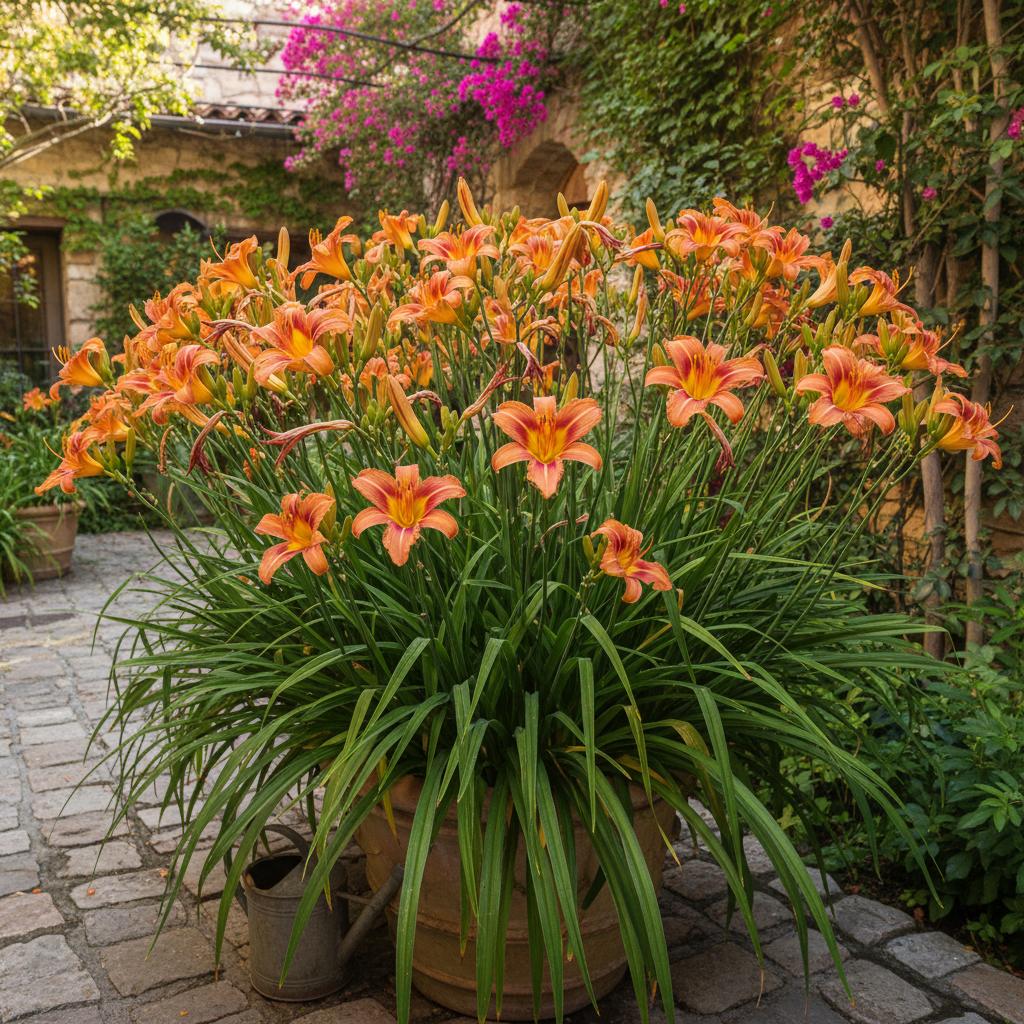
- Leaves: Basal, linear, strap-shaped, 50-90 cm long, forming dense clumps;
- Flowers: Funnel-shaped, 6 tepals, typically orange or tawny-red, blooming for one day on tall, leafless scapes;
- Roots: Fleshy, tuberous root system adapted for water storage.
Care Guide
Watering
Keep soil evenly moist during the active growing and blooming season
Fertilization
Apply a balanced organic layer or compost as new growth emerges. Avoid excessive nitrogen, which promotes foliage over flowers.
Banana Peel Tea:Soak chopped banana peels in water for 24-48 hours, strain, and use the liquid to water the base of the plant to support robust blooming. Discard peels in compost to avoid attracting pests.Pruning
- Deadheading: Remove spent flowers daily to maintain a tidy appearance;
- Stalk Removal: Cut back the entire leafless flower scape (stalk) to the base once all buds have bloomed;
- Foliage Cleanup: Cut back dead or yellowing foliage to the ground in late autumn or early spring.
Toxicity
Warning: this plant may be toxic.
Pets & Humans
Pets: Highly toxic per ASPCA; ingestion of any part can cause acute renal failure.
Humans: Generally considered non-toxic; flowers and buds are edible in moderation.
Garden Uses & Culture
Culture: In Western gardens, the daylily is a staple of the perennial border, symbolizing coquetry and the fleeting, ephemeral nature of beauty due to its single-day bloom.
Usage: Widely used in ornamental landscaping, mass plantings, and erosion control on steep banks due to its dense root system.