 PlantFun
Plant Needs
Sunlight
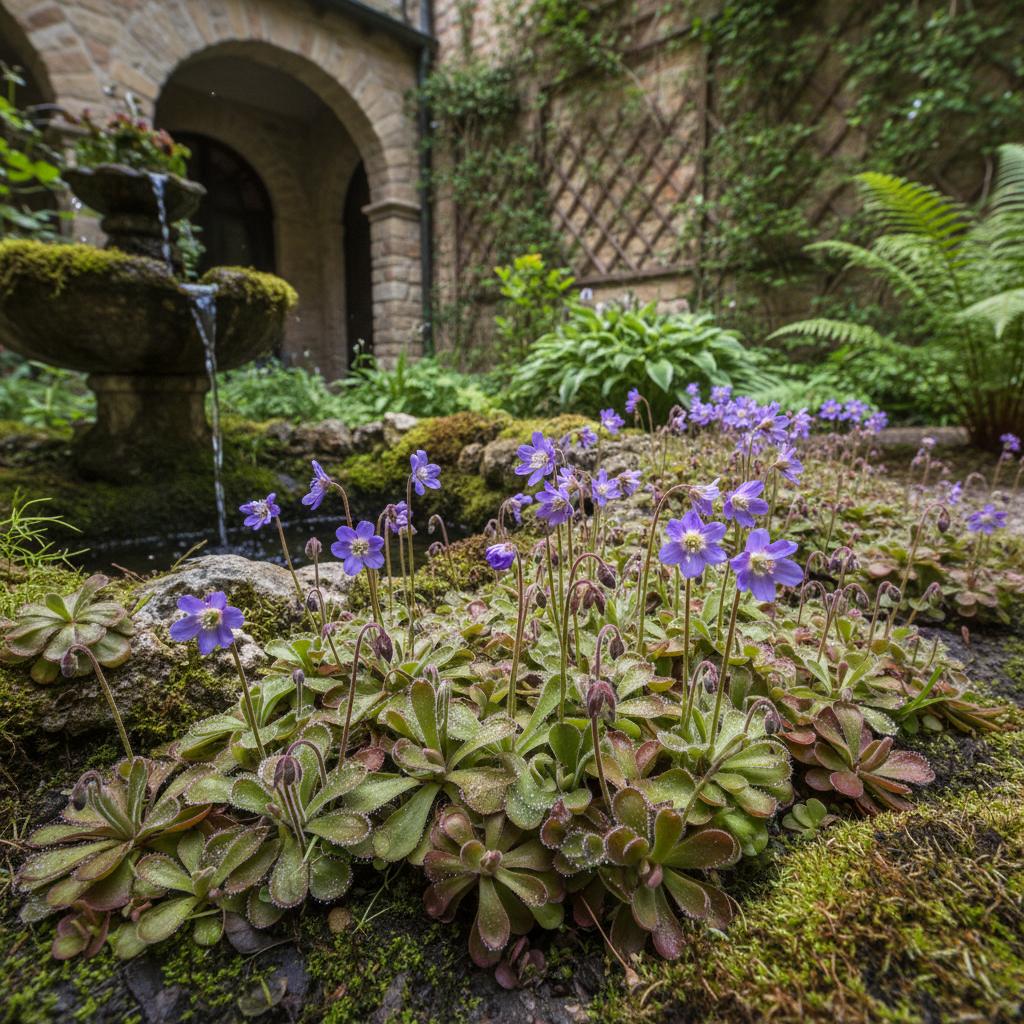
Requires full, direct sunlight for vigorous growth and red trap coloration.
Watering
Must be kept constantly moist using distilled, rain, or reverse osmosis water. Never let the soil dry out.
Temperature
Tolerates summer heat but requires a winter dormancy period (0-10°C) for 3-4 months.
Characteristics
- Leaves: Rosette arrangement; petiole is flat and leaf-like, terminating in a bilobed trapping structure with marginal bristles (cilia).
- Flowers: Small, white, 5-petaled flowers borne on a tall scape (15-30 cm) well above the traps to prevent pollinator consumption.
- Traps: Inner surface often red (anthocyanins) to attract insects, containing 3-6 trigger hairs that initiate closure when stimulated.
- Roots: Shallow, black, and wiry, serving primarily for water anchorage and absorption rather than nutrient uptake.
Care Guide
Watering
Keep sitting in 1-2 inches of distilled water in a tray.
Fertilization
Do not apply traditional fertilizers.. Never use standard plant fertilizers, as nitrogen burns the roots.
Pruning
- Cut off dead, black traps and leaves at the base to prevent mold.
- Snip flower stalks early in the spring if you want the plant to focus energy on growing larger traps.
Toxicity
Warning: this plant may be toxic.
Pets & Humans
Pets: Non-toxic to cats per ASPCA.
Humans: Non-toxic to humans; safe to handle, though triggering traps unnecessarily wastes the plant's energy.
Garden Uses & Culture
Culture: Fascinated early botanists like Charles Darwin, who called it "one of the most wonderful plants in the world."
Usage: - **Ornamental**: Popular novelty houseplant and botanical garden specimen. - **Educational**: Used to demonstrate plant movement and carnivorous adaptations.