 PlantFun
Plant Needs
Sunlight
Requires bright, indirect light to partial sun to maintain its vibrant variegation; too much shade causes leaves to revert to solid green.
Watering
Keep the soil consistently moist but not waterlogged; do not allow the root ball to dry out completely.
Temperature
Prefers warm temperatures and high humidity; highly sensitive to frost and cold drafts.
Characteristics
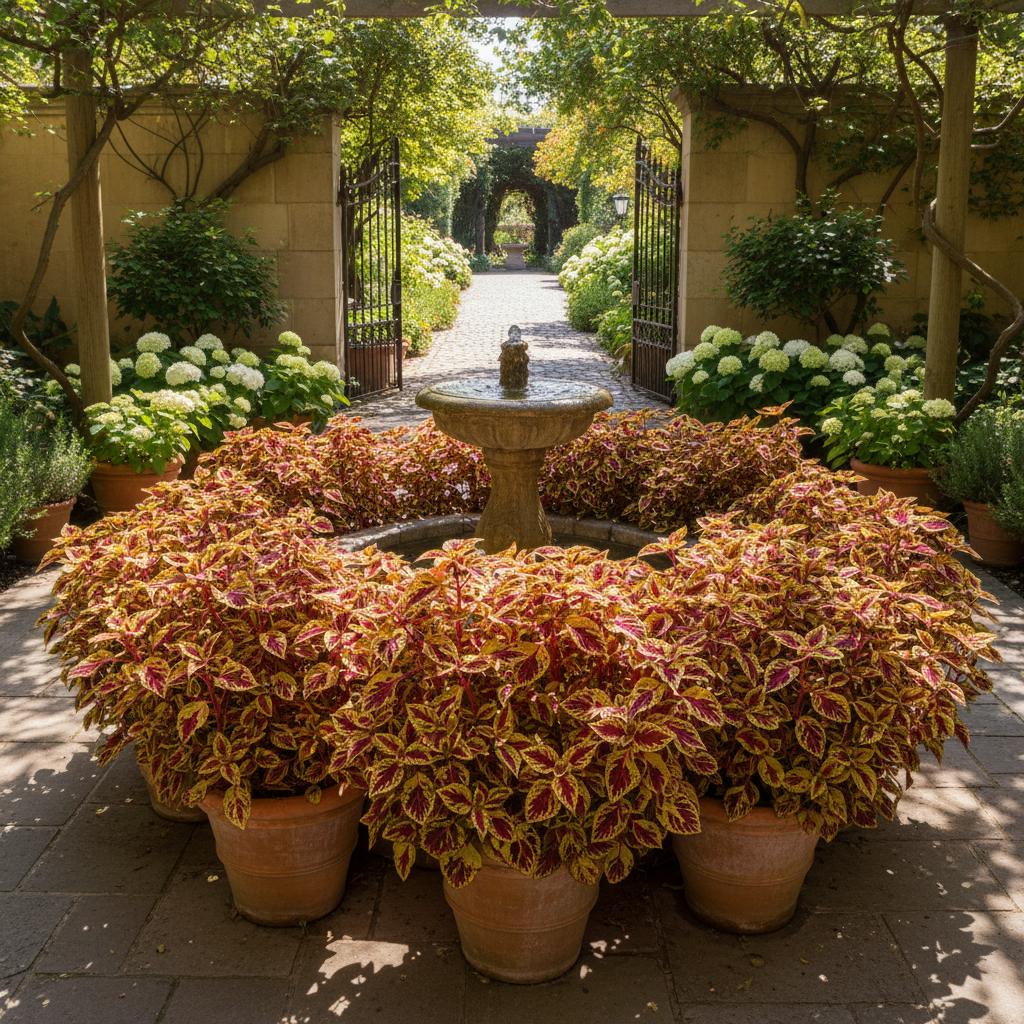
- Leaves: Opposite, ovate to rounded, often notched at the apex; highly variegated with a green and yellow background highlighted by prominent, luminous pink or red venation.
- Stems: Fleshy, translucent pink to deep red, branching readily when pinched back.
- Flowers: Inconspicuous, tiny greenish-white to pale yellow flowers borne on terminal panicles.
Care Guide
Watering
Water thoroughly when the top half-inch of soil feels dry to the touch.
Fertilization
Apply a diluted balanced fertilizer to support active foliage growth.. Feed regularly during the growing season; halt fertilization in winter.
Banana Peel Tea:Steep chopped banana peels in water for 24-48 hours, strain, and use the liquid to water the plant. This provides gentle potassium to support strong, fleshy stems. Discard the peels in compost to avoid attracting fruit flies indoors.Pruning
- Pinch back growing tips regularly to encourage a bushy, compact habit and prevent leggy growth.
- Remove any stems that revert to solid green or red to preserve the 'Aureoreticulata' variegation.
- Prune away any dead or yellowing lower leaves to maintain airflow and appearance.
Toxicity
Warning: this plant may be toxic.
Pets & Humans
Pets: Non-toxic to cats per ASPCA.
Humans: Non-toxic to humans; safe to handle.
Garden Uses & Culture
Culture: During the Victorian era in Europe, brightly colored foliage plants like Iresine were highly prized for intricate "carpet bedding" schemes in formal estate gardens.
Usage: Excellent as a vibrant houseplant, terrarium specimen, or outdoor summer annual in mixed containers and borders.