 PlantFun
Plant Needs
Characteristics
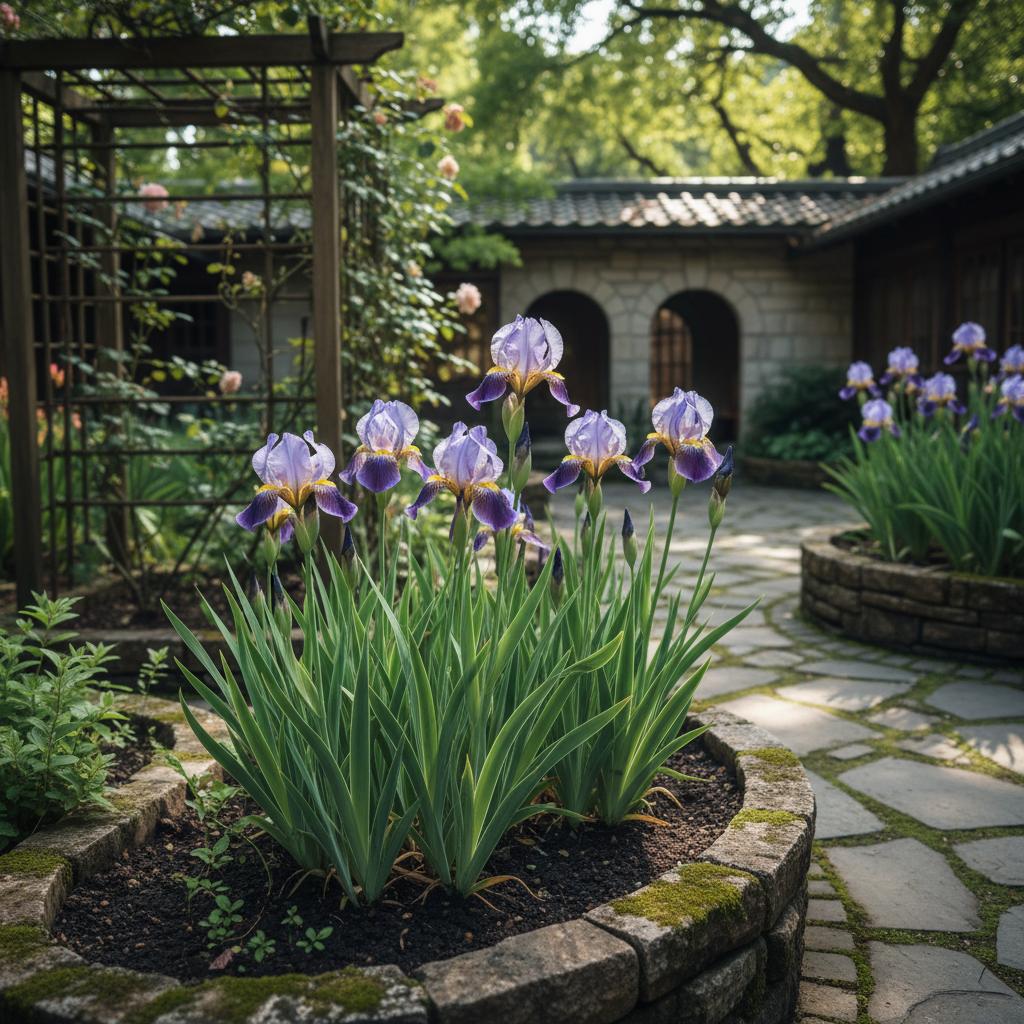
- Leaves: Sword-shaped, glaucous green, arranged in a flat, overlapping fan shape at the base;
- Flowers: Large and showy, featuring three upright petals (standards) and three drooping sepals (falls) with a fuzzy, caterpillar-like "beard" in the center;
- Rhizome: Thick, fleshy, creeping stems that grow partially exposed on the soil surface.
Care Guide
Water deeply when the top 2 inches of soil are dry, especially during bud formation
Apply a low-nitrogen fertilizer as new growth appears. Avoid high-nitrogen fertilizers, which encourage foliage growth at the expense of flowers and increase the risk of rot.
Banana Peel Tea:Steep chopped banana peels in water for 24-48 hours. Strain and use the liquid to water the base of the plant to promote strong blooms. Discard solids in compost to avoid attracting pests.- Deadheading: Cut off spent flower stalks at the base to direct energy back into the rhizome;
- Foliage: Leave healthy green leaves intact during summer to photosynthesize;
- Fall Cleanup: Trim foliage down to a 6-inch fan shape in late autumn to prevent overwintering pests and diseases.
Toxicity
Warning: this plant may be toxic.
Pets: Toxic to cats per ASPCA; ingestion can cause gastrointestinal distress.
Humans: Mild gastrointestinal upset if ingested; sap may cause mild skin irritation.
Garden Uses & Culture
Culture: In Greek mythology, Iris was the goddess of the rainbow and a messenger of the Olympian gods. The flower inspired the fleur-de-lis, a prominent symbol of the French monarchy and European heraldry representing light and perfection.
Usage: Widely used in ornamental landscaping and borders. The dried rhizomes (orris root) of some species are used in perfumery and potpourri as a fixative and for their violet-like scent.