 PlantFun
Plant Needs
Characteristics
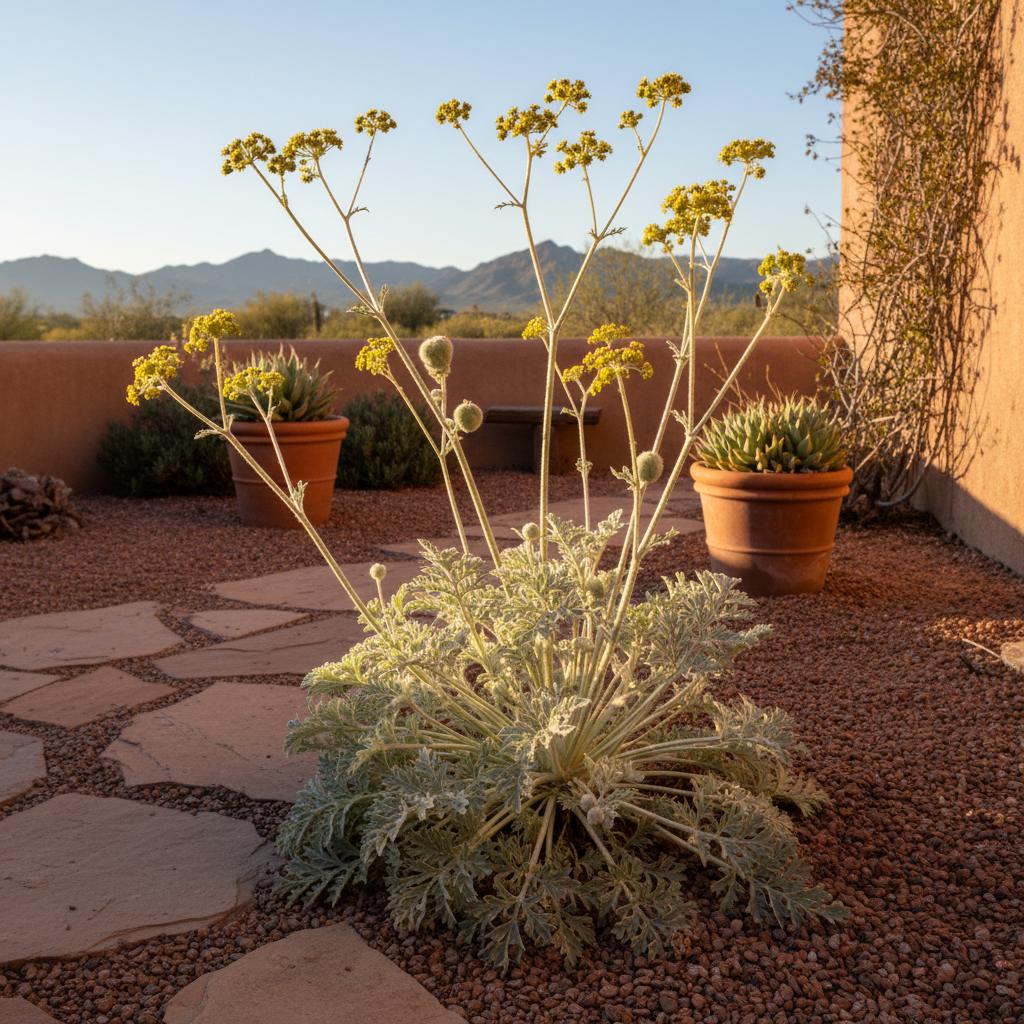
- Leaves: Basal, highly dissected and pinnately compound, covered in dense, soft, woolly (lanate) hairs giving a grayish-green appearance;
- Flowers: Small, yellow to pale yellow, arranged in compound umbels typical of the Apiaceae family;
- Stem: Short, often purplish at the base, densely pubescent;
- Fruit: Schizocarp, flattened with lateral wings, glabrous or slightly hairy.
Care Guide
Water sparingly during active growth in spring; allow soil to dry completely between waterings. Cease watering in late summer as it goes dormant.
Apply a very light, natural amendment if soil is completely barren, though generally unnecessary.. Adapted to nutrient-poor soils; excess fertilizer can harm the plant.
Crushed Eggshell Powder:Wash and dry eggshells thoroughly, crush them into a fine powder, and sprinkle lightly around the base in early spring to mimic the mineral-rich rocky soils of its native habitat. Avoid high-nitrogen household scraps.- Remove spent flower stalks in mid-summer to tidy the plant's appearance;
- Allow the basal foliage to die back naturally to return nutrients to the taproot;
- Clear away dead debris in late winter before new spring growth emerges.
Toxicity
Warning: this plant may be toxic.
Pets: No known toxicity to cats per general botanical databases.
Humans: Generally considered non-toxic, though foraging wild Apiaceae is highly discouraged due to deadly look-alikes like poison hemlock.
Garden Uses & Culture
Culture: N/A
Usage: - **Landscaping**: Excellent for rock gardens, alpine troughs, and xeriscaping; - **Ecological**: Provides crucial early-season nectar for native bees and pollinators in arid regions.