 PlantFun
Plant Needs
Characteristics
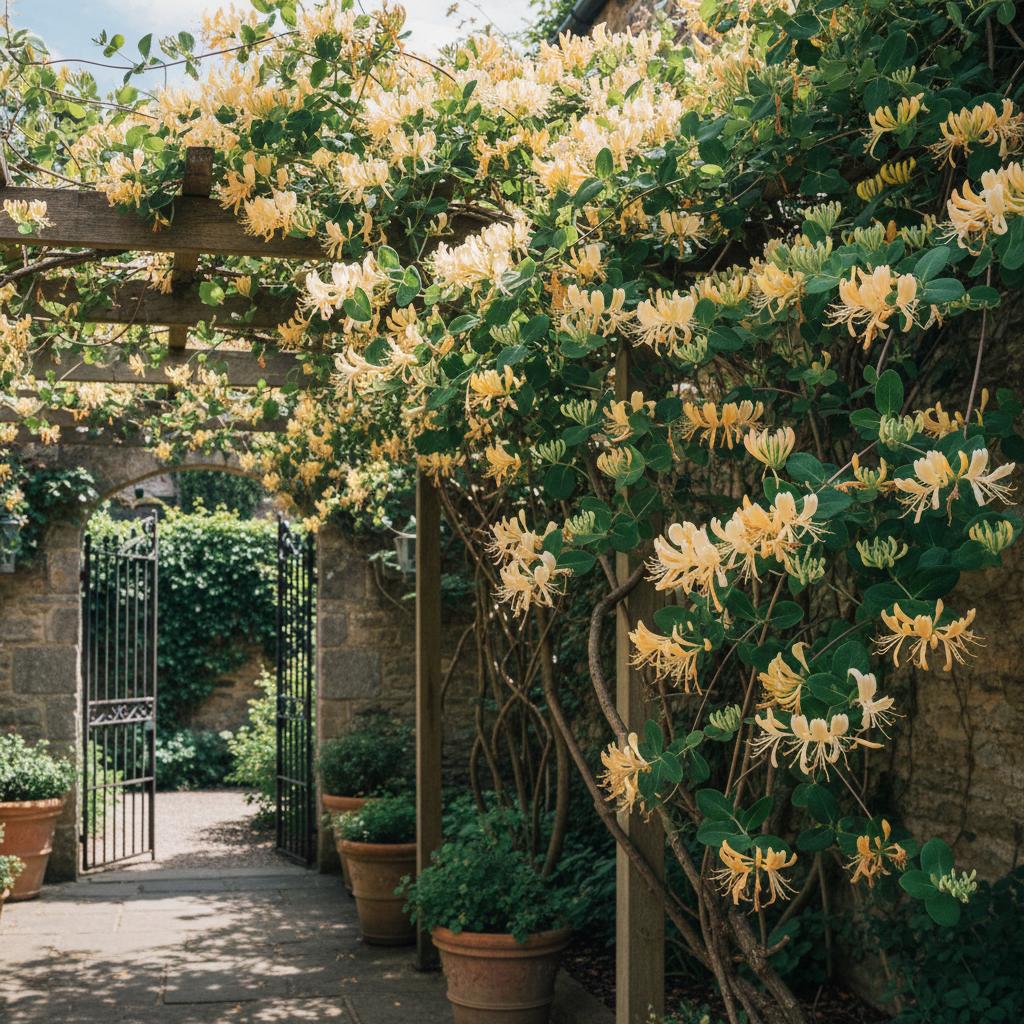
- Leaves: Opposite, simple, ovate to oblong, 3-8 cm long, semi-evergreen to evergreen with entire margins;
- Flowers: Intensely fragrant, bilabiate (two-lipped), tubular, opening white and fading to yellow, borne in pairs along the stem;
- Fruit: Globose, fleshy black berries containing few seeds, maturing in autumn;
- Stem: Twining woody vines, young stems pubescent, older stems developing peeling, papery bark.
Care Guide
Water deeply when the top inch of soil feels dry to encourage deep root growth
Apply a balanced, slow-release fertilizer as new growth emerges in early spring. Honeysuckle is generally a light feeder and often thrives without supplemental fertilization in decent soil.
Banana Peel Tea:Steep chopped banana peels in water for 24-48 hours. Strain and use the liquid to water the base of the plant to encourage prolific blooming. Discard solids in compost to avoid attracting pests.- Prune aggressively in late winter or early spring before new growth begins to control size and shape;
- Thin out older, woody stems to improve air circulation and light penetration;
- Cut back severely if the vine becomes overgrown or bare at the base to rejuvenate the plant;
- Remove any dead, damaged, or diseased wood promptly.
Toxicity
Warning: this plant may be toxic.
Pets: Non-toxic per ASPCA, though ingestion of large amounts of plant material may cause mild, self-limiting stomach upset.
Humans: Berries contain saponins which can cause mild gastrointestinal upset if ingested in large quantities. Flowers are edible.
Garden Uses & Culture
Culture: In Victorian flower language, the honeysuckle represents devoted affection, bonds of love, and fidelity, often planted around doorways to bring good fortune and sweet fragrance to the home.
Usage: Widely used as an ornamental climbing vine for trellises, fences, and arbors; also utilized for erosion control on steep banks, though its invasive potential must be managed.