 PlantFun
Plant Needs
Characteristics
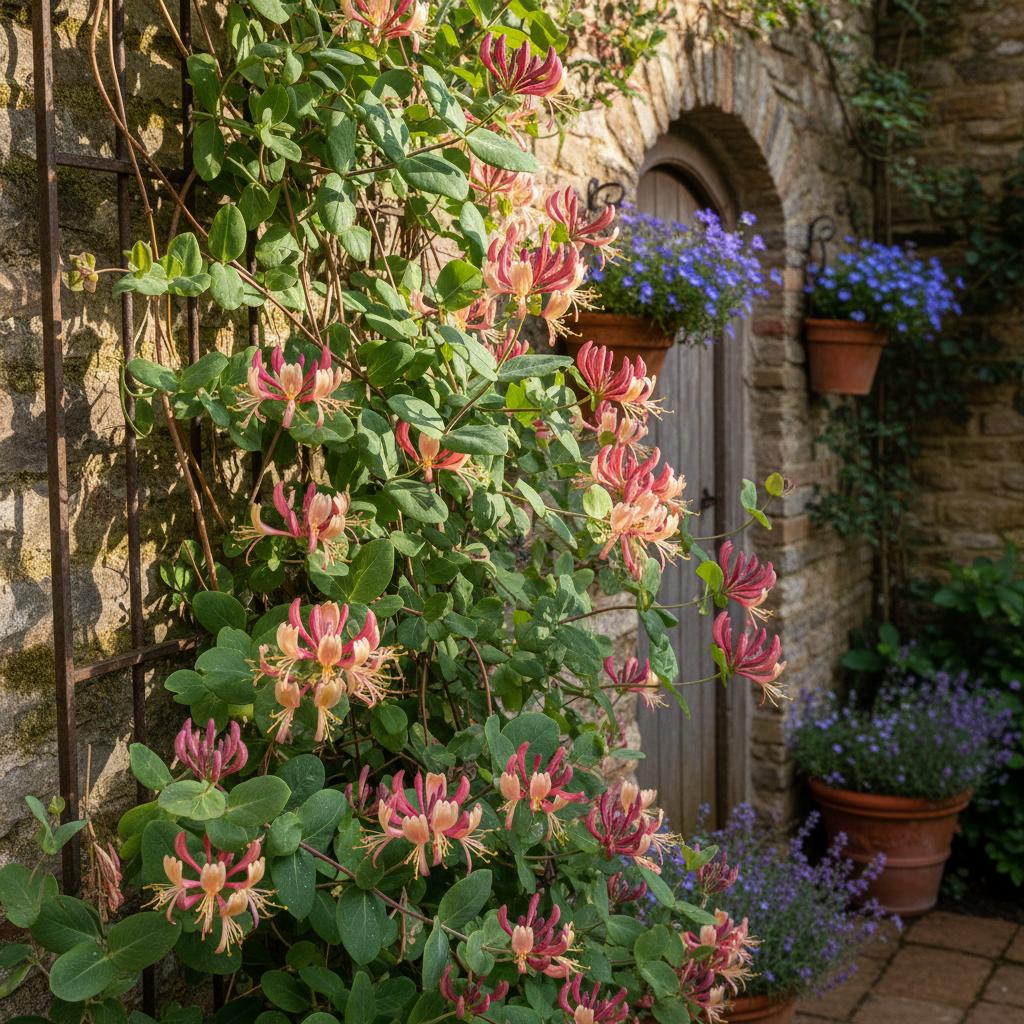
- Leaves: Opposite, ovate to elliptic, blue-green in color; the uppermost pairs just below the flowers are often fused together around the stem (perfoliate).
- Flowers: Highly fragrant, tubular, two-lipped flowers arranged in terminal whorls; buds are carmine-red, opening to reveal a yellow-orange interior.
- Stems: Twining, woody vines that are reddish-brown when young, becoming papery and peeling with age.
- Fruits: Small, spherical red berries occasionally produced in late summer to autumn.
Care Guide
Water deeply when the top inch of soil feels dry to support vigorous growth and blooming.
Apply a balanced, slow-release organic fertilizer as new growth emerges.. Avoid excessive nitrogen, which promotes leafy growth at the expense of flowers.
Banana Peel Tea:Steep chopped banana peels in water for 24-48 hours. Strain and use the liquid to water the base of the vine. This provides a gentle potassium boost to encourage prolific blooming. Discard the solid peels in a compost bin to avoid attracting pests.- Timing: Prune immediately after the main flush of flowering in late summer or early autumn.
- Maintenance: Remove dead, damaged, or crossing vines to improve air circulation and light penetration.
- Rejuvenation: For overgrown plants, thin out up to one-third of the oldest woody stems down to the base to encourage vigorous new shoots.
- Shaping: Lightly trim wayward stems throughout the growing season to keep the vine trained to its trellis or support.
Toxicity
Warning: this plant may be toxic.
Pets: Ingestion of berries or large amounts of foliage may cause mild gastrointestinal irritation (vomiting, diarrhea) per ASPCA guidelines.
Humans: Berries contain saponins which may cause mild gastrointestinal upset if ingested in large quantities.
Garden Uses & Culture
Culture: In Victorian floriography, the honeysuckle represents devoted affection, fidelity, and the sweet bonds of love, often planted around doorways to invite romance and good fortune into the home.
Usage: Excellent for covering trellises, arbors, pergolas, and fences. Highly valued in pollinator gardens for attracting hummingbirds, bees, and butterflies.