 PlantFun
Plant Needs
Characteristics
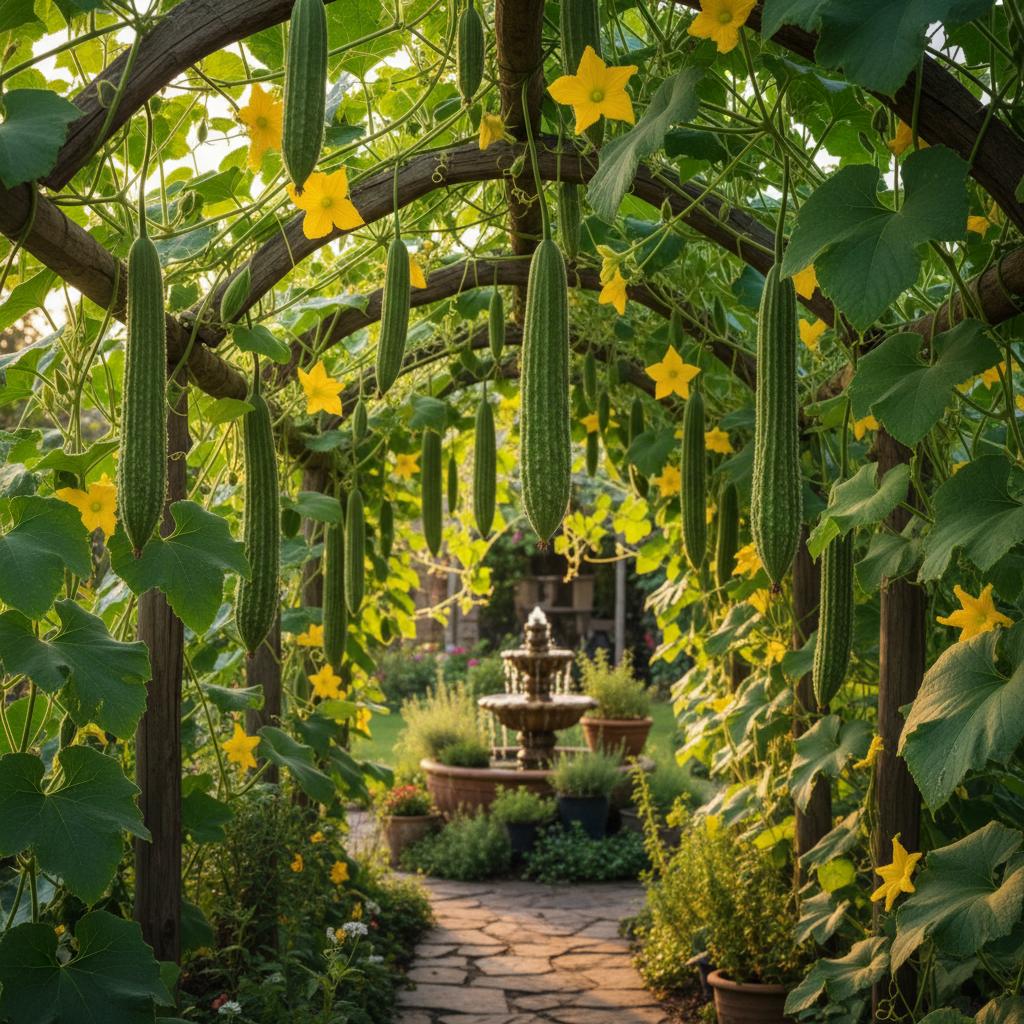
- Leaves: Pale green, broadly ovate to reniform, shallowly 5-7 lobed, with a rough, scabrous texture;
- Flowers: Monoecious, pale to bright yellow, 5-petaled, typically opening in the late afternoon or evening;
- Fruit: Elongated, club-shaped, featuring 10 prominent longitudinal sharp ridges, green when young, drying to a fibrous sponge;
- Stem: Stout, pentagonal, climbing vigorously with the aid of branched tendrils.
Care Guide
Water deeply and frequently to support rapid vine growth and fruit development.
Apply a balanced organic fertilizer to encourage strong vegetative growth.. Heavy feeder; requires regular nutrient replenishment during the active growing season.
Banana Peel Tea:Soak chopped banana peels in water for 48 hours. Dilute 1:1 with water and apply to the base to promote flowering and fruiting. Discard solids in compost to avoid foul odors and pests.- Pinch off the growing tip when the main vine reaches the top of the trellis to encourage lateral branching;
- Remove lower yellowing or dead leaves to improve air circulation and reduce disease risk;
- Thin out excessive male flowers if the vine becomes too congested, though some are needed for pollination.
Toxicity
Warning: this plant may be toxic.
Pets: Non-toxic per ASPCA guidelines for related Cucurbitaceae gourds.
Humans: Non-toxic; young fruits are widely consumed as a vegetable.
Garden Uses & Culture
Culture: Grown in Western novelty gardens and homesteads primarily for its dual-purpose nature: a fast-growing summer screen and a source of natural, biodegradable sponges.
Usage: - **Culinary**: Young, tender fruits (under 15 cm) are cooked in stir-fries, soups, and curries; - **Practical**: Mature, dried fruits are peeled and deseeded to create natural exfoliating bath sponges or household scrubbing pads.