 PlantFun
Plant Needs
Sunlight
Requires bright, direct sunlight for optimal growth and spine development.
Watering
Highly drought-tolerant; water only when the soil is completely dry.
Temperature
Prefers warm temperatures; must be protected from frost and freezing conditions.
Characteristics
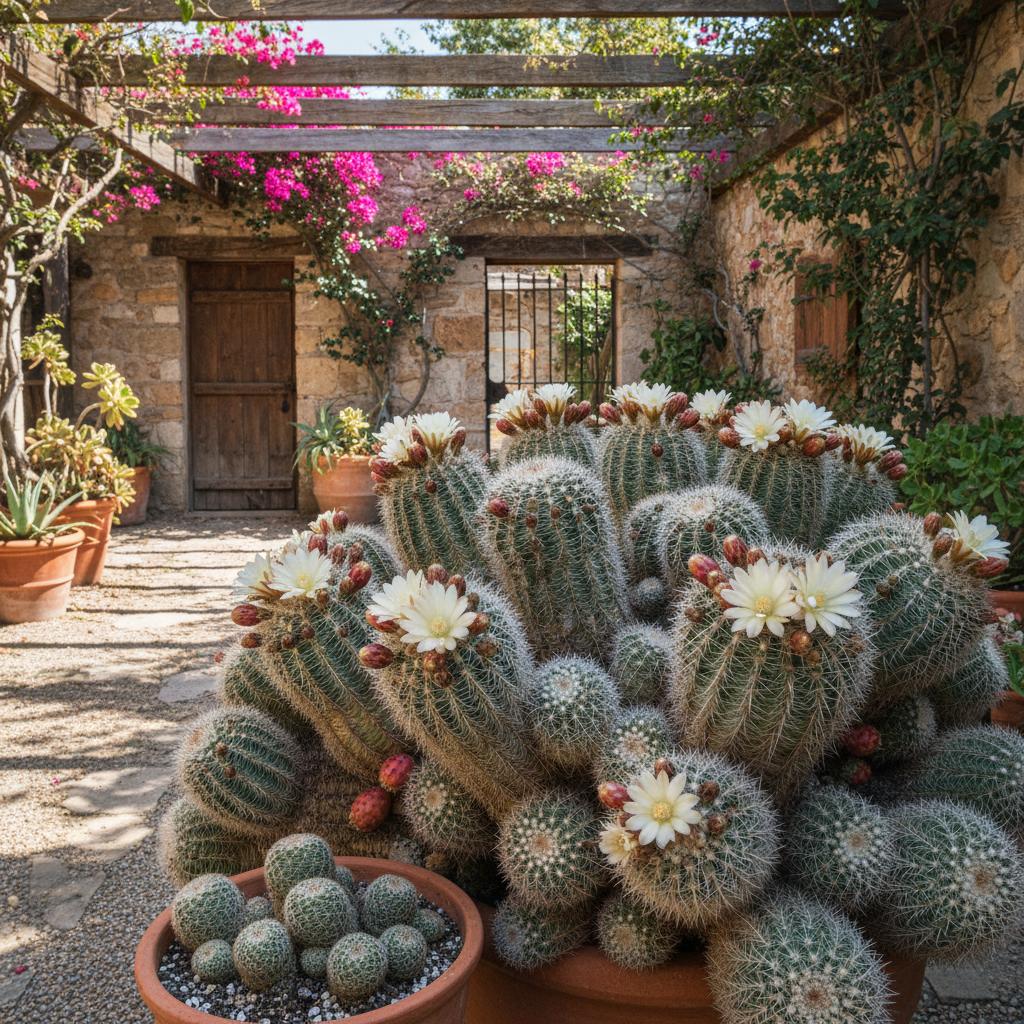
- Stem: Globose to short cylindrical, dark green, notable for dichotomous branching (splitting at the apex to form two distinct heads);
- Tubercles: Conical and firm, containing milky white sap (latex) when punctured;
- Spines: Areoles bear dense, silvery-white bristly radial spines and longer, stiffer central spines often tipped with dark brown;
- Flowers: Funnel-shaped, cream to pale yellow with distinct reddish-brown or pink midstripes, blooming in a ring around the crown;
- Fruit: Bright red, club-shaped berries that protrude from the woolly axils after flowering.
Care Guide
Watering
Water thoroughly, allowing the soil to dry completely before the next watering.
Fertilization
Apply a diluted, low-nitrogen fertilizer to support new growth.. Fertilize only during the active growing season.
Banana Peel Tea:Steep chopped banana peels in water for 24-48 hours, strain, and dilute 1:1 with water. Apply during the growing season to encourage blooming. Avoid leaving solid peels on the soil to prevent mold and pests.Pruning
- Deadheading: Carefully remove dried flowers and shriveled fruits with long tweezers to maintain a tidy appearance;
- Handling: Always use thick gloves or folded newspaper when handling the plant to avoid spine injuries;
- Division: No structural pruning is needed, as the dichotomous branching is its natural and most prized growth habit.
Toxicity
Warning: this plant may be toxic.
Pets & Humans
Pets: Non-toxic to cats per ASPCA guidelines for the genus, but spines can cause physical injury to the mouth or paws.
Humans: Non-toxic to humans, though the sharp spines pose a mechanical hazard.
Garden Uses & Culture
Culture: In Western botanical traditions, cacti are often seen as symbols of endurance, maternal love, and resilience, frequently gifted to represent lasting warmth and protection.
Usage: Highly valued as an ornamental potted plant for sunny windowsills, greenhouses, and xeriscape rock gardens in frost-free climates.