 PlantFun
Plant Needs
Characteristics
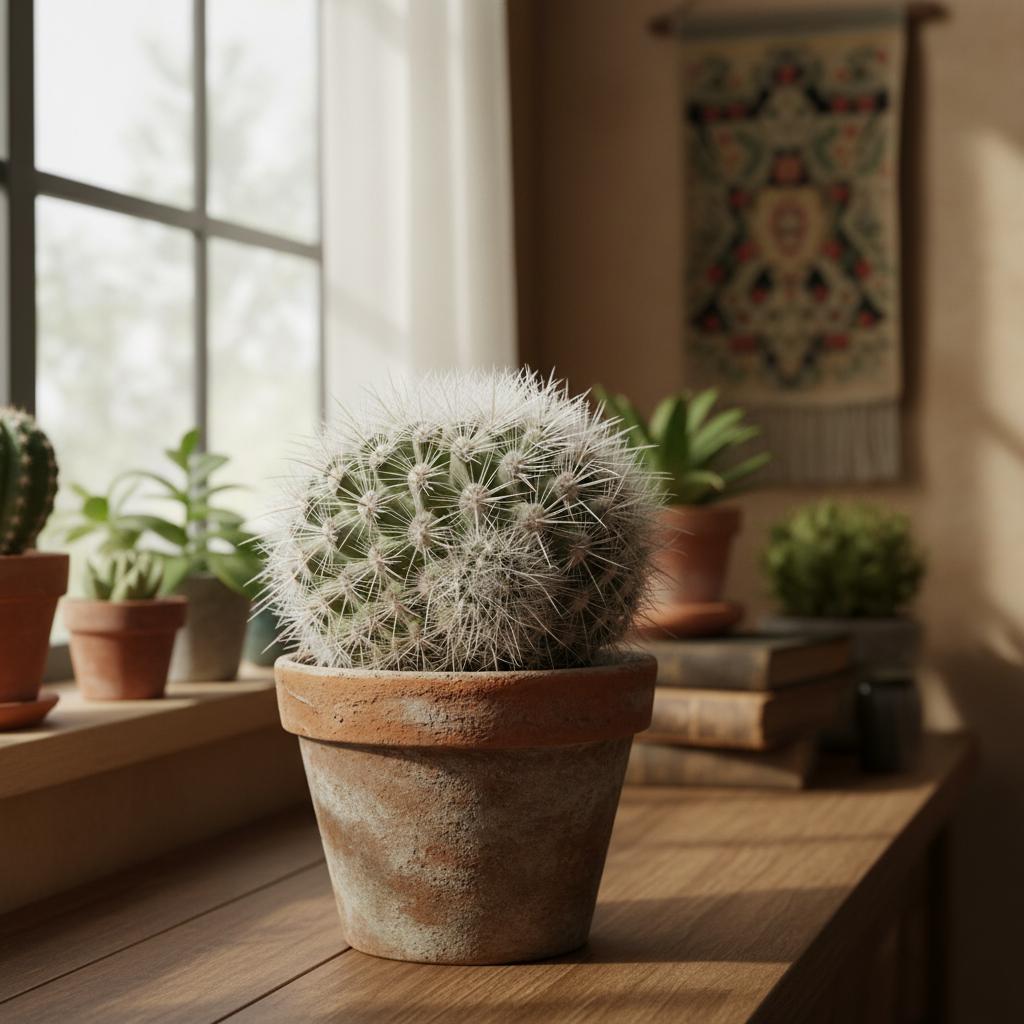
- Stems: Cylindrical, elongated stems clustering tightly, 1-3 cm in diameter, light green.
- Tubercles: Conical tubercles arranged in spirals, lacking latex.
- Spines: Radial spines yellow to golden-brown, interlacing, 15-25 per areole; central spines usually absent or 1-2.
- Flowers: Small, bell-shaped, pale yellow to pinkish or white, appearing in a ring near the apex of the stems.
Care Guide
Water thoroughly when the soil is completely dry, allowing excess water to drain away.
Apply a diluted, low-nitrogen cactus fertilizer once at the start of the growing season.. Fertilization recommendations description
Banana Peel Tea:Soak dried banana peels in water for 24 hours, dilute 1:1, and use during the growing season to encourage blooming and root health. Avoid using raw peels directly on the soil to prevent mold and rot.- Pruning is generally not required for this clustering cactus.
- Remove dead or dried flowers gently with tweezers to maintain a tidy appearance.
- Offsets (pups) can be carefully separated at the base with a sterile knife for propagation.
Toxicity
Warning: this plant may be toxic.
Pets: Non-toxic (per ASPCA), but sharp spines pose a physical hazard if chewed or brushed against.
Humans: Non-toxic, but sharp spines can cause mechanical injury and puncture wounds to the skin.
Garden Uses & Culture
Culture: In Western houseplant culture, it is highly prized for its geometric perfection and ease of care, often featured in desert terrariums and sunny windowsill collections across Europe and the Americas.
Usage: Ornamental potted plant, desert landscaping in suitable climates, and drought-tolerant rock gardens.