 PlantFun
Plant Needs
Sunlight
Requires bright, indirect light; direct sunlight will scorch the leaves and fade the delicate variegation.
Watering
Keep the soil consistently moist but not soggy during the growing season.
Temperature
Thrives in warm temperatures between 18°C and 27°C; avoid cold drafts below 15°C.
Characteristics
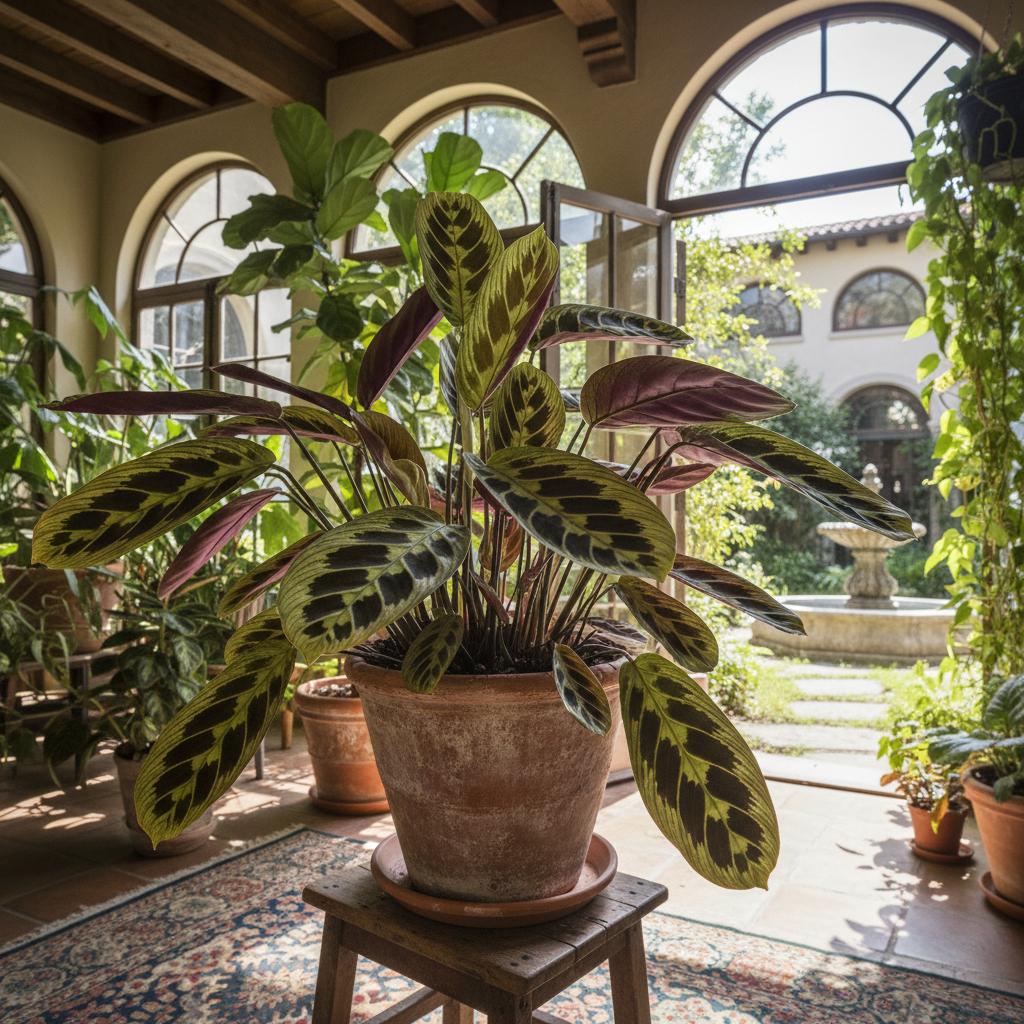
- Leaves: Broadly elliptic to oval, light green background with dark chocolate or dark green blotches along the midrib, featuring striking irregular white to cream variegation; exhibits nyctinasty (folds upward at night).
- Stems: Short, jointed, with a creeping or trailing growth habit.
- Flowers: Small, inconspicuous, tubular white flowers with pale purple spots, appearing on slender spikes in optimal conditions.
- Roots: Fibrous root system, occasionally forming small rhizomes.
Care Guide
Watering
Water thoroughly when the top inch of soil feels dry, keeping it evenly moist.
Fertilization
Apply a diluted, balanced liquid fertilizer every 4 weeks.. Do not fertilize in winter when the plant's growth naturally slows down.
Banana Peel Tea:Soak chopped banana peels in water for 24-48 hours, strain, and dilute 1:1 with water. Use to promote healthy root and foliage growth. Avoid leaving solid peels on the soil to prevent fungus gnats.Pruning
- Trim away any brown, yellowing, or dead leaves at the base of the stem using sterilized shears.
- Prune leggy stems just above a leaf node to encourage bushier growth.
- Remove any reverted (completely green) shoots if you wish to maintain the highly variegated appearance.
Toxicity
Warning: this plant may be toxic.
Pets & Humans
Pets: Non-toxic to cats (per ASPCA).
Humans: Non-toxic to humans.
Garden Uses & Culture
Culture: Known widely as the "Prayer Plant" in Western households because its leaves fold upward at night, resembling hands in prayer. It has become a popular symbol of gratitude, reflection, and mindfulness in indoor gardening.
Usage: - Highly prized as an indoor ornamental plant for its striking foliage. - Excellent for hanging baskets, terrariums, or tabletop displays where humidity can be maintained.