 PlantFun
Plant Needs
Sunlight
Requires bright, indirect light; avoid harsh direct midday sun which can scorch the leaves.
Watering
Keep the potting medium evenly moist but not waterlogged; do not allow it to dry out completely between waterings.
Temperature
Prefers intermediate to warm temperatures and moderate to high humidity.
Characteristics
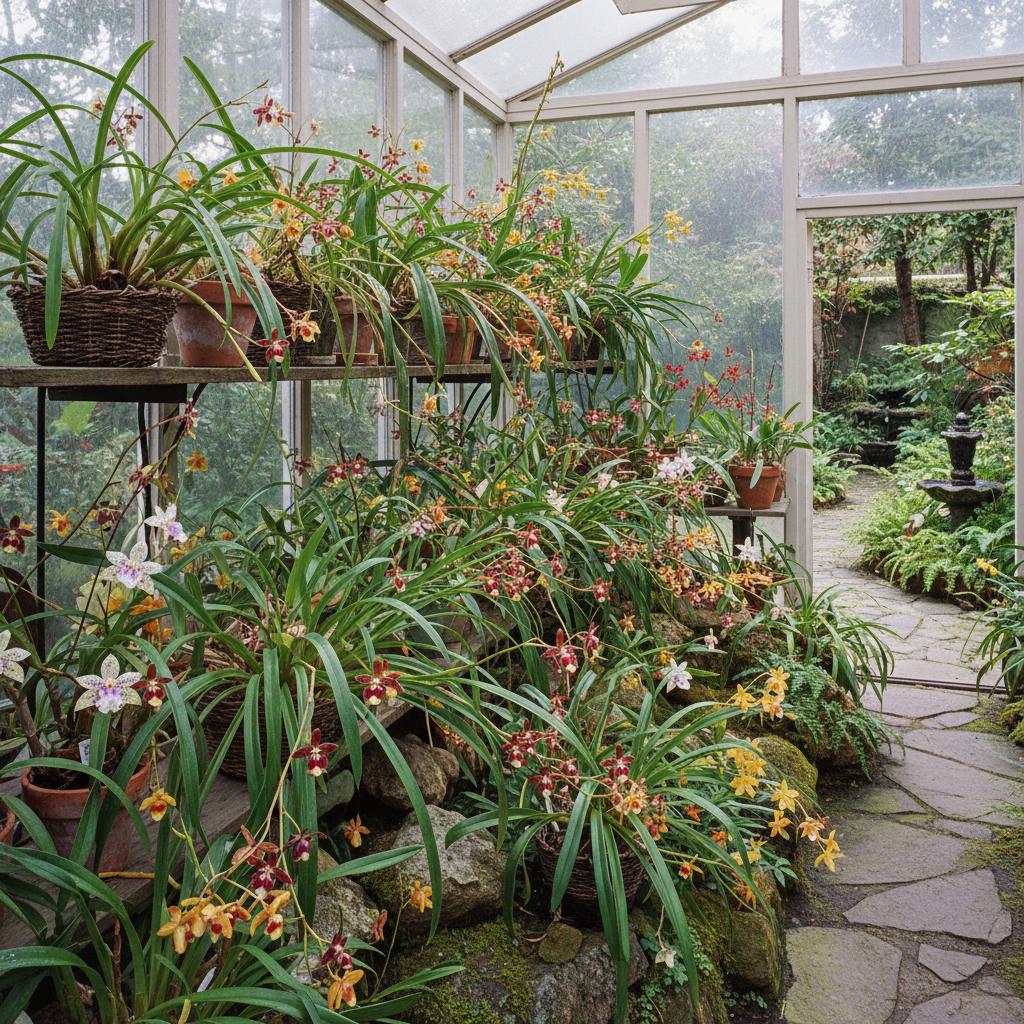
- Leaves: Single, linear to narrowly elliptic, leathery green leaves emerging from the apex of each pseudobulb;
- Flowers: Small, solitary flowers (about 1 - 1.5 cm across) that are highly variable in color, ranging from pale yellow and orange to deep red or almost black;
- Stems: Creeping or ascending rhizomes bearing small, somewhat compressed pseudobulbs spaced at intervals along the rhizome;
- Roots: Fine, white velamen-covered aerial roots adapted for clinging to bark and absorbing atmospheric moisture.
Care Guide
Watering
Water thoroughly when the top of the medium begins to dry, ensuring excellent drainage.
Fertilization
Apply a balanced orchid fertilizer at quarter strength.. Orchids are light feeders; it is better to under-fertilize than over-fertilize to prevent root burn.
Banana Peel Tea:Soak chopped banana peels in water for 24 hours, strain, and dilute 1:1 with water. Use to water the orchid to promote blooming. Avoid leaving solid residue on the roots to prevent mold.Pruning
- Remove spent flowers at the base of the stem to maintain tidiness;
- Trim away dead, hollow, or mushy roots using sterilized tools during repotting;
- Do not remove green, leafless pseudobulbs, as they continue to store water and nutrients for the plant.
Toxicity
Warning: this plant may be toxic.
Pets & Humans
Pets: Non-toxic to cats per ASPCA guidelines for most Orchidaceae.
Humans: Non-toxic to humans; safe to handle.
Garden Uses & Culture
Culture: Highly valued in Western orchid societies and private collections for its compact growth habit and the element of surprise in its variable flower coloration.
Usage: Cultivated as an ornamental houseplant, terrarium specimen, or greenhouse epiphyte.