 PlantFun
Plant Needs
Characteristics
- Leaves: Opposite, ovate to lanceolate, 6-15 cm long, serrate margins, dark green, highly aromatic (mint/citrus scent) when crushed;
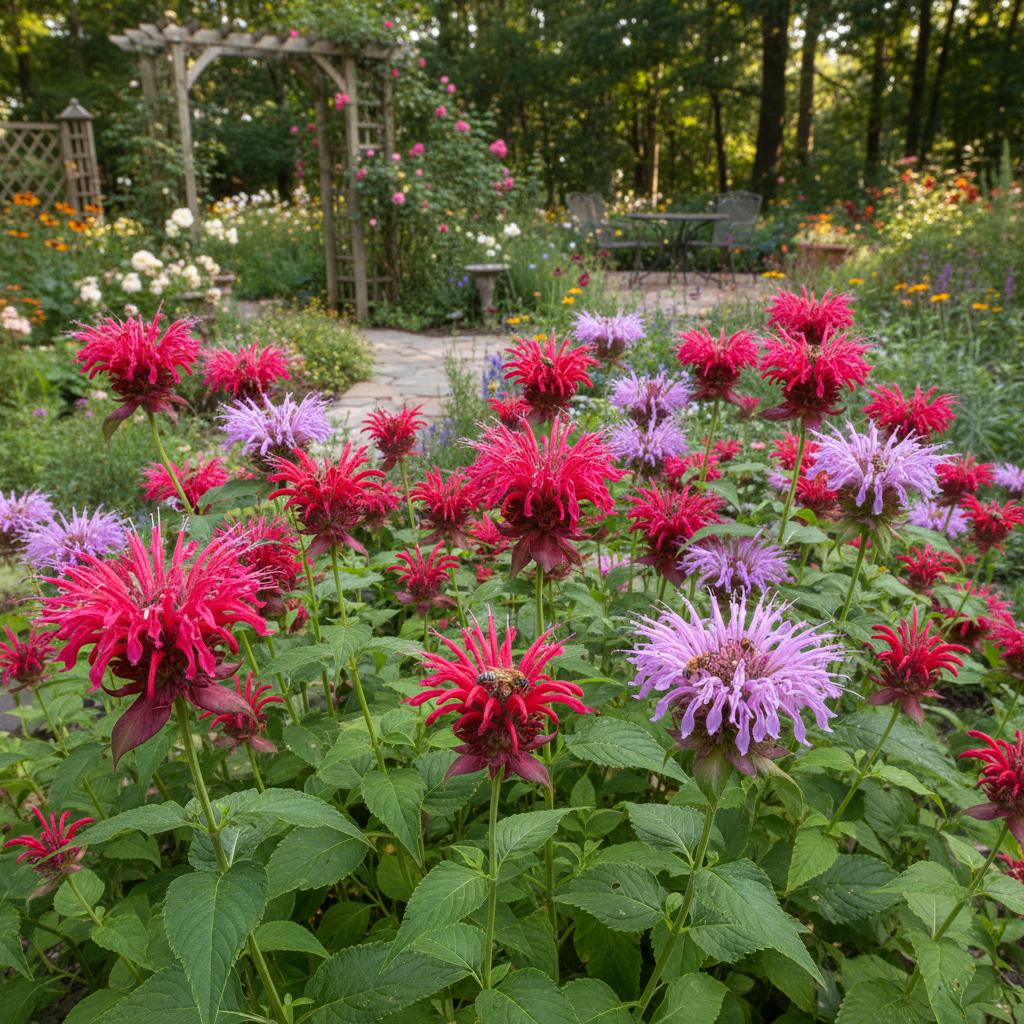
- Flowers: Bright red, tubular, 3-4 cm long, arranged in dense terminal head-like clusters (verticillasters) subtended by reddish bracts;
- Stem: Distinctly square in cross-section, hollow, often tinged with red, typical of the mint family;
- Roots: Spreads vigorously via shallow, creeping underground rhizomes.
Care Guide
Water deeply and regularly to keep the soil evenly moist, especially during dry spells.
Apply a balanced organic compost or mild fertilizer as new growth emerges.. Light feeder; excessive nitrogen can lead to weak stems and increased susceptibility to disease.
Banana Peel Tea:Steep chopped banana peels in water for 24-48 hours. Dilute 1:1 with water and apply to the base of the plant to encourage robust blooming. Discard peels in compost to avoid attracting pests.- Deadheading: Remove spent flower heads to prolong the blooming period and prevent unwanted self-seeding;
- Thinning: In early spring, thin out a quarter of the stems to improve air circulation and reduce powdery mildew risk;
- Cutback: Cut the entire plant down to 2 inches above the soil line in late autumn after the foliage dies back;
- Division: Divide the clumps every 2-3 years in early spring to maintain vigor and control aggressive spreading.
Toxicity
Warning: this plant may be toxic.
Pets: Non-toxic per ASPCA guidelines. Safe for feline exposure.
Humans: Non-toxic. The leaves and flowers are edible and have a long history of culinary use, particularly for making herbal teas.
Garden Uses & Culture
Culture: Historically significant in North America, the Oswego Native American tribe used it to brew tea. Following the Boston Tea Party in 1773, American colonists adopted "Oswego tea" as a patriotic substitute for imported British black tea.
Usage: Widely planted in pollinator gardens to attract bees, butterflies, and hummingbirds. Leaves and flowers are used in herbal teas, salads, and as a culinary garnish.