 PlantFun
Plant Needs
Sunlight
Prefers bright, indirect light or partial to full shade; avoid direct afternoon sun.
Watering
Keep soil consistently moist but not waterlogged; requires high ambient humidity.
Temperature
Thrives in warm tropical temperatures; highly intolerant of frost.
Characteristics
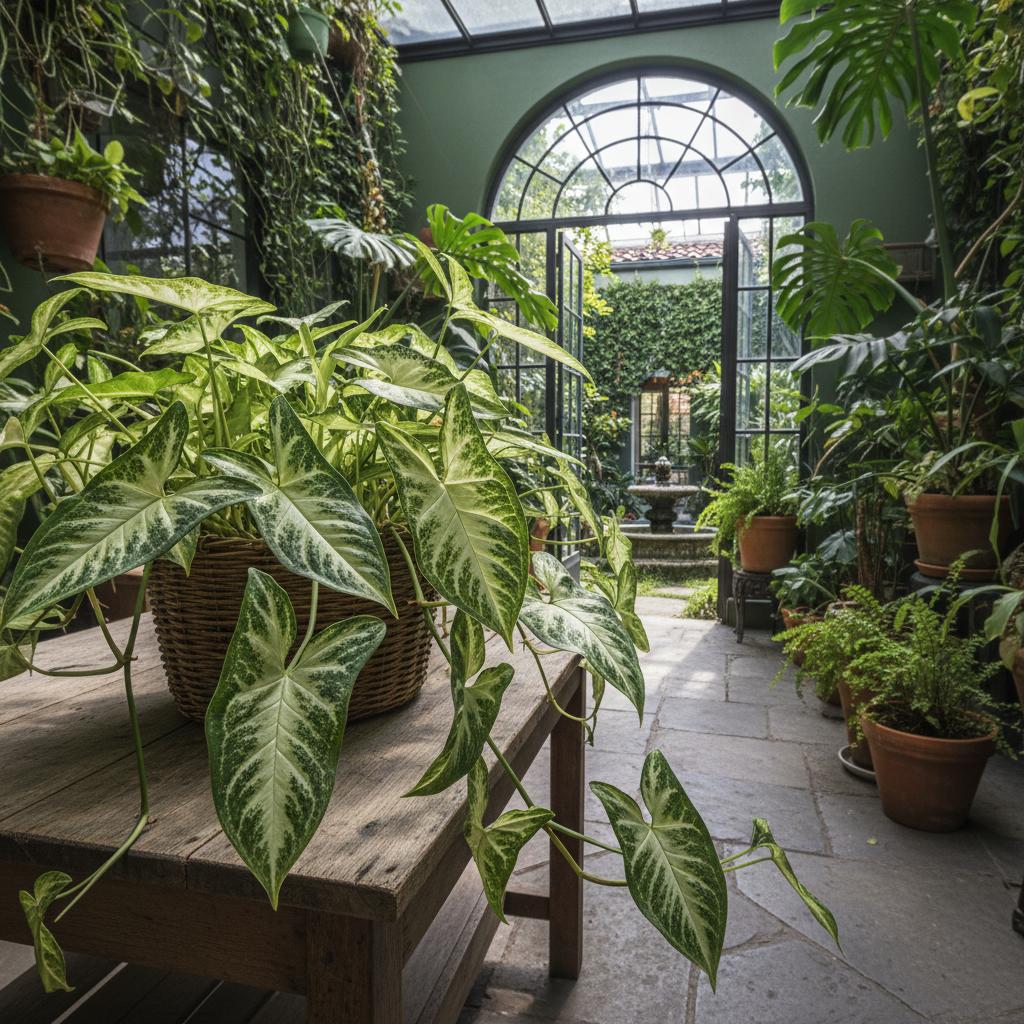
- Leaves: Sagittate (arrow-shaped) to hastate, dark green, borne on long petioles arising from a creeping rhizome;
- Flowers: Inflorescence is a spadix surrounded by a green to whitish spathe, typical of aroids;
- Stem: Creeping rhizomatous stem that grows horizontally along the forest floor.
Care Guide
Watering
Water thoroughly when the top inch of soil feels dry.
Fertilization
Apply a balanced liquid fertilizer monthly.. Feed during the growing season; halt in winter.
Banana Peel Tea:Steep chopped banana peels in water for 24 hours. Strain and dilute 1:1 with water. Avoid using raw peels directly on soil to prevent mold and pests.Pruning
- Remove yellowing or dead leaves at the base to maintain appearance;
- Trim back overly long rhizomes to control spread;
- Ensure sterilized tools are used to prevent bacterial or fungal infections.
Toxicity
Warning: this plant may be toxic.
Pets & Humans
Pets: Toxic per ASPCA: contains insoluble calcium oxalates causing oral irritation, pain and swelling of mouth, tongue and lips, excessive drooling, and vomiting.
Humans: Contains calcium oxalate crystals; ingestion causes oral irritation and swelling.
Garden Uses & Culture
Culture: Often overshadowed by its New World lookalike (Syngonium podophyllum, widely sold under the trade name "Nephthytis"), true Nephthytis is a prized specimen among dedicated aroid collectors in Europe and the Americas.
Usage: Cultivated as a rare indoor foliage plant or terrarium specimen.