 PlantFun
Plant Needs
Sunlight
Prefers full sun to partial shade, thriving in bright, direct light.
Watering
Moderate watering; highly drought-tolerant once established but prefers consistent moisture.
Temperature
Thrives in warm, tropical climates; sensitive to frost.
Characteristics
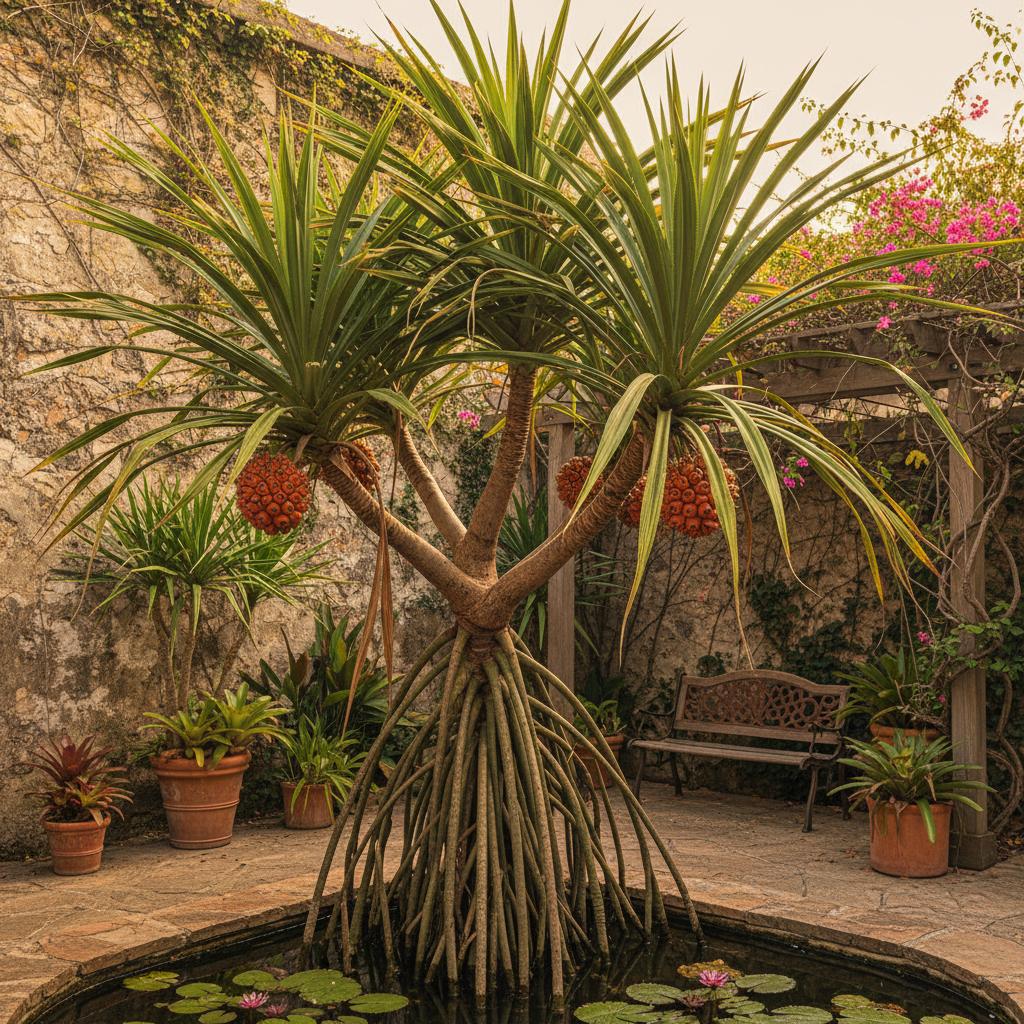
- Leaves: Long, sword-shaped, spirally arranged, 90-150 cm long, with spiny margins and midribs;
- Flowers: Dioecious; male flowers in fragrant, branched spadices with white bracts; female flowers in globose heads;
- Fruit: Large, pineapple-like syncarp, turning yellow to orange-red when ripe;
- Trunk: Stout, branching, supported by thick, woody prop roots at the base.
Care Guide
Watering
Water deeply when the top 2 inches of soil feel dry.
Fertilization
Apply a balanced, slow-release fertilizer at the start of the growing season.. Fertilization recommendations description
Banana Peel Tea:Soak chopped banana peels in water for 24-48 hours. Strain and use the liquid to water the plant. Discard peels in compost to avoid attracting pests.Pruning
- Remove dead or dying lower leaves to maintain a tidy appearance;
- Prune carefully using thick gloves due to the sharp spines on the leaf margins;
- Do not remove the aerial prop roots, as they are essential for the plant's stability.
Toxicity
Warning: this plant may be toxic.
Pets & Humans
Pets: Non-toxic to cats per ASPCA guidelines.
Humans: Generally non-toxic; fruits and seeds of some varieties are edible after proper preparation.
Garden Uses & Culture
Culture: Introduced to Western botanical gardens in the 19th century as a striking ornamental curiosity for grand Victorian glasshouses.
Usage: - **Ornamental**: Grown as a specimen tree in tropical landscapes for its architectural form and unique prop roots; - **Crafts**: Leaves are traditionally processed for weaving and thatching.