 PlantFun
Plant Needs
Characteristics
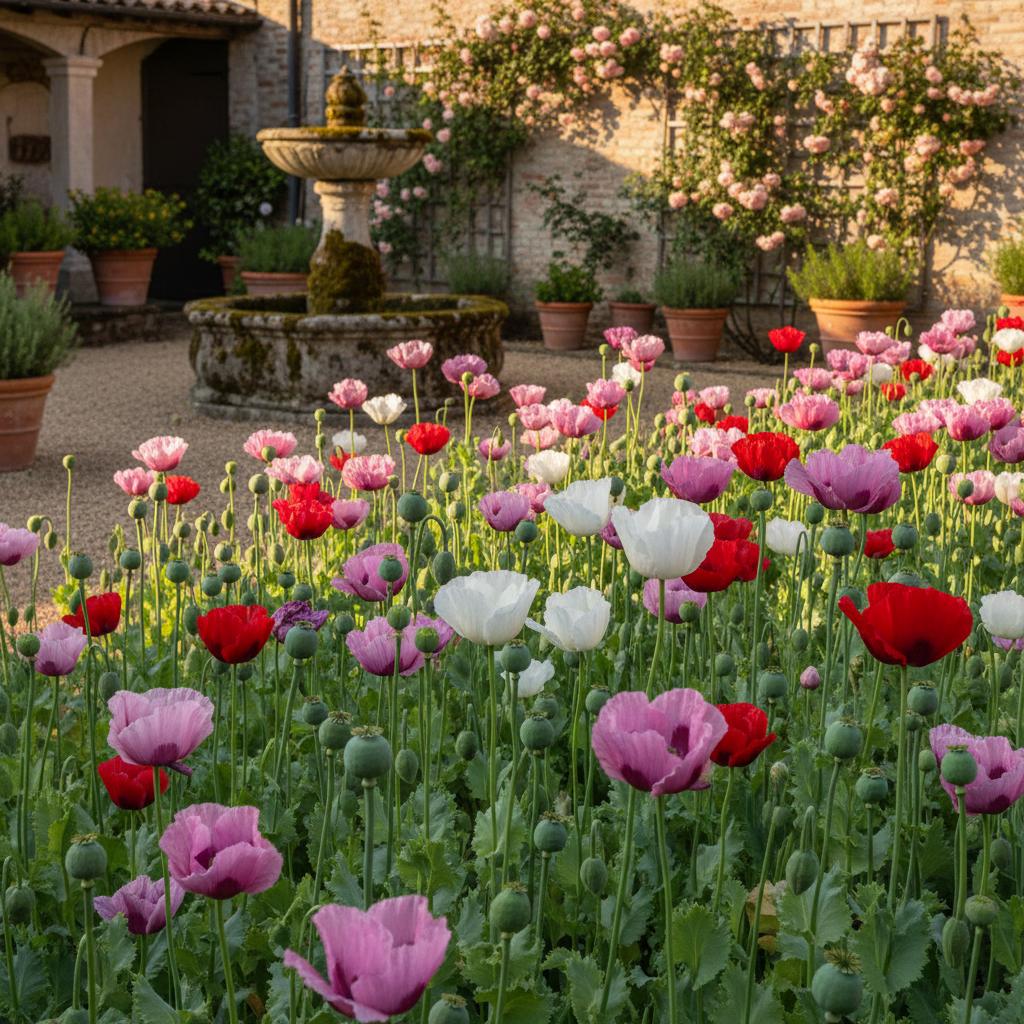
- Leaves: Pinnately lobed, alternate, light green, and covered with stiff, bristly hairs.
- Flowers: Solitary and terminal, featuring four large, vivid red, papery petals, often with a dark spot at the base of each petal.
- Stem: Slender, erect, branching, covered with bristly hairs, exuding a white or yellowish latex when broken.
- Fruit: A hairless, obovoid capsule capped by a flat stigmatic disk, containing numerous tiny dark seeds.
Care Guide
Water regularly during early growth, reducing frequency once established and blooming.
Apply a light, balanced organic fertilizer once seedlings are established.. Over-fertilizing can lead to excessive foliage growth at the expense of flowers.
Banana Peel Tea:Steep chopped banana peels in water for 24-48 hours. Strain and use the liquid to water the base of the plants to promote vibrant blooms. Discard the peels in compost to avoid attracting pests.- Deadheading: Remove spent flowers regularly to prevent early seed formation and prolong the blooming period.
- Seed Collection: Leave the final blooms of the season on the plant to develop into seed pods if self-seeding is desired.
- Clearance: Pull up and compost the entire plant once it turns brown and dies back at the end of summer.
Toxicity
Warning: this plant may be toxic.
Pets: Toxic per ASPCA; ingestion can cause sedation, stupor, crying, and pinpoint pupils.
Humans: Ingestion of large quantities can cause mild toxicity due to alkaloids, though it is significantly less toxic than the opium poppy.
Garden Uses & Culture
Culture: In Western culture, the red poppy is a powerful symbol of remembrance for soldiers who have died in wartime, heavily inspired by the World War I poem "In Flanders Fields".
Usage: Widely used in ornamental landscaping, wildflower meadows, and cottage gardens to provide vibrant splashes of color.