 PlantFun
Plant Needs
Characteristics
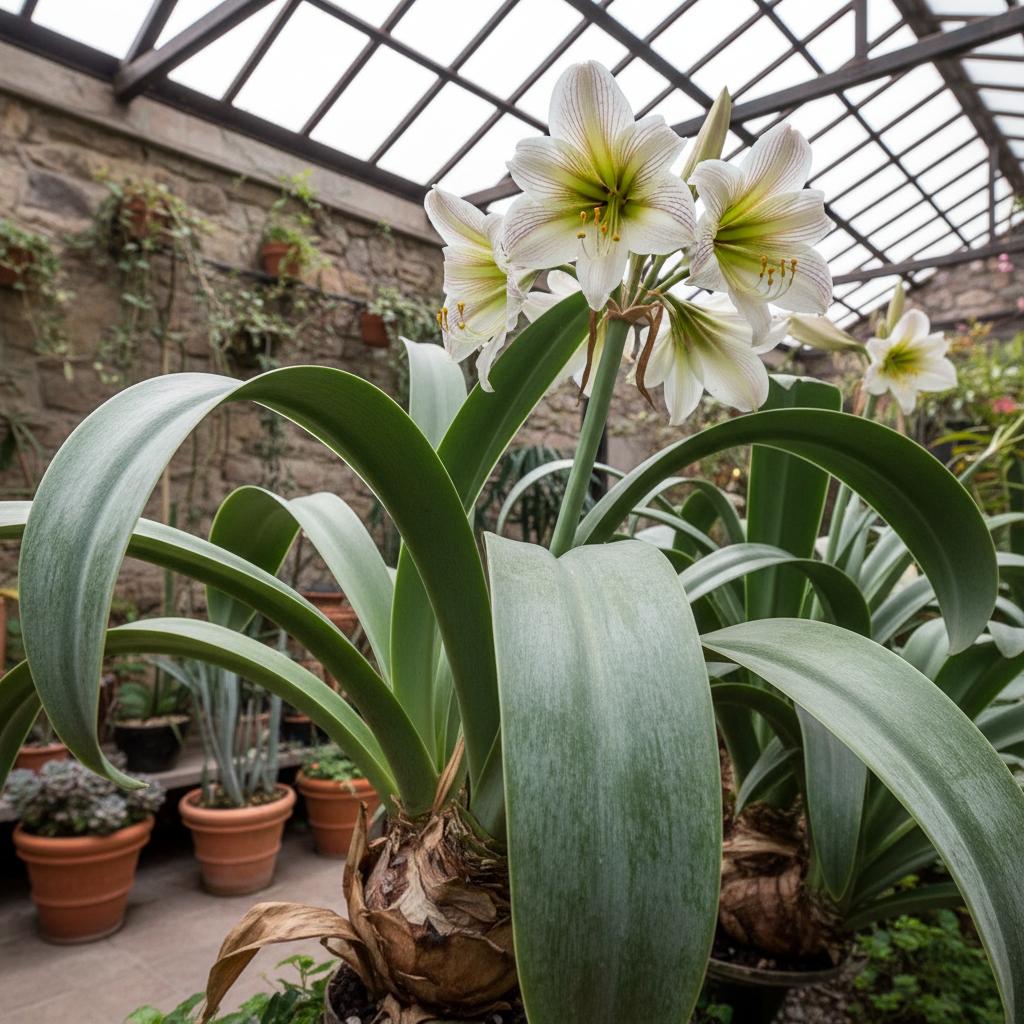
- Leaves: Glaucous, strap-shaped (lorate) leaves that emerge during the growing season and die back completely during dormancy;
- Flowers: Solitary, massive (up to 15 cm across), bright yellow, strongly fragrant, featuring a prominent staminal corona resembling a giant Narcissus;
- Bulb: Large, subterranean tunicated bulb adapted to surviving prolonged dry seasons in its native habitat.
Care Guide
Water thoroughly when the soil is dry to the touch during active leaf and flower growth.
Apply a low-nitrogen, high-potassium fertilizer when growth emerges.. Feed sparingly to support bulb regeneration without encouraging weak, leggy foliage.
Banana Peel Tea:Steep chopped banana peels in water for 24 hours. Dilute 1:1 with water and apply during the active growing season to support large blooms and bulb health. Discard solids in compost to avoid attracting pests.- Remove spent flowers to prevent seed formation if bulb vigor is prioritized;
- Crucially, allow all leaves to yellow and wither naturally so nutrients return to the bulb;
- Never cut green foliage.
Toxicity
Warning: this plant may be toxic.
Pets: Toxic to cats; ingestion of the bulb or leaves can cause gastrointestinal and neurological issues.
Humans: Mildly toxic if ingested due to lycorine and other alkaloids common in the Amaryllidaceae family.
Garden Uses & Culture
Culture: Highly coveted by rare bulb collectors in Europe and the Americas for its spectacular, oversized blooms that rival traditional daffodils.
Usage: - Cultivated as a specimen plant in alpine houses and specialized bulb collections; - Grown in terracotta pots to ensure rapid soil drying.