 PlantFun
Plant Needs
Sunlight
Prefers bright, indirect light; avoid harsh direct afternoon sun which can scorch the dark leaves.
Watering
Water thoroughly when the top 2 to 3 inches of the soil feel dry to the touch.
Temperature
Thrives in warm household temperatures; avoid cold drafts below 15°C (60°F).
Characteristics
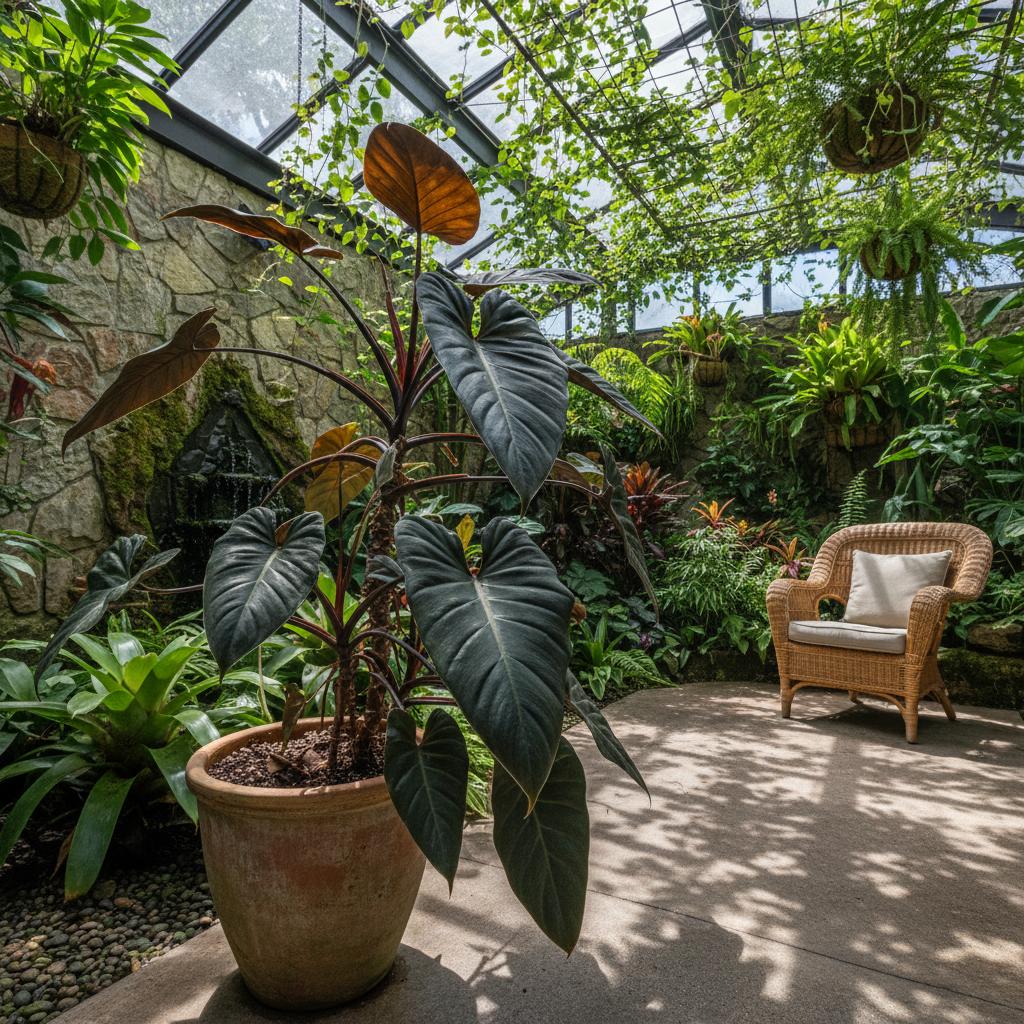
- Leaves: Large, sagittate (arrow-shaped) leaves that emerge bright orange-red, mature to deep burgundy or near-black, and eventually fade to dark green with reddish undersides;
- Stems: Thick, dark red to blackish stems with prominent aerial roots emerging from the nodes;
- Growth Habit: Climbing hemiepiphyte that produces larger foliage when provided with a vertical support like a moss pole;
- Flowers: Typical aroid inflorescence with a dark red to purple spathe and a white to reddish spadix, though rarely seen in indoor cultivation.
Care Guide
Watering
Water thoroughly when the top few inches of soil dry out.
Fertilization
Apply a balanced liquid fertilizer diluted to half strength.. Feed monthly during the active growing season; pause fertilization during winter dormancy.
Aquarium Water:Use old aquarium water during routine tank changes to water the plant. It provides gentle, natural nitrogen for lush foliage growth. Ensure the water has no added chemical medications or high salts.Pruning
- Size Control: Prune leggy or overly long vines to encourage a bushier growth habit;
- Maintenance: Remove any yellowing, damaged, or dead leaves near the base of the plant;
- Propagation: Take stem cuttings with at least one node and aerial root, and root them in water or damp sphagnum moss.
Toxicity
Warning: this plant may be toxic.
Pets & Humans
Pets: Toxic per ASPCA. Chewing or ingestion causes intense oral irritation, drooling, and vomiting.
Humans: Contains insoluble calcium oxalates which can cause oral irritation and swelling if chewed or ingested.
Garden Uses & Culture
Culture: Highly prized in Western houseplant communities for its "goth" aesthetic, often featured in modern interior design for its dramatic, dark architectural foliage.
Usage: Cultivated primarily as an ornamental houseplant for tropical interior landscaping and indoor air purification.