 PlantFun
Plant Needs
Characteristics
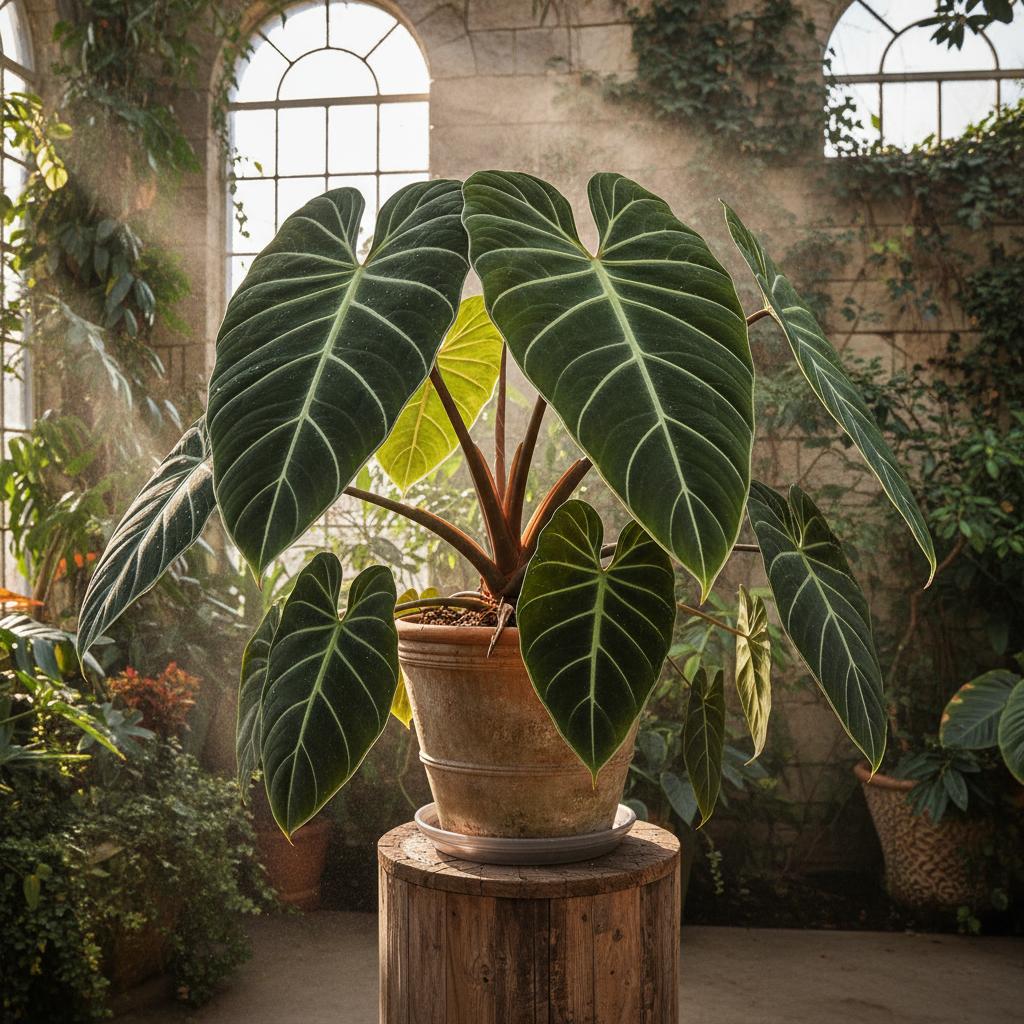
- Leaves: Large, cordate (heart-shaped), glossy to semi-velvety medium green with prominent, pale green to white contrasting veins, slightly pillowy texture;
- Stem: Thick, terrestrial creeping rhizome that grows horizontally along the soil surface, rooting at the nodes;
- Flowers: Typical aroid inflorescence with a green to reddish spathe and white spadix, rarely seen in cultivation;
- Roots: Thick, fleshy adventitious roots emerging from the internodes along the creeping rhizome.
Care Guide
Water thoroughly when the top layer of soil dries out.
Apply a balanced liquid fertilizer diluted to half strength.. Feed regularly during the active growing season; pause fertilization during winter dormancy.
Aquarium water fertilizer:Use leftover water from freshwater aquarium changes to water the plant. It provides gentle, natural nitrogen perfect for large foliage growth. Ensure the water has no added salts or harsh chemical medications.- Remove old, yellowing, or damaged leaves at the base of the petiole using sterilized shears;
- Do not cut the main creeping rhizome unless propagating;
- Trim away any mushy or rotted roots during repotting.
Toxicity
Warning: this plant may be toxic.
Pets: Toxic per ASPCA due to insoluble calcium oxalates; causes oral irritation, pain, and swelling.
Humans: Contains insoluble calcium oxalate crystals causing oral irritation and gastrointestinal discomfort if ingested.
Garden Uses & Culture
Culture: Highly prized in Western houseplant communities for combining the stunning, pillowy look of P. gloriosum with the faster, more robust growth habit of P. pastazanum.
Usage: Cultivated primarily as a statement indoor foliage plant; requires a long, rectangular pot to accommodate its crawling habit.