 PlantFun
Plant Needs
Characteristics
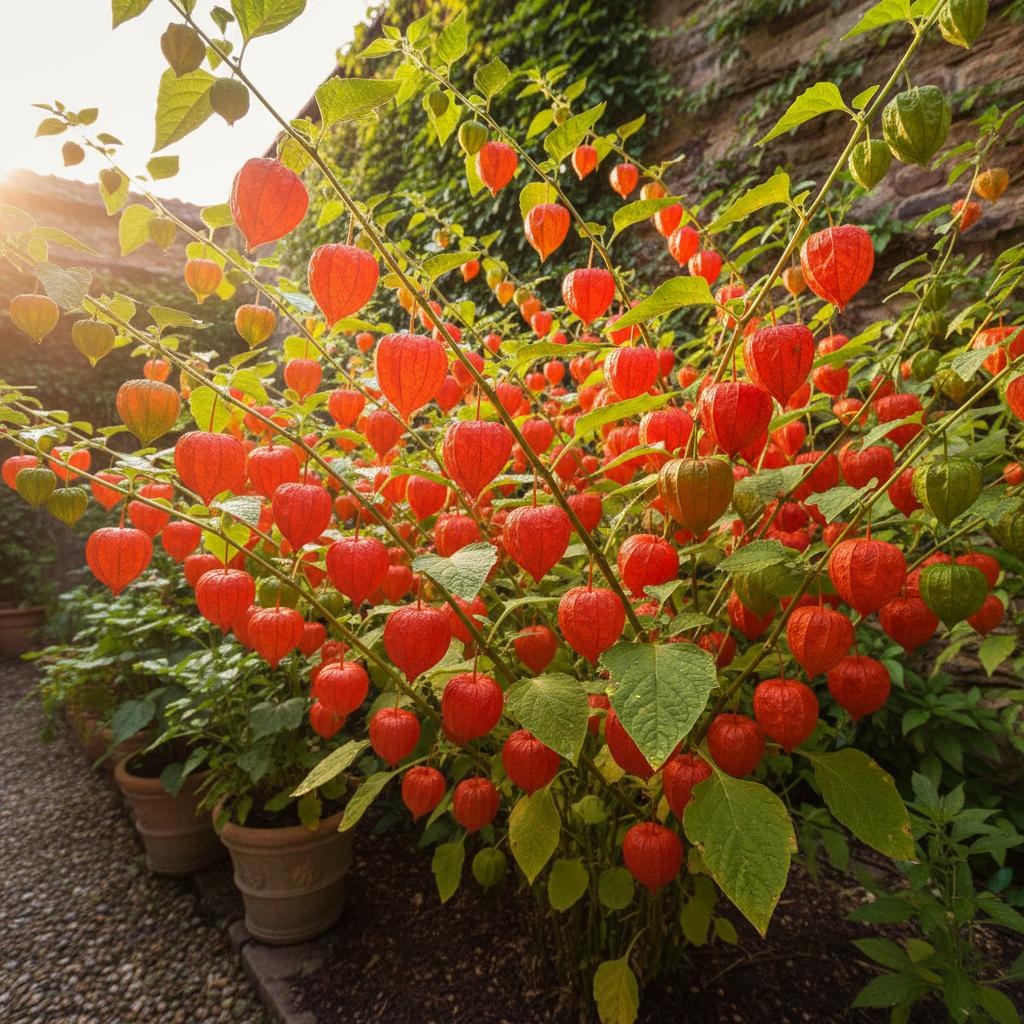
- Leaves: Ovate to deltoid, 5-12 cm long, green, with entire or sparsely toothed margins;
- Flowers: Solitary, axillary, small, star-shaped, whitish with 5 lobes, blooming in mid-summer;
- Fruit: A small round berry enclosed in a greatly inflated, papery, bright orange-red calyx resembling a lantern;
- Stems: Erect, herbaceous, unbranched or sparsely branched, spreading vigorously via underground rhizomes.
Care Guide
Water regularly to keep soil moist but not soggy.
Apply a balanced fertilizer as new growth emerges.. Fertilize monthly during the active growing season.
Banana Peel Tea:Steep chopped banana peels in water for 24-48 hours. Strain and use the liquid to water the base of the plant to encourage vibrant lantern development. Discard solids in compost to avoid attracting pests.- Cut stems at the base in early autumn if harvesting lanterns for dried arrangements;
- Remove dead foliage and stems in late winter or early spring before new growth begins;
- Regularly thin out creeping rhizomes to prevent the plant from aggressively overtaking garden beds.
Toxicity
Warning: this plant may be toxic.
Pets: Toxic to cats per ASPCA. Ingestion of leaves or unripe fruit can cause gastrointestinal and neurological issues.
Humans: Unripe berries, leaves, and stems contain solanine and are toxic. Ripe berries are technically edible but often unpalatable and best avoided.
Garden Uses & Culture
Culture: In Western floristry and garden design, the bright orange husks are a staple of autumn harvest decor and Halloween displays, symbolizing the transition into the colder months.
Usage: Widely cultivated as an ornamental plant. The fruiting stems are highly prized for dried floral arrangements and autumn wreaths.