 PlantFun
Plant Needs
Characteristics
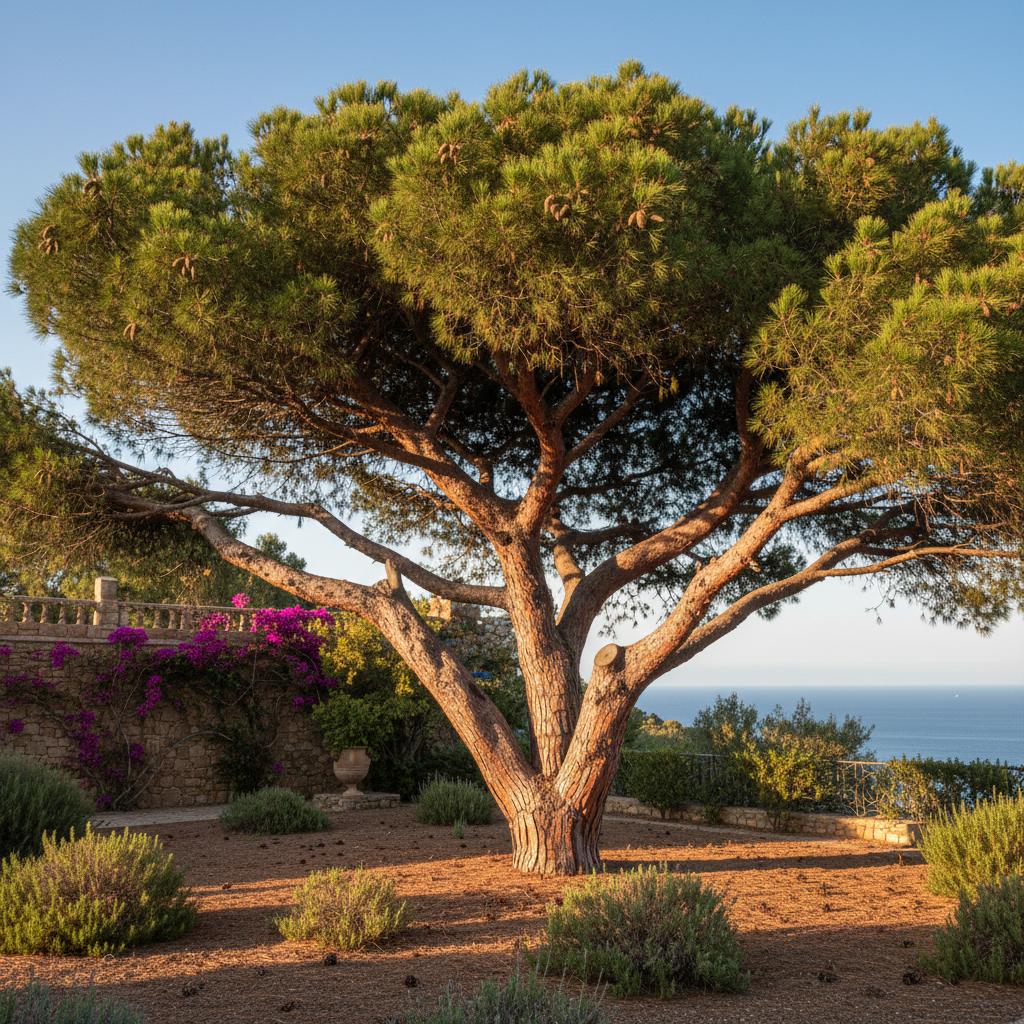
- Leaves: Needles in pairs, stout, rigid, 10 - 25 cm long, yellowish-green to dark green, with rough margins.
- Cones: Large, heavy, conical, 10 - 20 cm long, often clustered, glossy brown when mature, persistent on branches for several years.
- Bark: Orange-red to reddish-brown, deeply fissured into thick, irregular plates on mature trees.
- Trunk: Often bare of branches in the lower part when mature, supporting a spreading or umbrella-shaped crown.
Care Guide
Water young trees deeply every few weeks; mature trees rely on rainfall.
Apply a light layer of organic compost around the drip line for young trees.. Mature pines rarely need supplemental fertilization if grown in their preferred environment.
Coffee Grounds:Sprinkle a thin layer of used coffee grounds around the base of young trees in spring to provide a gentle nitrogen boost and help maintain slight soil acidity. Avoid thick layers to prevent mold.- Prune dead, damaged, or diseased branches in late winter during dormancy.
- Avoid cutting into old wood that lacks green needles, as pines generally do not sprout new growth from bare branches.
- Can be "limbed up" (removing lower branches) to expose the attractive bark and create clearance.
Toxicity
Warning: this plant may be toxic.
Pets: Ingestion of needles may cause mild gastrointestinal upset; sap can cause dermal irritation or stick to fur.
Humans: Generally non-toxic, though contact with the resin/sap may cause mild contact dermatitis in sensitive individuals.
Garden Uses & Culture
Culture: Historically vital in the Mediterranean and southwestern France for the naval stores industry, providing timber, pitch, and resin for shipbuilding.
Usage: Widely used for timber, paper pulp, and commercial resin extraction (turpentine and rosin). Also planted extensively for coastal dune stabilization and as windbreaks.